
Restaurant Rationalization in 2026: A Strategic Rebalancing of Footprints and Valuations
The planned store reductions at Wendy'sWEN--, Denny'sDENN--, and StarbucksSBUX-- are not isolated cost-cutting measures. They represent a deliberate, industry-wide rationalization of underperforming footprints, a strategic rebalancing driven by structural shifts in consumer behavior and competitive pressures. The scale of these moves underscores a fundamental pivot away from simple geographic expansion toward a model focused on financial stability and selective growth.
Wendy's is setting the pace for the year ahead. The company has announced plans to close 200 to 350 U.S. restaurants over the next two years, targeting a "mid-single-digit percentage" of its roughly 6,000-unit footprint. This move, disclosed during its November earnings call, is explicitly framed as a strategic effort to "stabilize performance and reposition the brand for long-term growth." The closures will focus on consistently underperforming locations, many in older buildings or weaker trade areas, signaling a commitment to pruning a legacy footprint that no longer meets the company's financial or operational standards.
Denny's has already completed a major phase of its own rationalization. The chain completed a previously announced plan to close approximately 150 underperforming restaurants by the end of 2025. This effort, part of a broader overhaul announced in 2024, aimed to improve financial efficiencies and strengthen the brand. The closures are now a prelude to a new chapter, as the company enters 2026 following the announcement of its sale for $620 million to a private equity consortium. The footprint reduction was a necessary step to stabilize the business ahead of a change in ownership.
Starbucks provides the clearest example of a top-down, capital-intensive restructuring. In 2025, the coffee giant closed roughly 400 stores as part of a $1 billion restructuring plan. The closures were highly targeted, focusing on underperforming urban locations in major metros like New York, Los Angeles, and Chicago. This move directly confronts the erosion of its once-dominant "one on every corner" strategy, which has been challenged by remote work trends and a surge in local competition. The company reviewed over 18,000 stores to identify those that were liabilities, not assets.
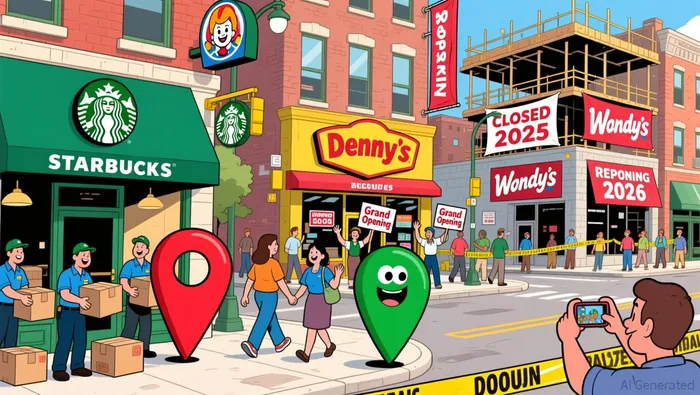
Together, these actions form a coherent narrative. They reflect a market reality where sheer density no longer guarantees success. Whether it's Wendy's pruning its U.S. footprint, Denny's completing a planned reduction, or Starbucks aggressively reshaping its urban core, the strategic intent is the same: to shed drag, optimize capital allocation, and reposition for a more sustainable growth trajectory in a changed environment.
Differentiating the Strategies: From Closures to Remodels and New Openings
The strategic moves beyond simple closures reveal a clear divergence in how each company is navigating its path forward. While all three are pruning underperforming assets, their subsequent capital allocation tells a distinct story about market positioning and growth ambition.
Starbucks is executing a top-down, capital-intensive transformation. Its 2025 closures were the first phase of a $1 billion restructuring plan, but the company's next major step is a remodel of roughly 10 percent of its portfolio. This isn't just about shuttering liabilities; it's a deliberate investment to reclaim its core "third place" identity. The refreshed design, with updated layouts and more outlets, is a direct response to the erosion of its urban dominance, which has been challenged by remote work and a surge in local competition. The goal is to convert the remaining footprint into a more compelling destination, competing head-on with the very niche coffee shops that have captured its former customers. This strategy acknowledges that density is no longer a moat and instead seeks to upgrade quality and experience.
Denny's presents a classic post-restructuring pivot. The chain has already completed its plan to close more than 150 underperforming restaurants, a necessary step to stabilize its financials and improve brand health. Now, with the footprint reduction largely behind it, the company is signaling a shift to selective growth. It has announced plans to open new restaurants as it enters 2026. This move, coming on the heels of its sale to a private equity consortium, suggests a new ownership is looking past the immediate cleanup to build a leaner, more efficient chain with a focus on better locations. The strategy is to use the capital freed by closures to fund new openings in stronger markets, aiming to return to net flat to positive growth by 2026.
Wendy's, meanwhile, is using its closures as a foundational step to stabilize its core business. The company's plan to close 200 to 350 U.S. restaurants is explicitly framed as a means to stabilize performance and reposition the brand for long-term growth. The capital and operational focus will then shift inward, toward reinvestment in the remaining 5,700+ locations. This includes upgrades to equipment, digital menu boards, and technology aimed at improving service speed and efficiency. The objective is to win back traffic from a customer base that has pulled back on discretionary spending, directly countering the nearly 5% decline in same-store sales that prompted the move. For Wendy's, the closures are a prelude to a turnaround campaign in its existing stores.
In essence, Starbucks is betting on a radical upgrade of its legacy footprint to compete on experience. Denny's is using a clean slate to fund a measured expansion. Wendy's is pruning to strengthen its core. Each path reflects a unique response to the specific pressures it faces, from urban saturation to competitive erosion to margin compression.
Financial and Operational Implications
The strategic closures are a direct lever for improving financial health, translating footprint reductions into tangible gains in efficiency, capital allocation, and profitability. For all three companies, the core objective is to shed drag and focus resources on a leaner, more profitable operation.
Starbucks' $1 billion restructuring plan provides the clearest blueprint for this financial engineering. The initiative was not just about closing stores; it was a comprehensive cost and capital overhaul. The company cut approximately 900 non-retail roles alongside the closure of roughly 400 locations. This dual-pronged approach targets both fixed overhead and underperforming real estate, directly improving the bottom line. The strategic goal is to build "towards a better Starbucks" by reducing expenses and focusing on fewer, more efficient stores. By targeting urban locations where competition has eroded volume, the plan aims to improve the financial efficiency of the remaining portfolio. The capital freed from closures and headcount reductions is then being redeployed into a major remodel program, a bet that upgrading the experience in key markets will drive higher sales per square foot and justify the investment.
For Denny's, the closures were a necessary prelude to a financial reset. The chain announced plans to open new restaurants as it comes to the end of the footprint-reduction plan, a move explicitly tied to the goal of improving financial efficiencies and strengthening the brand. By closing more than 150 underperforming units, the company is shrinking its cost base and improving the average quality of its remaining locations. This sets the stage for a return to growth, with the CEO targeting "net flat to positive growth by 2026." The sale to private equity for $620 million, expected to close in the first quarter, validates this strategy. The new owners inherit a cleaner, more efficient platform with capital to fund selective expansion, aiming to stabilize the business and improve its long-term financial trajectory.
Wendy's is using its closures as a foundational step to stabilize performance and reposition the brand. The company's plan to close 200 to 350 U.S. restaurants is framed as essential for stabilizing performance and repositioning the brand for long-term growth. The operational rationale is to free up capital for reinvestment in the remaining 5,700+ locations, including upgrades to equipment and technology aimed at improving service speed. This is a direct response to a nearly 5% decline in same-store sales, a metric that pressures margins and investor sentiment. By pruning its weakest assets, Wendy's aims to improve the average unit economics of its footprint, making the remaining stores more profitable and better positioned to win back traffic.
The bottom line for investors is a clearer path to improved margins and stronger balance sheets. These are not mere cost cuts; they are strategic reallocations of capital and human resources. By focusing on fewer, higher-quality stores and streamlining operations, these companies are attempting to build a more resilient financial model. The success of this rationalization will be measured not just in the number of closures, but in the sustained improvement of profitability and the ability to fund future growth from within.
Broader Industry Trends and Valuation Implications
The closures at Wendy's, Denny's, and Starbucks are not just corporate maneuvers; they are symptoms of a sector-wide reckoning. The strategic rationalization underway is a direct response to a confluence of macroeconomic and competitive pressures that are setting the stage for a challenging year ahead.
First, the closures are expected to accelerate market share gains by category leaders. As consumers tighten their discretionary spending, a trend that has already seen four consecutive months of comparable sales and traffic declines, they are trading down. Experts note that QSRs may stand to reap the rewards of consumer spending anxiety, as diners shift from casual and fast-casual dining to more affordable options. This dynamic benefits chains like Wendy's and Denny's, which are already positioned on the value spectrum. By shedding underperforming assets, these companies are sharpening their focus, making them better positioned to capture this defensive spending. The rationalization is a way to win the battle for market share in a shrinking pie.
Yet, for the industry as a whole, 2026 is shaping up to be a "humbling year." As BTIG analyst Peter Saleh wrote in his December forecast, the sector faces a perfect storm of depressed valuations, pending unit closures, consumer price sensitivity and strategy overhauls. The very act of closing stores, while necessary, is a stark admission of past missteps and a sign of financial strain. This reality is compounded by increased food costs, particularly for staples like beef, which will squeeze already thin margins. The result is a sector where profitability and survival are becoming pressing questions, not distant concerns.
This sets up a fundamental shift in what drives shareholder value. The era of pure footprint expansion is over. The trend signals a decisive pivot toward operational efficiency as the primary driver of value. For investors, the focus is no longer on the number of new locations, but on the financial health and quality of the remaining ones. The capital freed by closures at Starbucks, Denny's, and Wendy's is being redeployed into upgrades, technology, and targeted growth, a bet that efficiency gains and improved unit economics will outperform simple geographic reach.
The bottom line is a sector in structural transition. The closures are a painful but necessary step to build a leaner, more resilient model. The path forward is not about growing the total number of restaurants, but about making each one more profitable and better aligned with a more price-sensitive consumer. For category leaders, this rationalization offers a clearer path to market share. For the industry, it marks the end of an easy growth chapter and the beginning of a more disciplined, efficiency-driven era.
Catalysts, Risks, and What to Watch in 2026
The strategic closures are now a done deal for Denny's and in motion for Wendy's and Starbucks. The real test begins in 2026, where success will hinge on a few critical catalysts and the ability to navigate persistent risks.
The first major catalyst is the completion of the Denny's acquisition by private equity, expected in the first quarter. This change in ownership brings new capital and a fresh strategic direction, but it also raises the stakes. The new owners inherit a cleaner, more efficient platform after the chain completed its plan to close more than 150 underperforming restaurants. Their mandate will be clear: use the freed-up capital to fund the announced plans to open new restaurants and return to "net flat to positive growth." The success of this pivot will be a key indicator for the entire rationalization playbook.
The overarching risk, however, is execution. The closures are merely the first step; the critical test will be whether reinvestment in the remaining stores and brand updates can actually win back traffic in a competitive, price-sensitive market. Wendy's, for instance, is counting on reinvestment in remaining restaurants to improve service speed and efficiency, a direct response to a nearly 5% decline in same-store sales. For all three chains, the capital saved from shedding liabilities must now be deployed to drive higher sales per square foot. If these upgrades fail to resonate with consumers pulling back on discretionary spending, the entire restructuring effort risks becoming a costly pause rather than a turnaround.
Investors should watch for two primary indicators of success. First, look for evidence of market share gains by category leaders. As BTIG analyst Peter Saleh noted, looking ahead to 2026, we expect a central theme to be market share gains by existing category leaders. Chains that have successfully pruned their footprints and sharpened their focus should be in a better position to capture the defensive spending that experts predict. Second, monitor consumer spending patterns and traffic trends closely. Black Box Intelligence measured four consecutive months of comparable sales and traffic declines as of November, a headwind that will test the value propositions of all operators. Signs that traffic is stabilizing or improving, particularly for chains that have completed their closures, would signal the rationalization is working.
The bottom line is that 2026 is a year of decisive outcomes. The catalysts are clear-the Denny's deal closing, the reinvestment phase beginning-but the risks are substantial. The industry outlook remains challenging, with depressed valuations and consumer price sensitivity setting a low bar. For investors, the priority shifts from the scale of closures to the quality of the remaining footprint and the tangible results of strategic bets on efficiency and brand refresh. The companies that can translate a leaner model into winning traffic and profits will be the ones that emerge from this humbling year with stronger valuations.





Comentarios
Aún no hay comentarios