
ResMed's Q1 FY2026 Earnings Outlook: Navigating Sleep Therapy Market Growth and Operational Excellence
ResMed's Q1 FY2026 Earnings Outlook: Navigating Sleep Therapy Market Growth and Operational Excellence
The sleep therapy market is entering a pivotal phase, driven by a confluence of demographic shifts, rising awareness of sleep disorders, and technological innovation. For ResMedRMD-- (RMD), a global leader in sleep and respiratory care, the coming quarters will test its ability to capitalize on this expanding market while navigating competitive pressures and evolving patient needs. With the company set to report Q1 FY2026 earnings on October 30, 2025, investors are scrutinizing whether ResMed can sustain its recent momentum amid a maturing market and emerging alternatives like GLP-1 drugs. ResMed recently launched the Sleep Institute, a global clinical insights initiative aimed at elevating sleep health as a policy priority.
Market Context: A $72.3 Billion Opportunity by 2034
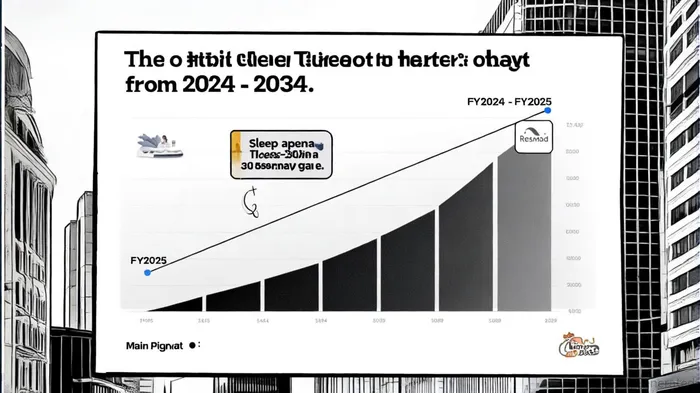
The global sleep therapy market is poised for robust growth, with the sleep disorder market valued at $27.6 billion in 2024 and projected to expand at a compound annual growth rate (CAGR) of 10.1% through 2034, reaching $72.3 billion, according to a sleep disorder market report. Sleep apnea, the largest segment at $13.2 billion in 2024, remains a cornerstone of this growth, fueled by increasing diagnosis rates, insurance coverage, and demand for continuous positive airway pressure (CPAP) devices. ResMed's dominance in this space-bolstered by products like the AirSense 11 and digital platforms such as myAir and AirView-positions it to benefit from these tailwinds. However, the company's long-term success will depend on its ability to diversify beyond sleep apnea into adjacent areas like insomnia and chronic obstructive pulmonary disease (COPD), where it has recently made strategic inroads, as outlined in ResMed's SWOT analysis.
Operational Execution: Margin Expansion and Strategic Acquisitions
ResMed's operational execution in recent quarters has been a bright spot. For Q4 FY2025, the company reported revenue of $1.3 billion, a 10% year-over-year increase, driven by strong global demand for its devices and the expansion of its digital health ecosystem in its Q4 FY2025 results. Gross margin expanded by 230 basis points to 60.8%, attributed to procurement efficiencies, manufacturing improvements, and a favorable product mix. This trend continued into Q2 CY2025, where operating margins hit 33.7%, up from 31.2% in the prior-year period, according to a Q2 deep dive. Such margin resilience underscores ResMed's disciplined approach to cost management and its ability to scale production without sacrificing profitability.
Strategic acquisitions have further strengthened ResMed's value proposition. The recent acquisition of VirtuOx, an at-home diagnostic testing provider, addresses a critical bottleneck in sleep care pathways by enabling earlier patient intervention (reported in the company's Q4 FY2025 results). Similarly, the integration of Ectosense and Somnoware into ResMed's ecosystem enhances its capabilities in remote monitoring and data analytics, aligning with the broader shift toward value-based care (as discussed in the Q2 deep dive). These moves not only diversify ResMed's revenue streams but also reinforce its position as a one-stop solution for sleep and respiratory health.
Earnings Outlook: Meeting Expectations or Facing Headwinds?
Analysts expect ResMed to report Q1 FY2026 earnings per share (EPS) of $2.36, in line with its Q2 CY2025 performance of $2.37 (per the Q2 deep dive). Historically, the company has demonstrated a capacity to exceed estimates-such as its Q1 FY2025 result of $2.20, which beat expectations by 8.37%, as noted in a Q1 earnings review. However, recent data reveals a shift: from 2022 to the present, ResMed has not reported a quarterly EPS that exceeded the market-wide consensus estimate; a backtest analysis of earnings surprises from 2022 to 2025 highlights this trend. This pattern raises questions about the sustainability of its earnings momentum in a more competitive and economically uncertain environment.
Rising freight costs, increased competition from Philips (recovering from regulatory issues), and the potential impact of GLP-1 drugs, which may reduce obesity-related sleep apnea cases, pose near-term risks. ResMed's response to these challenges will be critical. The company's investment in AI-driven tools, such as the Dawn feature in myAir, and its expansion into wearable technology aim to enhance patient adherence and outcomes. Additionally, the launch of the Sleep Institute signals ResMed's commitment to elevating sleep health as a policy priority, potentially unlocking new markets and reimbursement opportunities.
Competitive Landscape: Innovation as a Differentiator
While ResMed faces intensifying competition, its focus on innovation and operational excellence provides a buffer. For instance, its Q2 CY2025 revenue growth of 10.2% outpaced the -4.48% decline seen by rivals, highlighting its market resilience (see the Q2 deep dive). The company's recent product launches, including the AirTouch N30i and F40 masks, have also driven growth in the U.S. mask market (reported in its Q4 FY2025 results). However, the emergence of implantable devices (e.g., Inspire Medical Systems) and digital therapeutics could erode market share if ResMed fails to accelerate its R&D pipeline, a risk discussed in ResMed's SWOT analysis.
Conclusion: A Buy with Caution
ResMed's Q1 FY2026 earnings will serve as a barometer for its ability to balance growth in the sleep apnea market with innovation in adjacent areas. While the company's operational execution and margin discipline are commendable, investors must remain vigilant about macroeconomic headwinds and competitive dynamics. The recent absence of earnings surprises since 2022 underscores the need for prudence. For now, ResMed's strategic initiatives-ranging from acquisitions to digital health expansion-justify a "Moderate Buy" rating, but the path to sustained growth will require agility in an increasingly fragmented market (as highlighted in the Q2 deep dive).





Comentarios
Aún no hay comentarios