
Resilient Retail: Walmart's Strategy in a Volatile Economic Climate
In an era marked by inflationary pressures, supply chain disruptions, and shifting consumer behavior, Walmart's ability to maintain operational discipline and customer-centric execution has emerged as a critical differentiator. While many retailers grapple with margin erosion and inventory mismanagement, Walmart's strategic agility—rooted in its supply chain expertise and value-driven ethos—positions it as a resilient player in uncertain markets. This article examines how Walmart's operational rigor and customer-focused innovations are not only stabilizing its performance but also creating long-term value for investors.
Operational Discipline: The Bedrock of Resilience
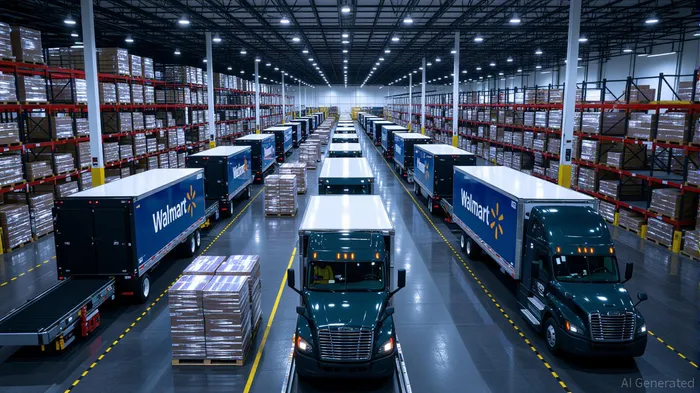
Walmart's operational discipline has long been a cornerstone of its success. Its supply chain, a marvel of global coordination, has faced recent headwinds—rising tariffs, labor disputes, and supplier compliance issues—but the company's proactive adjustments are mitigating these risks. For instance, Walmart's strategy of importing inventory early to avoid tariff hikes has allowed it to maintain pricing flexibility. In Q2 2026, the company reported a 26% year-over-year growth in U.S. e-commerce sales, driven by store-fulfilled deliveries and inventory pre-positioning for the holiday season. This approach not only reduces exposure to tariff volatility but also ensures product availability during peak demand periods.
However, operational discipline extends beyond logistics. Walmart's vendor-managed inventory model and just-in-time cross-docking systems have historically minimized costs, but recent challenges—such as an 8.7% increase in supplier facilities with “Orange” compliance ratings—highlight the need for tighter oversight. The company's response? A shift toward localized sourcing and strategic inventory buffers, mirroring the approaches of competitors like Target and CostcoCOST--. These adjustments, while incremental, signal a recognition that global scale must be balanced with regional adaptability.
Customer-Centric Execution: Balancing Value and Profitability
Walmart's “Everyday Low Prices” mantra remains its most potent weapon, but the company has refined its execution to align with evolving consumer expectations. In Q2 2026, it managed to absorb a portion of tariff costs while selectively raising prices on high-impact items (e.g., clothing, car seats). This nuanced approach—pricing on an item-by-item basis—has preserved customer trust while protecting margins. The result? Flat sales of private-label items and stable customer spending, even as middle- and lower-income households adjust to inflation.
The company's digital transformation further amplifies its customer-centric strategy. Walmart's e-commerce profitability doubled in Q2 2026, fueled by a 46% surge in advertising revenue and the integration of Vizio. Its WalmartWMT-- Connect platform, which offers targeted ads to brands, has become a lucrative revenue stream, growing 31% year-over-year. These innovations not only diversify Walmart's income but also deepen its relationship with both consumers and advertisers, creating a flywheel effect.
Investment Implications: A Defensive Play in Uncertain Times
Walmart's resilience is evident in its financial performance. Despite a 68 cents-per-share adjusted earnings miss in Q2 2026 (versus 74 cents expected), the company's revenue of $177.4 billion exceeded forecasts, and it raised its full-year sales outlook to 3.75–4.75% growth. This outperformance, relative to peers like Target, underscores the value of its operational and customer-centric strategies.
For investors, Walmart represents a defensive play in a volatile market. Its ability to absorb cost shocks, maintain pricing discipline, and innovate in digital channels offers a buffer against macroeconomic swings. However, risks persist: supplier compliance issues and rising labor costs could pressure margins if not managed effectively. That said, Walmart's track record of adapting to challenges—such as its early 2025 inventory pre-positioning—suggests it is well-equipped to navigate these headwinds.
Conclusion: A Model for Retail Resilience
Walmart's success in a volatile economic climate hinges on its dual focus: operational discipline to stabilize costs and customer-centric execution to retain loyalty. While the company faces structural challenges, its strategic agility—evidenced by localized sourcing, digital monetization, and pricing precision—positions it as a leader in the evolving retail landscape. For investors seeking stability and growth, Walmart's combination of scale, innovation, and value-driven execution makes it a compelling long-term holding.







Comentarios
Aún no hay comentarios