
Resilient Leadership in Turbulent Times: Lessons from Chung Ju-Yung and Implications for Today's Market Leaders
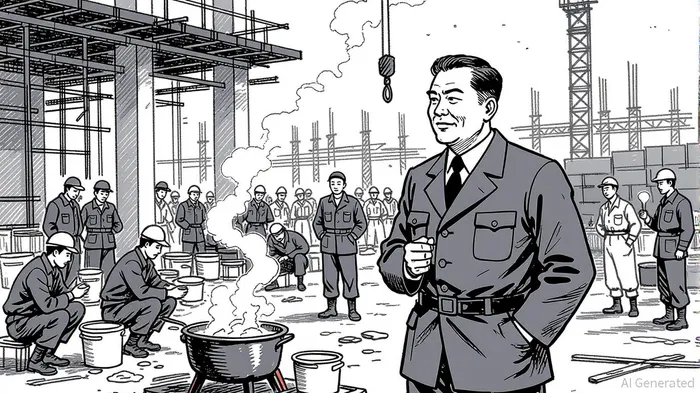
In the annals of business history, few figures embody the fusion of resilience, ethical governance, and long-term vision as profoundly as Chung Ju-Yung. The founder of Hyundai transformed a post-war scrapyard into a global industrial861072-- empire by prioritizing frugality, innovation, and a “people-first” culture. His leadership during crises—such as the 1997 Asian Financial Crisis, when he acquired Kia to secure regional dominance—demonstrated a willingness to act decisively while maintaining integrity. Today, as markets grapple with volatility, investors are increasingly seeking companies led by executives who mirror Chung's principles: those who balance short-term pragmatism with long-term value creation, and who treat employees and stakeholders as partners rather than costs.
The Chung Ju-Yung Blueprint: Frugality, People, and Ethical Resolve
Chung's success stemmed from a paradoxical blend of frugality and bold innovation. He famously used double-sided paper to cut costs, yet reinvested savings into R&D, enabling Hyundai to pioneer hydrogen fuel cell technology decades ahead of its time. His “people-first” approach—profit-sharing, open communication, and rejecting hierarchical perks—fostered loyalty and productivity, allowing Hyundai to weather downturns without layoffs. Ethical governance was non-negotiable: during financial strain, Hyundai honored contracts, such as completing a Thai expressway project on time, cementing its reputation for reliability.
Modern investors would do well to seek leaders who replicate this model. The key metrics? High R&D-to-revenue ratios (15%+), employee retention rates above 80%, and debt-to-EBITDA ratios under 1.5x. These indicators signal companies that prioritize innovation, employee engagement, and financial discipline.
Modern-Day Chung Ju-Yungs: Verra MobilityVRRM-- and DeltaDAL-- Airlines
Verra Mobility (VRRM) exemplifies this ethos. Under CEO Todd Pedersen, the company has navigated the 2022 supply chain crisis with frugality and agility. Pedersen, known for driving a used truck in his early days, has cultivated a culture of cost-consciousness while investing in smart mobility solutions. Verra's GRIT framework (Growth, Reinvestment, Innovation, Technology) mirrors Chung's philosophy, with 45% EBITDA margins and a 46.77% projected earnings growth in 2025. Its ability to adapt to global bottlenecks without compromising service underscores its operational resilience.
Delta Airlines (DAL) offers another compelling case. CEO Ed Bastian's focus on route optimization, fleet modernization, and employee retention has driven a 40.5% earnings growth since 2010. During the 2020 pandemic, Delta leveraged its internal mobility platform to redeploy employees, avoiding U.S. furloughs and maintaining morale. With a P/E of 12.3 (below its 5-year average of 16.7) and a debt-to-EBITDA ratio of 0.45, Delta's lean capital structure positions it to thrive in a post-pandemic world.
A Cautionary Tale: AppLovin's Ethical Missteps
Not all companies led by visionary founders fare equally well. AppLovin (APPLO) faced a governance crisis in 2023, with allegations of ad fraud and AI-washing undermining investor trust. Despite a 5% R&D investment and a pivot to AI, its stock plummeted 32.3% in early 2025 amid securities lawsuits. The company's exclusion from the S&P 500 and unresolved governance issues highlight the risks of prioritizing growth over transparency. AppLovin's story serves as a stark reminder: ethical lapses can erode decades of value in a matter of months.
The Investment Framework: Metrics That Matter
To identify companies with Chung Ju-Yung-like leadership, investors should focus on three pillars:
1. Operational Resilience: Look for firms with high R&D investment and agile supply chains. Verra Mobility's 45% EBITDA margin and Delta's 90% employee retention rate are benchmarks.
2. Ethical Governance: Avoid companies with opaque practices or governance scandals. AppLovin's legal woes underscore the cost of neglecting this.
3. Long-Term Vision: Prioritize leaders who reject short-termism. Chung's refusal to cut corners during crises, and Delta's fleet modernization, reflect this mindset.
Conclusion: Building Portfolios for the Long Haul
Chung Ju-Yung's legacy is a testament to the power of resilient leadership. In today's volatile markets, investors must seek out companies that mirror his principles: those that innovate through adversity, treat employees as partners, and prioritize ethical governance. Verra Mobility and Delta Airlines stand out as exemplars, while AppLovin's struggles serve as a cautionary tale. By focusing on these metrics, investors can build portfolios that not only survive downturns but thrive in them—just as Hyundai did under Chung's visionary guidance.
The market's next great leaders will be those who, like Chung, see crises not as obstacles but as opportunities to redefine their industries. The question for investors is not whether to take risks, but which risks to take—and with whom.







Comentarios
Aún no hay comentarios