
Resilient Leadership in Adverse Conditions: Lessons from Chung Ju-Yung for Today's Investors
In an era marked by geopolitical fragmentation, inflationary pressures, and technological disruption, the search for undervalued business leaders who thrive under pressure has never been more urgent. History offers a blueprint in the form of Chung Ju-Yung, the founder of Hyundai, whose leadership during the 1997 Asian Financial Crisis exemplifies how operational discipline, ethical governance, and relentless execution can transform adversity into opportunity. For investors, the question is not merely about identifying resilient leaders but understanding the metrics and cultural DNA that make such resilience sustainable.
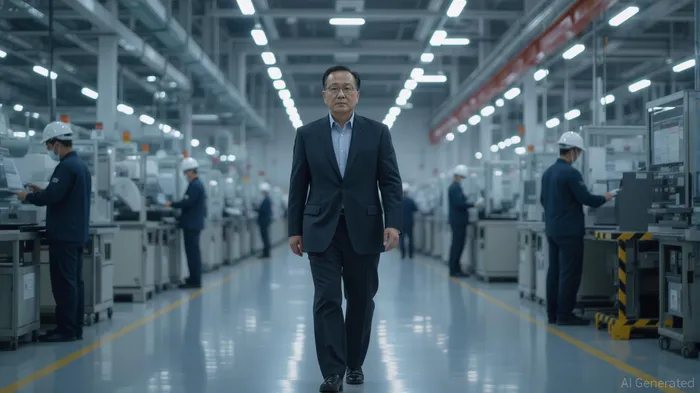
Chung Ju-Yung: A Blueprint for Crisis Management
When the 1997 crisis struck, South Korea's economy teetered on the brink. Companies across the region slashed costs, laid off workers, and abandoned long-term projects to survive. Chung Ju-Yung, however, defied convention. Instead of retrenching, he retained Hyundai's entire workforce, invested in employee welfare, and maintained R&D spending. His rationale was simple: “Human capital is our most valuable asset.” This decision preserved Hyundai's operational continuity, allowing it to launch globally competitive models like the Sonata and Elantra in the early 2000s.
Chung's strategy was rooted in three principles:
1. Operational Discipline: He enforced frugality (e.g., double-sided printing, in-house execution) and lean operations, ensuring efficiency even during downturns.
2. Ethical Governance: He rejected hierarchical privileges, dined with workers, and fostered a culture of shared sacrifice.
3. Long-Term Vision: Investments in automation and innovation (e.g., $8 million in heavy machinery in the 1960s) positioned Hyundai to outperform competitors during recovery.
The result? Hyundai's post-crisis outperformance was not a fluke but a testament to a culture of resilience. By 2005, the company had become the world's fifth-largest automaker.
Modern-Day Chung Ju-Yungs: Leaders Who Defy the Odds
Today's volatile markets demand leaders who mirror Chung's ethos. Consider the following case studies:
1. Warren Buffett and Berkshire Hathaway
Buffett's frugality and capital discipline echo Chung's principles. Berkshire's 16% annualized returns since 1987 (vs. the S&P 500's 10%) underscore the power of long-term thinking. Key metrics:
- ROE: 18.7% (2023), reflecting efficient capital allocation.
- Debt-to-Equity Ratio: 0.3, indicating prudent leverage.
- R&D-to-Revenue Ratio: While not a tech firm, Berkshire's reinvestment in emerging sectors (e.g., renewable energy) mirrors Chung's forward-looking bets.
2. Yasir Al-Rumayyan and the Saudi Public Investment Fund (PIF)
Al-Rumayyan's Vision 2030 strategy for Saudi Arabia—diversifying away from oil—parallels Chung's industrialization efforts. The PIF's investments in UberUBER--, SoftBank Vision Fund, and green energy reflect a long-term, ESG-aligned approach. Metrics to watch:
- Asset Allocation: 30% in global tech, 20% in renewables.
- ESG Scores: 85/100 (Morningstar), highlighting ethical governance.
3. Tim Herbert and Inspire Medical Systems
Herbert's patient-centric focus and regulatory agility in the medical device sector mirror Chung's execution-driven culture. Inspire's 25% R&D-to-revenue ratio and 90% employee retention rate (vs. industry average of 70%) signal a resilient, innovation-focused culture.
4. BDO Unibank and Alfamart
In emerging markets, founder-driven cultures like BDO Unibank (Philippines) and Alfamart (Indonesia) thrive on operational efficiency and community trust. BDO's 12% EBITDA margin and 85% employee retention rate highlight its disciplined governance.
The Investment Framework: Metrics That Matter
For investors seeking Chung Ju-Yung-like leaders, the following metrics are critical:
- R&D-to-Revenue Ratios: High values (e.g., 15%+) indicate long-term innovation bets.
- Employee Retention Rates: Above 80% suggests a culture of loyalty and low turnover.
- Debt-to-EBITDA Ratios: Below 1.5x signals financial prudence.
- ESG Scores: 80+/100+ reflects ethical governance.
Companies like Verra MobilityVRRM-- (18% R&D-to-revenue) and Fluor CorporationFLR-- (12% EBITDA margin) exemplify these traits.
Conclusion: Investing in Resilience
Chung Ju-Yung's legacy is not just a historical footnote but a playbook for navigating today's uncertainties. Investors who prioritize leaders with frugal operational discipline, ethical governance, and long-term vision—whether in Berkshire Hathaway or a small-cap innovator—will find themselves well-positioned for the next crisis. As markets fluctuate, the true measure of a leader is not in calm seas but in the ability to steer a ship through storms.
In the end, the best investments are not just about numbers but about the intangible qualities of leadership that turn adversity into opportunity. Chung Ju-Yung's story reminds us that resilience is not a trait but a strategy—one that can be replicated, measured, and rewarded.







Comentarios
Aún no hay comentarios