
Resilient Founders, Resilient Businesses: Lessons from Chung Ju-Yung and the Case for Industrials and Construction Stocks
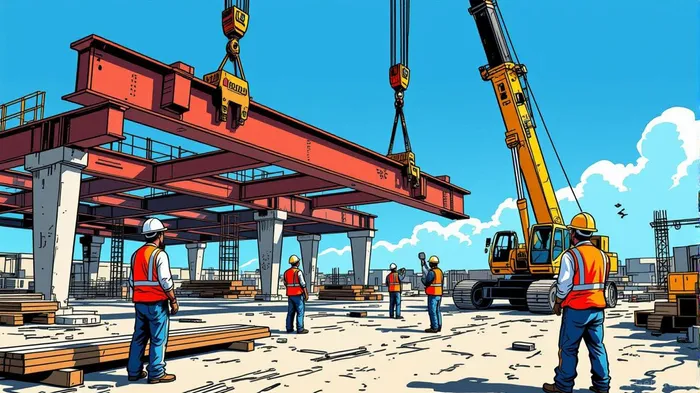
In the annals of business history, few leaders embody the fusion of frugality, relentless execution, and resilience as profoundly as , the founder of Hyundai. Rising from a rural Korean village to build a global industrial empire, Chung's legacy is a masterclass in turning adversity into opportunity. His mantra—“diligence, frugality, affection”—was not just a corporate slogan but a blueprint for sustainable growth. Today, as global markets grapple with geopolitical uncertainty, supply chain volatility, and shifting trade dynamics, the principles that guided Hyundai's rise are re-emerging in the industrials and construction sectors. For investors, this presents a compelling case: companies that prioritize operational discipline, stakeholder trust, and long-term reinvestment are poised to outperform in a fragmented, high-uncertainty environment.
The Chung Ju-Yung Model: Frugality as a Strategic Tool
Chung Ju-Yung's leadership was defined by a refusal to treat frugality as a cost-cutting exercise. Instead, he embedded it into Hyundai's DNA, using it to fuel innovation and resilience. During the 1997 , while many Korean conglomerates collapsed under debt, Hyundai preserved jobs, maintained R&D investments, and avoided short-term fixes. By 2025, this approach had transformed Hyundai into a leader in hydrogen fuel cell technology and electric vehicles, with a 63% market share in India's utility vehicle segment. The lesson? Frugality, when paired with bold long-term bets, becomes a catalyst for reinvention.
This model is now playing out in today's industrials sector. Consider Kaiser Aluminum Corporation (KALU), a Zacks Rank #2 company with a VGM Score of A. In 2025, KALUKALU-- has demonstrated frugality through strategic hedging of aluminum prices, . , even as it invests in sustainability initiatives like a 19% reduction in greenhouse gas emissions at its Warrick facility.
Resilience Through Diversification and Stakeholder Trust
Chung's ability to diversify Hyundai into shipbuilding, construction, and automotive manufacturing insulated the company from sector-specific downturns. This cross-industry strategy is mirrored in AGCO Corporation (AGCO), a Zacks Rank #1 company with a VGM Score of B. AGCO's recent $1 billion share buyback program and $200 million cost savings target by 2026—achieved through automation and offshoring—highlight its focus on operational resilience. CEO 's FarmerCore initiative, which digitizes dealer networks, further underscores a stakeholder-centric approach. By 2029, , leveraging its crisis-tested adaptability.
Relentless Execution in a Volatile Market
The hallmark of Chung's leadership was —translating bold visions into tangible results. This trait is evident in Hudson Technologies, Inc. (HDSN), a Zacks Rank #2 company with a VGM Score of A. HDSN's 27% improvement in Zacks Consensus Estimates over 60 days reflects its ability to execute under pressure. As a refrigeration solutions provider, the company has capitalized on infrastructure spending and on-shoring trends, . Its success lies in aligning frugality with innovation, much like Hyundai's 1965 investment in construction machinery.
The Case for Industrials and Construction Stocks in 2025
The is uniquely positioned to benefit from structural tailwinds. U.S. infrastructure spending, defense outlays, and the reshoring of supply chains are creating durable demand. For example, the $1.9 trillion in construction-related projects announced since 2020 has only a quarter completed, signaling a long runway for growth. Companies like GE Vernova, , and Rolls-Royce, , exemplify how frugality-driven execution and resilient leadership can outperform in volatile markets.
For investors, the key is to identify firms that embed Chung Ju-Yung's principles into their operations. Look for companies with:
1. High R&D reinvestment (e.g., .
2. Stable EBIT margins despite macroeconomic headwinds (e.g., .
3. Trust-based cultures (e.g., AGCO's profit-sharing and HDSN's stakeholder alignment).
Conclusion: Building a Resilient Portfolio
The 2025 market reset has amplified the importance of qualitative leadership traits. As Chung Ju-Yung proved, resilience is not about avoiding adversity but leveraging it to build long-term value. Industrial and construction firms like KALU, AGCOAGCO--, and HDSNHDSN-- are modern-day exemplars of this philosophy. For investors seeking asymmetric upside, the message is clear: prioritize companies that treat frugality as a strategic tool, diversify to hedge volatility, and execute with relentless discipline. In an era of persistent uncertainty, these principles are not just advantageous—they are essential.







Comentarios
Aún no hay comentarios