
The Resilient Founder Mindset: Lessons from Chung Ju-Yung and Hyundai's Rise
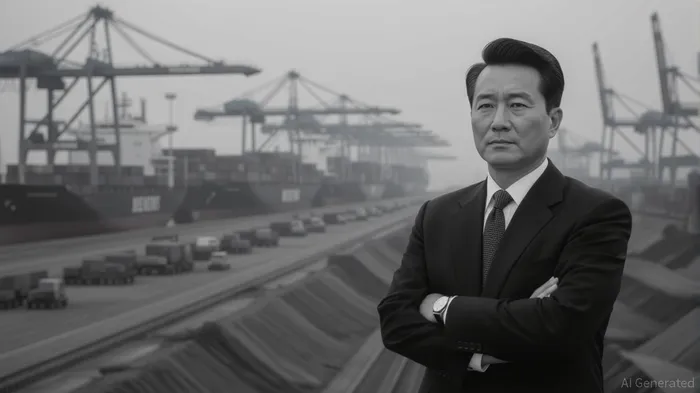
In the annals of industrial history, few stories are as compelling as Hyundai's meteoric rise from a post-war construction firm to a global automotive and manufacturing titan. At the heart of this transformation lies the indomitable spirit of its founder, Chung Ju-Yung, whose leadership style—marked by frugality, resilience, and a relentless focus on people—offers timeless lessons for investors seeking to identify underdog narratives with long-term value.
The Chung Factor: A Founder's Blueprint for Resilience
Chung Ju-Yung's mantra—“Quitting is not in my dictionary”—was more than a platitude. It was a philosophy that drove Hyundai to defy odds in South Korea's post-war reconstruction era and later in volatile emerging markets. His approach combined visionary thinking with operational discipline. For instance, in 1965, he took a $8 million gamble to purchase 2,000 advanced heavy machines, slashing construction times and enabling Hyundai to win high-profile infrastructure contracts. This blend of boldness and pragmatism became a hallmark of the company's DNA.
Chung's emphasis on frugality was equally critical. He mandated double-sided paper use and shared meals with workers during lean periods, fostering a culture of shared sacrifice and loyalty. This ethos not only stabilized the company during economic downturns but also built a foundation of trust that allowed Hyundai to scale rapidly. For investors, this underscores the power of founder-driven mental models: leaders who prioritize long-term value over short-term gains often build enterprises that weather crises better than their peers.
Strategic Boldness in Emerging Markets
Hyundai's expansion into emerging markets was not a passive process but a calculated risk. In the 1970s, Chung entered the shipbuilding industry with no prior experience, constructing the world's largest shipyard in Ulsan. By securing international oil tanker contracts, Hyundai bypassed traditional competitors and positioned itself as a global player. This pattern of entering high-growth sectors with a “build first, adapt later” mindset mirrors the strategies of successful startups in tech and energy today.
Post-1997 Asian Financial Crisis, Hyundai's resilience was tested. Yet, the company adapted by acquiring Kia Motors and refining its quality control processes. A 2009 initiative—offering a 10-year, 100,000-mile warranty—addressed its reputation for poor quality, turning a liability into a competitive edge. By 2008, despite a global recession, Hyundai's global unit sales grew by 2%, while revenues rose 5%. These figures highlight the importance of strategic pivots in volatile markets.
Financial Resilience and Structural Challenges
Hyundai's financial metrics tell a nuanced story. From 2010 to 2025, the company's earnings per share (EPS) fluctuated but showed a clear upward trend, particularly in emerging markets. By 2025, however, U.S. tariffs and rising production costs began to erode profitability, with operating profits dropping 16% year-on-year. A debt-to-equity ratio of 1.44 and a current ratio of 0.79 suggest vulnerabilities, yet Hyundai's P/E ratio of 1.33 (as of Q2 2025) indicates potential undervaluation.
Investors must weigh these risks against Hyundai's strategic investments. The company's $7.4 billion commitment to hydrogen fuel cells and urban air mobility signals a forward-looking approach, aligning with global energy transition trends. While these ventures carry high costs, they reflect Chung's legacy of thinking decades ahead.
Founder-Driven Value Creation in Industrial Sectors
The “Chung Factor” extends beyond Hyundai. Founders who embed resilience and ethical governance into their companies' DNA often create enterprises that outperform in industrial and emerging markets. Consider the parallels with Elon Musk's TeslaRACE-- or Jeff Bezos' Amazon: all three leaders prioritized long-term innovation over immediate profitability, a strategy that has rewarded patient investors.
In emerging markets, where institutional risks are higher, founder-led companies with strong governance models tend to outperform. Hyundai's localized strategies—such as tailoring production systems to low-skill labor markets in the U.S. and introducing affordable models in India—demonstrate adaptability. These approaches are critical in regions where global supply chains are fragile.
Investment Thesis: Balancing Risks and Rewards
For investors, Hyundai represents a hybrid opportunity: a legacy industrial player with disruptive ambitions. While U.S. tariffs and debt levels pose near-term risks, the company's focus on emerging markets, R&D, and sustainable technologies creates long-term upside. Key indicators to monitor include:
- Hyundai's R&D-to-revenue ratio: A high ratio (currently ~6%) suggests sustained innovation.
- Emerging markets revenue share: A growing proportion (39.5% in 2011, rising to 52.8% by 2025) indicates strategic success.
- Debt management: A declining debt-to-EBITDA ratio would signal improved financial health.
Conclusion: The Enduring Power of the Founder's Mindset
Chung Ju-Yung's legacy is a testament to the power of a founder's mindset. His ability to blend frugality, resilience, and visionary thinking transformed Hyundai into a global force. For investors, the lesson is clear: underdog narratives with strong founder-driven principles often yield outsized returns, particularly in industrial and emerging markets. While Hyundai's path is not without risks, its history of adaptation and innovation makes it a compelling case study in long-term value creation.
In an era of economic uncertainty, the “Chung Factor”—a blend of grit, ethics, and strategic boldness—remains as relevant as ever. For those willing to look beyond short-term volatility, Hyundai's story offers both inspiration and opportunity.







Comentarios
Aún no hay comentarios