
The Resilient U.S. Consumer in a High-Inflation Environment: Investment Opportunities Amid Defying Economic Trends
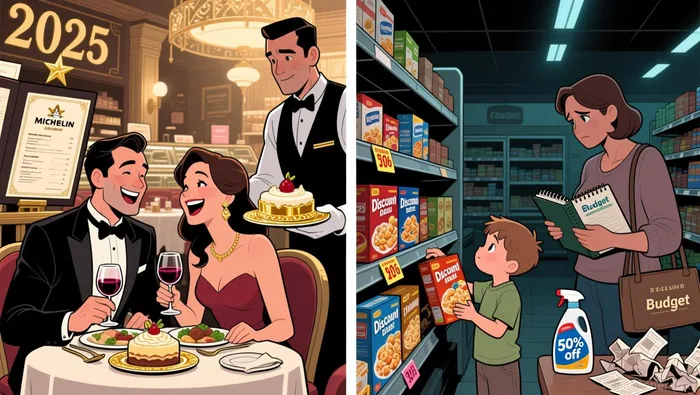
The U.S. consumer remains a paradoxical force in 2025's high-inflation landscape. While broader economic anxieties persist-evidenced by a nine-percentage-point decline in consumer sentiment in Q4 2025-spending patterns reveal a K-shaped recovery. Higher-income households continue to drive growth, splurging on discretionary items like travel and dining, while middle- and lower-income consumers tighten belts, prioritizing essentials. For investors, this divergence underscores the need to identify sectors and strategies that align with the evolving dynamics of resilience and vulnerability.
K-Shaped Dynamics: Discretionary Spending and the "Lipstick Effect"
The so-called "lipstick effect"-where consumers prioritize small indulgences during economic uncertainty-remains relevant, albeit unevenly distributed. In Q4 2025, 39% of consumers still planned to splurge, though this figure dropped 12 percentage points year-over-year. Notably, high-income Gen Z emerged as a standout cohort, with 76% intending to splurge, suggesting a generational shift in spending behavior. This trend positions consumer discretionary sectors-particularly travel, luxury goods, and dining-as opportunities for growth, provided investors targetTGT-- companies with pricing power and brand loyalty.
However, the sector's performance is not uniform. Retailers face a dual challenge: rising inflation (3.0% in September 2025) and shifting consumer priorities. Executives project mid-single-digit growth for 2025, driven by omnichannel innovations and AI-driven demand forecasting. For example, WalmartWMT-- and Target have leveraged automation to optimize inventory, mitigating margin pressures. Investors should favor companies with agile supply chains and digital-first strategies, as these traits correlate with resilience in a value-conscious market.
Consumer Staples: The Bedrock of Stability
While discretionary spending fluctuates, consumer staples remain a defensive anchor. Schwab's "Marketperform" rating for the sector in 2025 highlights its inelastic demand for essentials like food and household goods. ETFs such as the Consumer Staples Select Sector SPDR (XLP) and Vanguard Consumer Staples ETF (VDC) offer diversified exposure to this stability. However, profit margins face headwinds: rising input costs and limited pricing power could erode returns unless companies pass expenses to consumers.
The sector's performance is further bolstered by Federal Reserve rate cuts and healthy consumer balance sheets. Yet, trade policy risks-such as tariffs on imported goods-could disrupt margins for global suppliers. Investors should prioritize companies with localized sourcing or strong ESG credentials, as these factors reduce vulnerability to geopolitical shocks.
Inflation-Hedging Strategies: Energy, REITs, and Beyond
For investors seeking to combat inflation, energy and real estate sectors stand out. Energy stocks, which outperformed inflation 74% of the time historically, remain a compelling play as oil and gas prices remain tied to inflation indices. Similarly, equity REITs offer partial inflation protection through rent escalations and property value appreciation. These sectors align with structural growth drivers like AI adoption and automation, which enhance operational efficiency.
Conversely, utilities and consumer discretionary sectors lag. Utilities struggle to pass cost increases to consumers due to regulatory constraints, while discretionary spending faces headwinds from lower-income household stress. Financials, meanwhile, present a mixed picture: elevated interest rates benefit banks and insurers, but a weakening labor market could dampen returns.
Gold and inflation-protected securities (TIPS) also gain traction as diversifiers, though their role is more tactical than strategic. For a balanced approach, investors might allocate 10–15% of portfolios to hard assets while maintaining core exposure to resilient sectors like staples and energy.
Conclusion: Navigating the K-Shaped Economy
The U.S. consumer's resilience in 2025 is a tale of two markets. While higher-income households fuel growth in discretionary and high-margin sectors, lower-income consumers anchor demand in staples and essentials. For investors, the path forward lies in selectivity:
1. Target K-shaped winners: Overweight discretionary stocks with pricing power (e.g., luxury brands) and staples with stable cash flows.
2. Adopt inflation-hedging allocations: Energy, REITs, and gold provide diversification in a volatile environment.
3. Monitor macro risks: Tariffs, trade policy shifts, and labor market softness could disrupt sector dynamics.
As the Federal Reserve navigates rate cuts and inflation lingers near 3.0%, the key to outperforming lies in aligning portfolios with the dual forces of resilience and adaptation.





Comentarios
Aún no hay comentarios