
Resilient Business Models in Turbulent Markets: Lessons from Chung Ju-Yung and Hyundai's Unwavering Growth Strategy
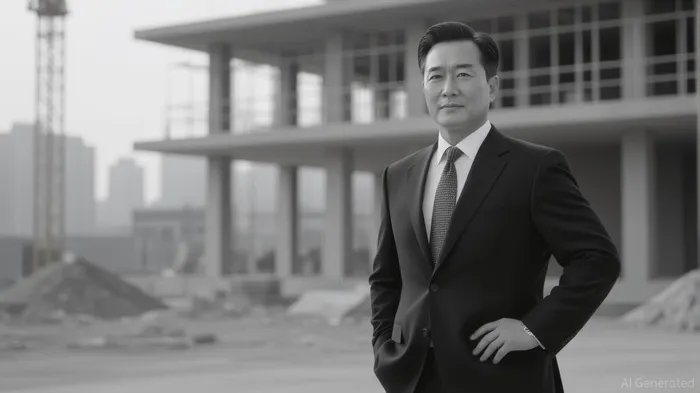
In today's volatile markets, where inflation, interest rates, and geopolitical tensions create headwinds for investors, the question isn't just which companies to buy—it's how to identify those built to endure. The answer lies in the playbook of Chung Ju-Yung, the visionary founder of Hyundai, whose crisis-driven leadership, frugality, and relentless execution turned a post-war South Korea startup into a global industrial titan. His strategies, honed during the 1997 Asian Financial Crisis, remain a blueprint for modern enterprises in high-pressure sectors like enterprise software and construction. Let's break down how these principles translate to today's resilient companies—and why investors should take notice.
The Chung Ju-Yung Playbook: Crisis as Catalyst
Chung Ju-Yung's philosophy was simple: treat downturns as opportunities to innovate, not obstacles. During the 1997 crisis, while competitors slashed workforces, he doubled down on retaining talent, believing that institutional knowledge and morale were non-negotiable assets. He also imposed strict cost discipline—employees reused paper, executives lived modestly, and capital was funneled into R&D and infrastructure. This frugality wasn't austerity; it was a calculated reinvestment in the future. For example, his $8 million bet on heavy machinery in 1965 became the backbone of Hyundai's global expansion.
The lesson? Resilience isn't about avoiding pain—it's about channeling it into long-term value creation.
Modern-Day Resilience: Founders, Frugality, and Execution
Today's volatile markets demand leaders who mirror Chung's ethos. Let's spotlight five companies in enterprise software and construction that exemplify this model:
1. Verra Mobility (VRRM): Scaling the Autonomous Future
Led by founder Todd Pedersen, Verra MobilityVRRM-- is a prime example of crisis-driven execution. Despite carrying significant debt, the company uses leverage strategically to fund innovation in autonomous vehicle infrastructure. With a projected 46.77% annual earnings growth and an intrinsic value of $48.35 (vs. its current $25.01), Verra's model is a hybrid of frugality and bold bets. Pedersen's track record (scaling Vivint to $3 billion) and the company's alignment with the autonomous vehicle revolution make it a standout.
2. Dell Technologies (DELL): Direct-to-Customer Efficiency
Dell's direct-to-customer model, pioneered by Michael DellDELL--, is a masterclass in lean operations. The company's 29% operating margin and $6.2 billion in 2024 free cash flow highlight its ability to minimize overhead while maximizing responsiveness. By partnering with NVIDIANVDA-- and AMDAMD-- in AI infrastructure, Dell is positioning itself to capitalize on the next wave of enterprise software demand.
3. Fluor Corporation (FLR): Engineering Resilience
Fluor, a construction and engineering giant, mirrors Chung's operational rigor. Trading at a 13% discount to fair value, FluorFLR-- excels in executing complex projects under tight timelines. Its investments in NuScale PowerSMR-- and clean energy projects align with global sustainability trends, ensuring relevance in a shifting market.
4. Associated Banc-Corp (ASB): The Frugal Banker
While not a construction or software firm, ASB's 40.5% annual earnings growth and 49.5% discount to fair value make it a critical enabler for resilient enterprises. Its low-overhead community banking model and profit-sharing culture echo Chung's people-centric approach, providing a stable financial backbone for high-pressure industries.
5. AppLovin Corporation (APP): AI-Driven Innovation
AppLovin's Axon 2 machine learning engine is a testament to frugality and execution. By shifting to a software-centric model, the company has boosted margins and positioned itself to capitalize on AI-driven enterprise solutions. Founder Adam Foroughi's long-term vision ensures the company stays ahead of market cycles.
The Resilient Investor's Checklist
For investors, the key is to identify companies that:
- Prioritize founder-led governance (long-term vision over short-term gains).
- Balance frugality with innovation (cutting costs without sacrificing R&D).
- Excel in execution (delivering projects under pressure).
- Diversify strategically (entering emerging sectors ahead of the curve).
Hyundai's success under Chung Ju-Yung wasn't luck—it was a disciplined, crisis-tested strategy. Today's market demands the same rigor. Verra Mobility, Dell, Fluor, ASBASB--, and AppLovinAPP-- are not just surviving; they're building moats around their businesses.
Final Takeaway
In a world where volatility is the norm, the best investments are those that thrive in the storm. Look for companies that treat downturns as a chance to reinvent, invest in people and technology, and execute with precision. Chung Ju-Yung's legacy isn't just a historical footnote—it's a roadmap for the resilient enterprises of today.
Actionable Advice: Add Verra Mobility and Fluor to your watchlist for their crisis-driven execution. For a diversified bet, consider Dell and AppLovin's AI-focused strategies. And don't overlook Associated Banc-Corp—it's the unsung hero of enterprise resilience.
The market's next big winners won't be the loudest—they'll be the most prepared.







Comentarios
Aún no hay comentarios