
Resilient Business Models in Post-Election Norway: The Future of Wealth Tax and Its Impact on Equity Markets
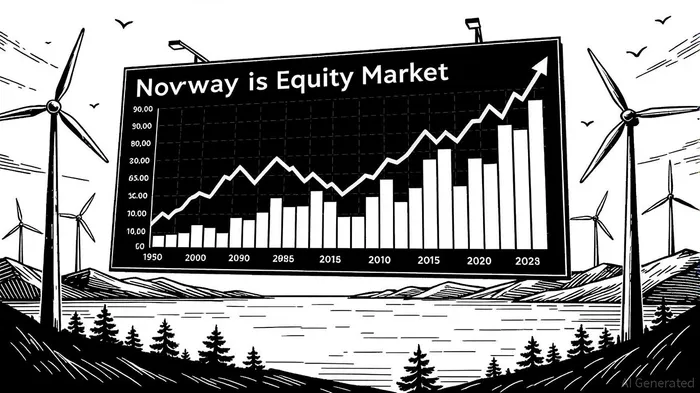
The 2025 Norwegian election has delivered a clear signal to global investors: stability in fiscal policy, particularly the preservation of the century-old wealth tax, will remain a cornerstone of the Nordic model. For markets accustomed to volatility in resource-rich economies, Norway's political landscape offers a rare blend of predictability and adaptability. The election outcome, which solidified the center-left bloc's dominance under Prime Minister Jonas Gahr Støre, has reaffirmed the government's commitment to maintaining the wealth tax—a policy that has long served as both a redistributive tool and a stabilizer for the welfare state.
Geopolitical Stability and Fiscal Policy: A Symbiotic Relationship
Norway's geopolitical position as a NATO member and Europe's top gas supplier has historically insulated it from the kind of economic shocks that plague less diversified economies. However, the 2025 election highlighted a critical tension: how to balance the demands of a high-welfare state with the need to attract capital in an era of global capital flight. The wealth tax, which imposes a 1.1% levy on net assets exceeding 1.76 million kroner (approximately $176,000), has become a lightning rod for this debate.
The center-left bloc, led by the Labour Party, has framed the wealth tax as a non-negotiable pillar of Norway's social contract. Their argument is pragmatic: scrapping the tax would cost the state 34 billion kroner annually, a sum critical for funding healthcare, education, and infrastructure. This stance aligns with broader global trends where high-income democracies are rethinking inequality in the wake of the pandemic and climate crisis. For investors, this means Norway's fiscal policy is unlikely to shift toward aggressive tax cuts, which could deter capital inflows but also reduce the risk of populist backlash against wealth concentration.
Conversely, the right-wing coalition's push to abolish the wealth tax—led by the Progress Party and supported by younger voters—reflects a growing global trend of challenging traditional welfare-state models. Yet, the election results suggest that Norwegian voters have opted for continuity over radical reform. This outcome reduces the likelihood of sudden policy shifts that could destabilize equity markets, particularly in sectors reliant on government contracts or public infrastructure spending.
Equity Market Implications: Capital Flows and Corporate Strategy
The preservation of the wealth tax has immediate implications for capital flows. Ultra-wealthy Norwegians, such as Kjell Inge Røkke, have previously moved assets to tax havens like Switzerland. A stable tax regime may mitigate such outflows, preserving liquidity in domestic equity markets. For foreign investors, this creates a paradox: while the wealth tax may deter some high-net-worth individuals, it also reinforces Norway's reputation as a country with a robust social safety net—a factor that can attract long-term institutional investors seeking stable returns.
Corporate strategy in Norway is also evolving. Energy companies861070--, for instance, must navigate a dual mandate: meeting global decarbonization goals while maintaining Norway's role as a key gas supplier to Europe. The government's emphasis on renewable energy—highlighted in the 2025 budget—suggests that firms investing in wind, solar, and hydrogen technologies will benefit from policy tailwinds. Conversely, oil and gas firms may face tighter regulatory scrutiny, even as the country continues to export fossil fuels.
Sovereign Wealth Fund and Global Capital Allocation
Norway's $2 trillion sovereign wealth fund (SWF) remains a linchpin of its fiscal strategy. The fund's controversial investments in Israel, particularly in companies linked to the Gaza conflict, have sparked debates about ethical investing. While the Labour-led government has resisted calls to divest, the SWF's global exposure—spanning equities, real estate, and infrastructure—provides a buffer against domestic economic shocks. For investors, the SWF's stability is a key factor in assessing Norway's long-term creditworthiness.
Investment Advice: Navigating the Nordic Model
For investors, the 2025 election underscores the importance of aligning with Norway's long-term fiscal and environmental priorities. Here are three strategic considerations:
- Sector Rotation Toward Renewables: With the government prioritizing green energy, equities in wind and hydrogen technology—such as Orsted and Equinor—are likely to outperform.
- Defensive Plays in Public Infrastructure: The continued funding of welfare programs will sustain demand for construction and healthcare services861198--, making these sectors attractive for conservative investors.
- Currency Hedging: The Norwegian krone's resilience against inflationary pressures (despite a 3.3% CPI rise) suggests that hedging against currency risk may be less critical than in more volatile economies.
Conclusion: A Model for Resilience
Norway's post-election trajectory demonstrates that even in a resource-rich economy, fiscal discipline and social equity can coexist. The wealth tax, while contentious, has proven to be a stabilizing force in a world increasingly defined by inequality and geopolitical uncertainty. For investors, the lesson is clear: resilience in business models is not just about adapting to change but about anchoring strategies in policies that endure.
In the end, Norway's election outcome is a reminder that the Nordic model—rooted in stability, innovation, and social cohesion—remains a compelling case study for investors seeking to navigate the complexities of the 21st-century global economy.







Comentarios
Aún no hay comentarios