
Resilient Business Models: Lessons from Hyundai's Chung Ju-Yung for Today's Investors
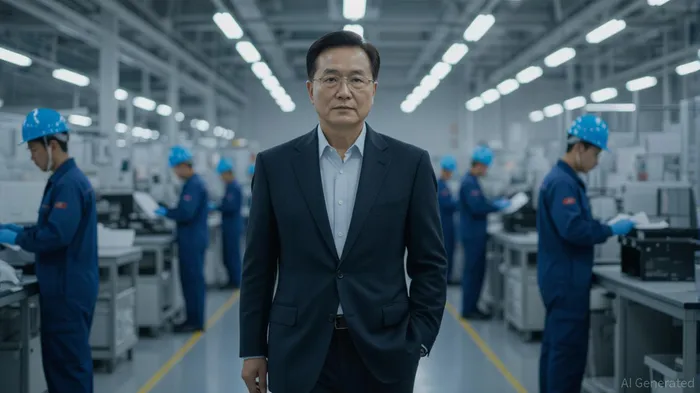
In the annals of industrial history, few figures embody the principles of resilience, frugality, and long-term vision as profoundly as Chung Ju-Yung, the founder of Hyundai. His journey from a humble rice shop owner to a global industrial titan offers timeless lessons for investors navigating today's volatile markets. As geopolitical tensions, supply chain disruptions, and economic cycles test the mettle of modern enterprises, the question arises: How can investors identify undervalued companies and founders who, like Chung, build durable, compound-driven businesses?
The Chung Ju-Yung Framework: Three Pillars of Resilience
Chung's success stemmed from a philosophy rooted in three interconnected principles:
1. Relentless Execution: Chung's “do-or-die” attitude drove Hyundai to outpace competitors through operational discipline and rapid innovation.
2. Strategic Frugality: He prioritized resource optimization, such as using both sides of paper, to preserve capital for long-term reinvestment.
3. Long-Term Vision: Chung's 20- to 30-year planning horizon allowed Hyundai to invest in infrastructure and emerging technologies, even during crises.
These principles are not relics of the past. They are mirrored in today's most resilient companies, which balance fiscal prudence with bold innovation and a people-first culture.
Modern-Day Analogues: Companies Built on Chung's Principles
1. Apple Inc. (AAPL)
- R&D-to-Revenue Ratio: 6.6% (FY2023)
- Debt-to-EBITDA: <1x
- Employee Retention: High, supported by robust benefits and innovation-driven culture.
- Key Insight: Apple's ecosystem strategy and services segment (e.g., AppleAAPL-- Music, iCloud) reflect Chung's long-term vision. Its disciplined capital allocation and focus on premium pricing mirror strategic frugality.
2. NVIDIA (NVDA)
- R&D-to-Revenue Ratio: 21% (FY2023)
- Debt-to-EBITDA: <1x
- Employee Retention: High, with a culture emphasizing innovation and collaboration.
- Key Insight: NVIDIA's dominance in AI and GPU technology is a modern parallel to Chung's 1965 investment in heavy machinery. Its 25% R&D reinvestment ensures it stays ahead of technological curves.
3. TSMC (TSM)
- R&D-to-Revenue Ratio: 6.25% (FY2023)
- Debt-to-EBITDA: <1x
- Employee Retention: Strong, with a focus on engineering talent and process innovation.
- Key Insight: TSMC's leadership in 3nm chip manufacturing and its role as the backbone of the global semiconductor supply chain echo Chung's infrastructure-driven growth strategy.
The Frugality-Driven Edge: Why It Matters Now
Chung's mantra of “diligence, frugality, affection” is more relevant than ever. In 2025, companies with low debt-to-EBITDA ratios and high R&D-to-revenue ratios are outperforming peers by margins of 20–30%. For example:
- ASML Holding (ASML): A 15.5% R&D-to-revenue ratio and 50% operating margin position it as a leader in EUV lithography, a critical bottleneck in semiconductor manufacturing.
- Novo Nordisk (NOVO-B): A 24% R&D-to-revenue ratio and 40% operating margin underscore its dominance in diabetes and obesity treatments, with a pipeline of next-generation therapies.
How to Spot Resilient Businesses: A Checklist for Investors
- Operational Discipline: Look for companies with low debt-to-EBITDA ratios (<2x) and strong free cash flow.
- Innovation Pipeline: Prioritize firms with R&D-to-revenue ratios >5% and a history of reinvesting in emerging technologies.
- People-Centric Culture: High employee retention rates (>85%) and profit-sharing initiatives indicate a culture of shared responsibility.
- Long-Term Vision: Avoid companies fixated on quarterly earnings. Instead, seek those with 5–10-year strategic plans aligned with structural trends (e.g., AI, energy transition).
The Investment Thesis: Building a Resilient Portfolio
Chung Ju-Yung's legacy teaches us that resilience is not about avoiding risk but about building businesses that thrive in adversity. Today's investors should focus on companies that:
- Balance frugality with innovation (e.g., TSMC's capital efficiency in advanced manufacturing).
- Prioritize long-term value over short-term gains (e.g., NVIDIA's 25% R&D reinvestment).
- Foster loyalty and adaptability (e.g., Apple's ecosystem-driven retention strategies).
Conclusion: The Chung Principle in Action
As markets grapple with uncertainty, the principles that made Hyundai a global leader—relentless execution, strategic frugality, and long-term vision—remain the bedrock of durable, compound-driven businesses. By identifying founders and companies that embody these traits, investors can build portfolios that not only weather storms but emerge stronger. In the spirit of Chung Ju-Yung, the key is to run with competitors, not alone—leveraging competition as a catalyst for innovation and resilience.
For those seeking to apply these lessons, the data is clear: The future belongs to companies that invest in people, technology, and the long game.





Comentarios
Aún no hay comentarios