
Resilient Business Leadership in Turbulent Times: Lessons from Chung Ju-Yung and Hyundai's Rise
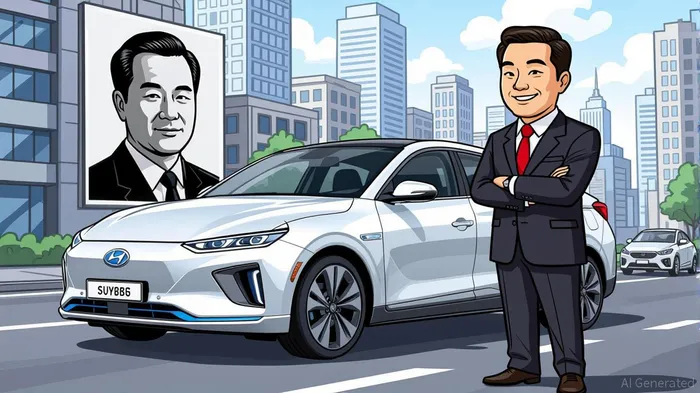
In the annals of business history, few leaders have demonstrated the blend of grit, foresight, and cultural discipline that brought to the Hyundai Group. His leadership during South Korea's post-war industrialization and subsequent economic crises offers a masterclass in building resilient enterprises. For investors seeking to identify companies that thrive in volatile markets, the story of Hyundai and its founder reveals a blueprint rooted in three pillars: unwavering long-term vision, operational rigor, and a people-centric culture.
The Power of Long-Term Vision in Crisis
Chung Ju-Yung's most enduring legacy lies in his refusal to compromise on innovation during downturns. During the , while competitors slashed R&D budgets, . This commitment to innovation positioned Hyundai as a pioneer in hydrogen and electric vehicle (EV) technologies, . By 2025, , a testament to the compounding power of long-term bets.
The 2008 global financial crisis further tested Chung's resolve. While automakers like GMGM-- and FordF-- faced bankruptcy, Hyundai introduced a 10-year warranty—a bold move that rebuilt consumer trust and differentiated the brand. This strategy paid off: Hyundai's U.S. , . For investors, this underscores the value of leaders who prioritize customer loyalty and brand equity during crises.
Strategic Frugality as a Competitive Moat
Chung's philosophy of “strategic frugality” was not about austerity but about aligning cost discipline with long-term goals. During the , executives at Hyundai shared meals with workers and adopted practices like double-sided paper use. These measures preserved cash flow without stifling innovation, enabling the company to reinvest in hydrogen and AI-driven manufacturing. By 2025, .
This approach contrasts sharply with speculative models that prioritize short-term gains. For example, Tesla's stock price has swung wildly over the past three years, reflecting its reliance on market sentiment rather than disciplined capital allocation.
People-Centric Culture: The Human Capital Edge
Chung's was a cornerstone of Hyundai's resilience. He implemented profit-sharing schemes, open communication channels, and treated employees as partners. By the 1970s, , directly tied to employee engagement. This culture of loyalty and productivity became a competitive moat, reflected in Hyundai's consistently high ESG scores and employee retention rates.
For investors, this highlights a critical metric: companies with strong ESG profiles and engaged workforces tend to outperform in volatile markets. , a direct result of Chung's legacy.
as a Hedge Against Volatility
Chung's diversification strategy—expanding into shipbuilding, construction, and infrastructure—shielded Hyundai from sector-specific downturns. By 2000, , a feat mirrored by modern conglomerates like General Electric. This cross-industry risk mitigation ensured that no single market fluctuation could derail the company's trajectory.
for the Modern Era
The Hyundai case offers actionable insights for investors:
1. Seek Founders with Adversity-Tested Leadership: Look for companies led by founders who have navigated multiple crises without compromising innovation.
2. Prioritize R&D and ESG Metrics: A consistent R&D-to-revenue ratio (6% for Hyundai) and high ESG scores are indicators of long-term resilience.
3. Value Strategic Frugality Over Speculation: Companies that reinvest savings into innovation during downturns, rather than cutting R&D, are more likely to outperform.
In today's volatile markets, the principles that guided Chung Ju-Yung remain as relevant as ever. By identifying companies with similar leadership qualities—unwavering vision, operational discipline, and a people-centric culture—investors can uncover undervalued enterprises poised to thrive through uncertainty. Hyundai's journey from a post-war startup to a global industrial861072-- powerhouse is not just a story of resilience; it's a roadmap for building enduring value in an unpredictable world.
For those willing to look beyond short-term noise, the lessons of Chung Ju-Yung and Hyundai offer a compelling case for investing in adversity-tested leadership.





Comentarios
Aún no hay comentarios