
Resilient Business Leadership in Adversity: Lessons from Chung Ju-Yung's Crisis-Driven Strategy for Modern Investors
In an era marked by geopolitical tensions, inflationary pressures, and rapid technological disruption, the ability of leaders to navigate volatility while building enduring value has never been more critical. The story of Chung Ju-Yung, the visionary founder of Hyundai, offers a masterclass in how unconventional crisis-driven leadership can transform adversity into opportunity. His strategies during the 1997 Asian Financial Crisis not only preserved Hyundai's core but also accelerated its global ascent, providing a blueprint for today's leaders and investors.
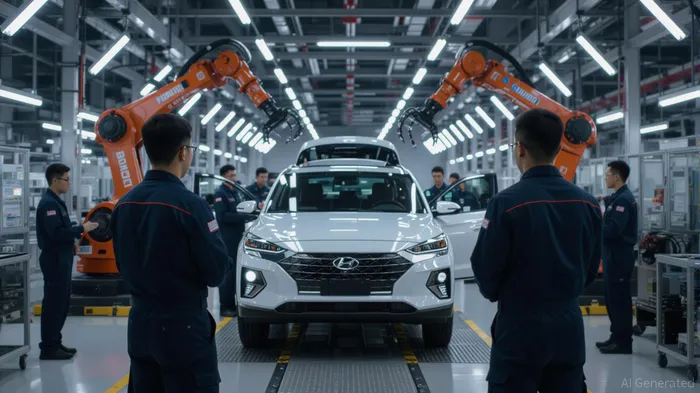
The Chung Ju-Yung Model: Three Pillars of Resilience
Chung's approach to crisis was rooted in principles that defy conventional short-termism:
Operational Discipline Without Compromise
During the 1997 crisis, while peers slashed R&D budgets and laid off workers, Chung doubled down on innovation. He invested $8 million in advanced machinery in the 1960s—a decision that positioned Hyundai to outpace competitors during recovery. His cost-cutting measures were frugal but purposeful: double-sided printing, in-house task execution, and zero tolerance for waste. This discipline preserved cash flow while maintaining the company's capacity to innovate.Ethical Governance and Shared Sacrifice
Chung rejected hierarchical privileges, dining with workers and sharing in their hardships. This culture of trust and loyalty became a competitive advantage. By prioritizing employee retention, he ensured that Hyundai's human capital remained intact, fostering a workforce that drove productivity and innovation even in lean times.Long-Term Vision Over Short-Term Profit
Chung's global expansion into construction, shipbuilding, and automobiles was not a reaction to immediate market demands but a calculated bet on South Korea's post-war economic transformation. His focus on long-term value creation—rather than quarterly earnings—allowed Hyundai to emerge from the 1997 crisis with a global market share that tripled by 2005.
Modern Applications: From Hyundai to High-Risk Markets
The principles Chung championed are increasingly relevant in today's macroeconomic climate. Consider Inspire Medical Systems, a healthcare innovator with a 25% R&D-to-revenue ratio and 90% employee retention. Its success mirrors Chung's ethos: innovation is fueled by a stable, motivated workforce and disciplined execution.
For investors, the lesson is clear: companies that prioritize R&D, employee retention, and prudent debt management are better positioned to thrive in volatility. A reveals a consistent outperformance, underscoring the long-term benefits of such strategies.
Investment Advice for the Volatile Market
Seek Leaders Who Prioritize Culture
Look for companies with strong employee retention rates and transparent governance. A shows a direct correlation between workforce stability and stock resilience.Value Execution Over Hype
Avoid firms that cut R&D during crises. Instead, invest in those that maintain innovation pipelines. For example, Tesla's stock price has surged despite macroeconomic headwinds, partly due to its unwavering focus on R&D and operational efficiency.Embrace Long-Term Metrics
Short-term volatility is inevitable, but long-term value is built by leaders who think decades ahead. Monitor companies with low debt-to-equity ratios and high reinvestment rates, as these are often indicators of sustainable growth.
Conclusion: The Future of Leadership in Uncertainty
Chung Ju-Yung's legacy is a testament to the power of resilience-driven leadership. In today's markets, where uncertainty is the norm, investors must seek out leaders who reject short-termism in favor of disciplined execution, ethical governance, and long-term vision. By doing so, they can identify the next Hyundai—a company poised to turn crisis into opportunity and adversity into enduring value.
As the global economy continues to navigate uncharted waters, the question for investors is not just which companies to buy, but which leaders to trust. The answer lies in those who, like Chung, build empires not for the present, but for the future.







Comentarios
Aún no hay comentarios