
The Resilience and Risks of the Trump-Driven U.S. Economy in 2026
The U.S. economy in 2026 stands at a crossroads, shaped by the enduring influence of Donald Trump's economic policies. While the private sector has shown resilience-adding 687,000 jobs since January 2025-systemic risks loom large, particularly from aggressive tariff policies, fiscal imbalances, and environmental deregulation. For investors, the question is whether this model of U.S. capitalism offers a compelling long-term investment case or signals growing instability.
Private Sector Job Growth: A Mixed Picture
The Trump administration has touted robust private-sector job creation, with 64,000 jobs added in November 2025 alone, bringing the year-to-date total to 687,000. However, this growth is uneven. While construction and professional services have thrived, sectors like manufacturing and transportation have struggled under the weight of tariffs and automation. 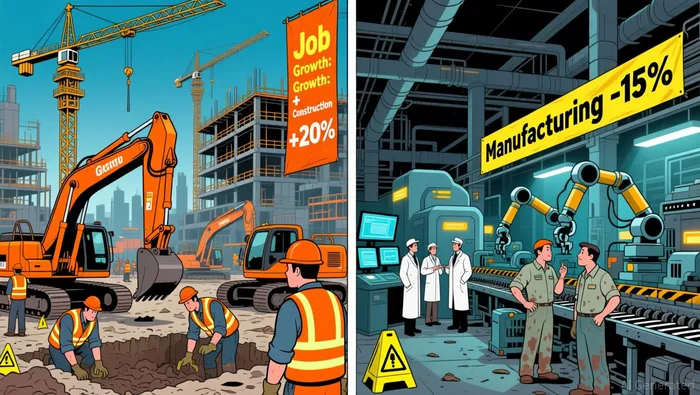 The Center for American Progress notes that job losses among non-college-educated workers and stagnant wage growth in manufacturing highlight the fragility of this expansion. Meanwhile, the unemployment rate rose to 4.6% in November 2025, signaling a broader labor market slowdown.
The White House attributes these gains to Trump's pro-growth policies, including deregulation and tax cuts, but critics argue that the focus on native-born employment overlooks structural challenges. For instance, natural disasters in Q1 2025 erased nearly 100,000 jobs, and real private-sector income declined due to reduced work hours. These trends suggest that while the private sector remains a growth engine, its sustainability hinges on addressing sector-specific vulnerabilities.
Tariffs and Manufacturing: A Double-Edged Sword
Trump's tariff policies, designed to "supercharge" domestic manufacturing, have delivered mixed results. While the administration claims these measures protect U.S. industries, data from the Council on Economic Policies (CEPR) reveals a 2.7% net reduction in manufacturing employment for industries exposed to high tariffs. Companies like John Deere have cited tariff-related costs as a factor in layoffs, and retaliatory measures from trading partners have disrupted supply chains.
High tariffs have also driven firms toward automation, reducing reliance on low-skill labor. This shift has benefited high-value-added sectors like computer and electronics manufacturing but has not translated into broad-based job growth according to Deloitte analysis. For investors, the implications are clear: while traditional energy and capital-intensive industries may see short-term gains, the long-term outlook for manufacturing employment remains uncertain.
Government Interventions: Deregulation, Tax Cuts, and Fiscal Risks
Trump's second term has deepened the trend of deregulation and tax cuts, policies that historically boost business confidence but introduce systemic risks. The 2017 Tax Cuts and Jobs Act (TCJA) initially spurred stock market growth, but the administration's 2025 fiscal proposals-such as the "Big Beautiful Bill"-threaten to widen the U.S. structural fiscal imbalance. According to the Tax Foundation, Trump's tariffs could reduce U.S. GDP by 0.8% over the next decade, while households face annual costs of $1,300–$2,100 due to inflationary pressures according to Plus500 analysis.
Environmental deregulation further complicates the picture. The administration's rollback of climate protections and methane emission controls has favored traditional energy sectors but undermined clean energy growth according to Acton Climate tracking. While this may provide short-term boosts to oil and gas equities, long-term risks-such as climate-related disasters and regulatory shifts under future administrations-could erode investor confidence.
Implications for Equities and Commodities
The Trump-driven economy presents divergent opportunities and risks for equities and commodities. Deregulation and tax cuts are likely to benefit energy, finance, and infrastructure sectors, as noted by Wells Fargo's Investment Institute. However, sectors reliant on global supply chains-such as automotive and electronics-face headwinds from tariff-driven volatility. The April 2025 tariff announcements, for instance, triggered a historic two-day $6 trillion drop in U.S. equities according to Plus500 analysis.
Commodities markets are similarly polarized. The administration's focus on energy independence has bolstered oil and gas prices, but climate-related disruptions and policy uncertainty could destabilize these gains. Meanwhile, the trade deficit's improvement-driven by increased exports and moderated imports-offers a temporary tailwind for commodities like agricultural products according to the Bureau of Economic Analysis.
Conclusion: Balancing Resilience and Risk
The Trump-driven U.S. economy in 2026 reflects a paradox: resilience in private-sector job growth and energy markets, juxtaposed with systemic risks from fiscal imbalances, tariff-driven volatility, and environmental deregulation. For investors, the key lies in hedging against sector-specific vulnerabilities while capitalizing on short-term gains in energy and infrastructure. However, the long-term sustainability of this model remains questionable, particularly as global supply chains and climate challenges intensify.
As the Federal Reserve contemplates rate cuts to support growth and the administration navigates legal challenges to its tariffs, investors must remain vigilant. The path forward will require balancing Trump's pro-growth agenda with the realities of a rapidly evolving global economy.







Comentarios
Aún no hay comentarios