
The Resilience and Reorientation of the Russian Stock Market in a Geopolitical Crossroads
The Russian stock market, once a casualty of geopolitical isolation, has emerged as a case study in economic reorientation. Amid the rubble of Western sanctions and the collapse of traditional trade routes, Moscow has recalibrated its economic strategy, pivoting toward strategic sectors and forging new alliances in the Global South. For investors, the question is no longer whether Russia can endure but how it might thrive in a fractured global order.
Strategic Sectors: Industry, Technology, and Infrastructure as Pillars of Growth
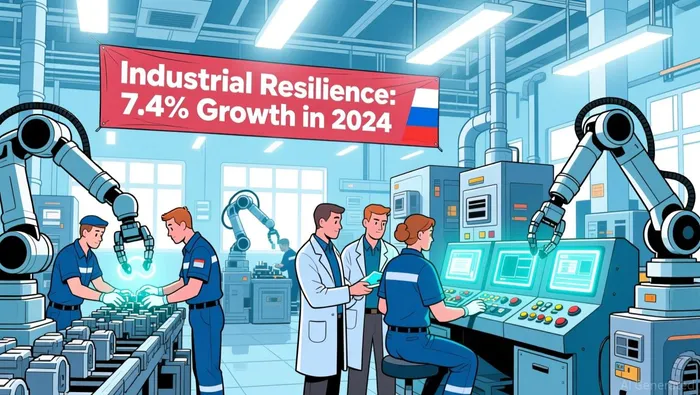
Russia's industrial sector has shown surprising resilience. According to a report by Russia Calling!, investment in industry rose by 6.7% in 2022, 9.8% in 2023, and 7.4% in 2024, driven by state-backed modernization efforts and a focus on self-sufficiency. The government's emphasis on replacing foreign machinery with domestic alternatives-particularly in energy and manufacturing-has spurred demand for local producers. For instance, the VEB Corporation, Russia's state development bank, has launched initiatives to fund industrial projects, aiming to create a unified investment ecosystem that blends public and private capital.
 Technology, though lagging, is a priority. The Russian government has allocated resources to bolster semiconductor production and artificial intelligence, recognizing that technological sovereignty is critical to reducing dependence on Western imports. While progress is uneven, partnerships with China have accelerated access to critical components. By October 2025, Russian LNG exports to China surged by 76.7%, underscoring how energy trade is funding technological overhauls.
Infrastructure remains a cornerstone of growth. With corporate borrowing costs rising, the state has stepped in to finance projects, from modernizing rail networks to expanding digital connectivity. A Bloomberg analysis notes that Russia's infrastructure spending has increased by 12% annually since 2023, supported by domestic equity markets and long-term savings programs. This focus on physical and digital infrastructure is not just about economic growth but about fortifying a self-contained economic ecosystem.
Geopolitical Isolation and the Rise of the Global South
The sanctions-induced exodus from Western markets has forced Russia to reorient its economic gaze eastward. Bilateral trade with China hit a record $254 billion in 2024, with energy exports forming the backbone of this relationship. China's appetite for Russian oil, gas, and raw materials has offset losses in European markets, while Moscow's pivot to India has diversified its export destinations. By 2025, India had become Russia's third-largest trading partner, importing discounted oil that it refined and exported to global markets, circumventing Western price caps.
This realignment is not without friction. The Russia-India-China (RIC) trilateral dialogue, while symbolically significant, faces structural challenges. A Recorded Future report highlights unresolved tensions between India and China, including border disputes and divergent economic priorities, which limit the formation of a cohesive bloc. Yet, shared antipathy toward U.S. sanctions has created a pragmatic alignment. For example, when the U.S. imposed a 50% tariff on Indian exports in August 2025, India and Russia deepened their energy ties, with New Delhi importing Russian oil at prices 30% below global benchmarks.
The Financial Reengineering of a Sanctioned Economy
Russia's financial sector has undergone a quiet revolution. By replacing nearly half of its export payments with the ruble and settling trade with key partners in national currencies, Moscow has reduced its vulnerability to Western financial systems. The Central Bank of Russia has also prioritized deleveraging, slashing external debt in the real sector and generating profits for the banking system.
Domestic equity markets, though volatile, are gaining traction. The MOEX Russia Index, which fell to year-to-date lows in October 2025 amid new sanctions, has shown resilience as the government pushes corporate governance reforms and IPOs. According to a CSIS analysis, these reforms aim to attract both domestic savings and foreign capital from non-Western investors, particularly in Asia.
Risks and Opportunities in a Fractured World
For investors, the Russian stock market remains a high-risk, high-reward proposition. While strategic sectors like energy and infrastructure offer growth potential, corporate profitability is constrained by rising borrowing costs and geopolitical uncertainty. The EU's looming restrictions on Russian LNG could further pressure energy stocks, as highlighted by Trading Economics.
Yet, the broader trend is clear: Russia is adapting. By leveraging its energy endowments, deepening ties with the Global South, and prioritizing technological self-reliance, Moscow is building an economic model that thrives in a multipolar world. For those willing to navigate the risks, the Russian stock market may yet prove to be a hidden gem in a fractured global order.







Comentarios
Aún no hay comentarios