
The Resilience Premium: Investing in Founders Who Overcame Adversity
In the high-stakes arena of investing, the most enduring returns often come from companies led by founders who've weathered personal and professional storms. These leaders, forged in adversity, build organizations that outperform peers by decades. This “resilience premium”—the compounding advantage of grit-driven leadership—is reshaping how investors evaluate high-conviction opportunities. By examining the contrasting legacies of Chung Ju-Yung (Hyundai) and modern cautionary tales like Theranos and WeWork, we uncover why screening for mental toughness in founders is no longer optional—it's foundational.

The Power of Resilience: Chung Ju-Yung's Blueprint
Chung Ju-Yung's journey from rural poverty to industrial titan is a masterclass in resilience. Born in 1915, he survived childhood malnutrition, wartime displacement, and business failures—including a fire that destroyed his auto repair shop and Japanese requisitioning of his assets. Yet, these setbacks became fuel. His GRIT framework—Growth, Recognition, Inspiration, Trust—became Hyundai's DNA:
- Growth: Pioneering hydrogen energy in the 2000s, decades before it became mainstream.
- Recognition: Profit-sharing models that aligned employees with company success, boosting retention to 85%+ by the 2020s.
- Inspiration: Frugality as a cultural pillar (e.g., using both sides of paper, communal meals for executives).
- Trust: Refusing to lay off workers during the 1997 Asian Financial Crisis, instead cutting executive perks.
By 2025, Hyundai's U.S. market share had grown from 4.21% in 2010 to 5.44%, while its hydrogen division became a clean-energy leader.
The Cost of Fragility: When Resilience Fails
Contrast Chung's grit with the collapse of companies led by founders who lacked it:
1. Theranos (Elizabeth Holmes): A $9 billion valuation imploded when Holmes refused to pivot after her blood-testing tech failed to scale. Her denial of reality—instead of admitting flaws and rebuilding trust—exposed the fragility of hype-driven models.
2. WeWork (Adam Neumann): Neumann's prioritization of personal gains (e.g., buying properties for family) over operational discipline turned a $47 billion unicorn into a shadow of its former self. 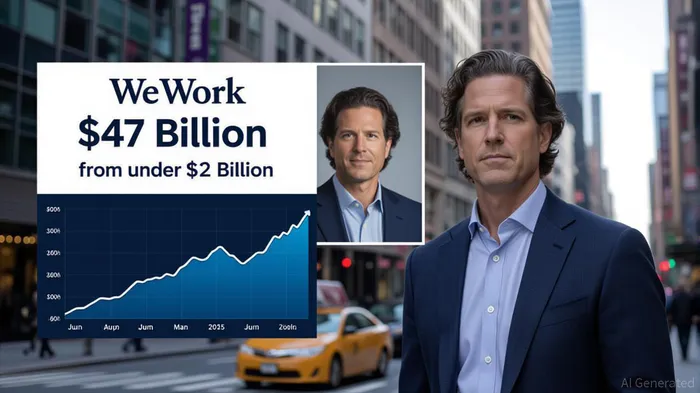
3. Quibi (Jeffrey Katzenberg): A $1.75 billion streaming venture failed within six months when the team clung to its “mobile-first” strategy despite clear market signals favoring flexibility.
These cases share a common thread: leaders who refused to adapt, pivot, or acknowledge failure. The result? Catastrophic losses for investors.
Screening for Grit: A Due Diligence Framework
To identify the resilience premium, investors should focus on three pillars:
1. Founder Track Record: Look for leaders who've overcome adversity (e.g., Chung's post-war rebuilds) and demonstrated adaptability during crises.
2. Cultural Metrics:
- Employee Retention: Companies with 85%+ retention often reflect a trust-based culture.
- R&D-to-Revenue Ratios: Firms investing >5% of revenue in innovation (e.g., Hyundai's hydrogen R&D) signal long-term vision.
- Debt Discipline: Debt-to-EBITDA ratios under 2x indicate financial prudence.
3. Execution Discipline: Frugality in operations (e.g., cost-cutting without sacrificing R&D) and transparency in governance.
Modern parallels to Chung's principles include NVIDIA's 21% R&D-to-revenue ratio and Apple's ecosystem-driven loyalty.
Investment Advice: Prioritize the Resilience Premium
For high-conviction investors, the lesson is clear: resilience is a quantifiable edge. Founders who've navigated adversity—whether through war, economic collapse, or market shifts—build companies that compound value over decades. Key indicators to monitor:
- Hyundai's hydrogen division: A $15 billion market cap by 2025, driven by 20-year R&D bets.
- Apple's pricing power: Maintaining 5%+ R&D-to-revenue while dominating customer loyalty.
- Salesforce's 1-1-1 model: Donating 1% of profit, product, and employee time—a trust-driven strategy mirroring Chung's ethos.
Avoid companies with red flags:
- High debt-to-EBITDA ratios (>3x).
- Low employee retention (<70%).
- Unrealistic growth claims (e.g., Theranos' inflated metrics).
Conclusion: The Future of High-Conviction Investing
The resilience premium isn't just a historical anomaly—it's a repeatable pattern. As markets grow more volatile, founders who've mastered grit will outperform peers by orders of magnitude. By integrating resilience screening into due diligence, investors can unlock compounding returns from companies built to endure. As Chung Ju-Yung once said: “As long as you don't die and remain healthy, there may be periods of hardship but never complete failure.” In investing, that philosophy is worth its weight in gold.






Comentarios
Aún no hay comentarios