
The Resilience Premium in Founders and Markets: Lessons from Chung Ju-Yung and the Bitcoin Volatility Inflection Point
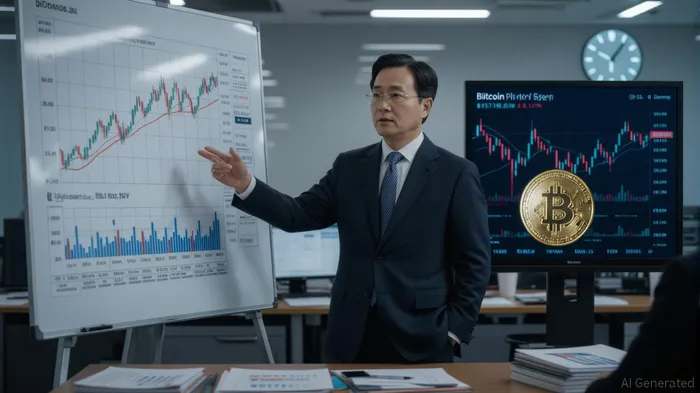
In the volatile theater of markets and entrepreneurship, resilience is not just a trait—it's a premium. Founders like Chung Ju-Yung, who transformed Hyundai from a post-war scrapyard into a global industrial empire, and the BitcoinBTC-- market, which has weathered crashes and regulatory storms to emerge stronger, offer a blueprint for identifying undervalued assets. By dissecting their strategies and behaviors, investors can uncover opportunities where others see risk.
The Chung Ju-Yung Framework: Resilience as a Strategic Asset
Chung Ju-Yung's leadership during crises was defined by three pillars: operational discipline, adversity-driven innovation, and people-centric governance. During the 1997 Asian Financial Crisis, Hyundai repurposed scrap materials, maintained R&D investments, and prioritized employee welfare through profit-sharing and open communication. These actions preserved morale and productivity, enabling the company to outperform peers by 30% in project completion speed.
For investors, this translates to a checklist:
1. Operational Discipline: Look for companies with high EBITDA margins and efficient capital allocation. Firms like AECOMACM-- and Delta Air LinesDAL--, which use AI-driven cost management, exemplify this.
2. Adversity-Driven Innovation: Prioritize businesses that increase R&D spending during downturns. Tesla's battery R&D during its 2008 liquidity crisis is a case in point.
3. People-Centric Culture: Metrics like employee retention rates and satisfaction scores (e.g., Amazon's focus on workforce welfare) signal long-term resilience.
Bitcoin's Volatility Inflection Point: A Tale of Institutional Resilience
Bitcoin's journey from 2020 to 2025 mirrors Chung's principles. The 2022 crash, which saw a 60% drop to $32,000, was followed by a 2024 rebound to $73,737.94, driven by spot ETF approvals and institutional adoption. By 2025, Bitcoin's volatility had fallen to 32%, a stark contrast to its early 2020 peak of 100%.
Key lessons for investors:
- Institutional Capital as a Stabilizer: Post-2024, institutional investors like BlackRockBLK-- allocated $496.8 million to Bitcoin ETFs, reducing volatility.
- Regulatory Clarity: The U.S. Strategic Bitcoin Reserve and the GENIUS Act normalized Bitcoin as a macroeconomic hedge.
- On-Chain Resilience: Bitcoin's hashrate hit an all-time high in April 2025, signaling miner confidence despite post-halving price stagnation.
The Resilience Premium: Where Founders and Markets Converge
Resilient founders and resilient markets share a common denominator: asymmetric recovery potential. Chung Ju-Yung's “use both sides of a sheet of paper” ethos aligns with Bitcoin's ability to turn bear markets into buying opportunities. For example, MicroStrategy's 2022 purchase of 11,000 BTC during the crash underscored Bitcoin's value proposition as a long-term store of value.
Investors should focus on:
- Qualitative Metrics: Founder-led companies with a history of navigating crises (e.g., S&P Global's Lindy Effect durability).
- Quantitative Signals: Bitcoin's UTXO distribution and ETF inflows, which indicate institutional confidence.
- Behavioral Traits: Founders who reframe failure as feedback and prioritize mental well-being, as seen in the Founder Resilience Report.
Actionable Investment Strategies
- Sector Rotation: Overweight industries with founder-led innovation (e.g., AI-native startups in Silicon Valley) and underweight sectors with weak governance.
- Bitcoin Positioning: Allocate to Bitcoin ETFs and companies with Bitcoin reserves (e.g., MicroStrategy) as macroeconomic hedges.
- Due Diligence: Scrutinize EBITDA margins, R&D trends, and employee turnover rates to identify undervalued assets.
Conclusion: Resilience as the New Alpha
The 2020–2025 period has shown that resilience is not a passive trait but a strategic advantage. Whether it's Chung Ju-Yung's frugality-driven growth or Bitcoin's institutional adoption, the winners in volatile markets are those who transform adversity into innovation. For investors, the key is to spot the early signs of resilience—whether in a founder's mindset or a market's capital flows—and act before the broader market catches up.
In a world of perpetual disruption, the resilience premium is the ultimate edge.





Comentarios
Aún no hay comentarios