
The Resilience Premium: How Adversity-Shaped Leaders Build Enduring Companies
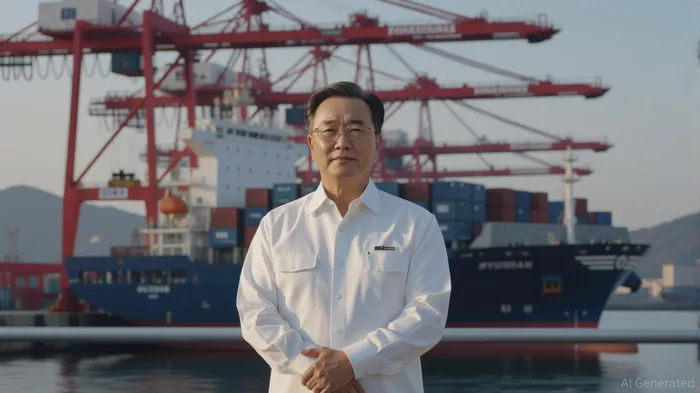
In the annals of corporate history, few stories rival the rise of Hyundai under Chung Ju-yung. Born into poverty in 1915, Chung's journey from a rural farm to building a global industrial empire is a masterclass in resilience. His leadership style—rooted in frugality, trust, and relentless execution—transformed Hyundai from a construction firm into a titan of automotive, shipbuilding, and technology. Yet, his story is not an outlier. Today's markets are littered with companies that thrive not because of pristine balance sheets or flawless quarterly forecasts, but because of leaders forged in adversity. The challenge for investors lies in identifying these leaders and understanding how their qualitative traits—often invisible in traditional financial metrics—drive long-term value.
The Limits of Traditional Metrics
Conventional investing relies heavily on quantitative indicators: P/E ratios, EBITDA margins, and ROIC. While these metrics are essential, they often miss the intangible qualities that define enduring companies. Consider Hyundai's 1997 Asian Financial Crisis. While competitors slashed R&D and laid off workers, Chung retained his entire workforce and invested in quality control. This decision, which defied short-term logic, preserved institutional knowledge and innovation capacity. By 2009, Hyundai's 10-year warranty became a marketing coup, turning a reputation for poor quality into a competitive edge. Traditional metrics would have flagged Hyundai as a risk during the crisis, but its long-term resilience was baked into its culture.
Similarly, Tesla's rise under Elon Musk offers a modern case study. In 2008, Musk nearly lost his fortune to keep the company afloat. Today, Tesla's $1 trillion market cap reflects not just EV demand but a culture of relentless iteration and mission-driven execution. Investors who focus solely on margins or cash flow might overlook the value of such a culture.
Adversity-Shaped Traits: The Qualitative Edge
Adversity-tested leaders share common traits that investors can dissect:
Frugality as a Strategic Tool
Chung Ju-yung's use of both-sided paper and his rejection of executive perks were not mere cost-cutting but signals of a mindset that prioritized resourcefulness. This ethos permeated Hyundai's operations, enabling it to outcompete rivals in capital-intensive industries. Modern analogs include Ed Bastian at DeltaDAL-- Airlines, who reinvented the company during bankruptcy by tying executive pay to employee profit-sharing. Delta's P/E ratio of 12.3 (below its 5-year average of 16.7) suggests the market may undervalue its culture-driven resilience.Execution Over Hype
Chung's mantra—“shortening the time”—emphasized speed and precision. Hyundai's Ulsan shipyard, built in the late 1960s, became the world's largest by prioritizing execution over perfection. Today, this trait is evident in Jeff Bezos' AmazonAMZN--, which turned a $50 million toy inventory write-off in 1999 into a pivot toward AWS. Bezos' focus on customer obsession and long-term bets created a moat that rivals couldn't replicate.Trust as a Competitive Advantage
Chung's trust-driven culture—profit-sharing, open communication, and employee loyalty—became a source of innovation. During the 1997 crisis, Hyundai's workforce didn't flee; they stayed, enabling the company to adapt. Modern parallels include Arianna Huffington's Thrive Global, which pivoted from media to wellness after The Huffington Post's decline, leveraging a founder-led vision to redefine its purpose.
Investor Frameworks for Qualitative Leadership
To assess these traits, investors must move beyond spreadsheets. Here are actionable strategies:
- Gartner Magic Quadrant for Vision Alignment: Use tools like Gartner's Magic Quadrant to evaluate companies' ability to execute their vision. Leaders in the “Visionaries” quadrant (e.g., SpaceX) may lack short-term execution but show long-term promise.
- LTSE Long-Term ScoreSM: The Long-Term Stock Exchange's score measures investor alignment with a company's long-term vision. For example, could highlight Tesla's alignment with investors focused on innovation.
- ESG and Cultural Metrics: Look for companies embedding ESG into their DNA. Pfizer's 6.65% dividend yield and 12-year growth streak reflect Albert Bourla's focus on social responsibility.
The Resilience Premium in Action
Investors who prioritize qualitative traits often find undervalued gems. Consider Delta's 2005 bankruptcy turnaround: Bastian's people-first strategy not only stabilized the company but created a culture of loyalty. By 2016, Delta returned $1.5 billion to employees—a move that boosted morale and operational efficiency. Similarly, SpaceX's reusable rocket tech, born from three failed launches, now underpins a $100 billion valuation.
Conclusion: Beyond the Balance Sheet
The resilience premium lies in companies led by adversity-shaped leaders who prioritize culture, execution, and long-term vision over short-term gains. While traditional metrics provide a baseline, they often miss the intangible qualities that define enduring success. Investors who integrate qualitative assessments—through frameworks like the GartnerIT-- Magic Quadrant or LTSE scores—can identify companies poised to outperform in volatile markets.
In a world where spreadsheets can't capture grit, frugality, or trust, the next great investment may lie not in the numbers, but in the story behind them. As Chung Ju-yung once said, “A leader is not someone who stands above others but someone who walks beside them.” For investors, the task is to find those leaders—and the companies they build.







Comentarios
Aún no hay comentarios