
The Resilience Playbook: Investing in Retail and Logistics Tech in a Post-2025 Chaos Era
The global retail and logistics sectors have entered a new era of volatility, defined by persistent inflation, geopolitical tensions, and the rapid integration of artificial intelligence (AI). As 2025 unfolds, companies that once prioritized cost efficiency are now recalibrating their strategies to balance resilience with profitability. This shift has created opportunities for investors to identify undervalued firms that have mastered the art of adaptability, AI-driven innovation, and margin resilience.
The New Normal: Adaptability as a Competitive Edge
The post-2025 landscape is marked by a "cost of resilience" mindset, where firms must navigate tariffs, labor shortages, and climate-related disruptions without sacrificing margins according to BCG analysis. For example, rising U.S. tariffs on Chinese imports have forced retailers to adopt near-shoring and supplier diversification strategies, while logistics firms are leveraging predictive analytics to optimize sourcing. According to a report by Capstone Logistics, 60% of companies now invest in generative AI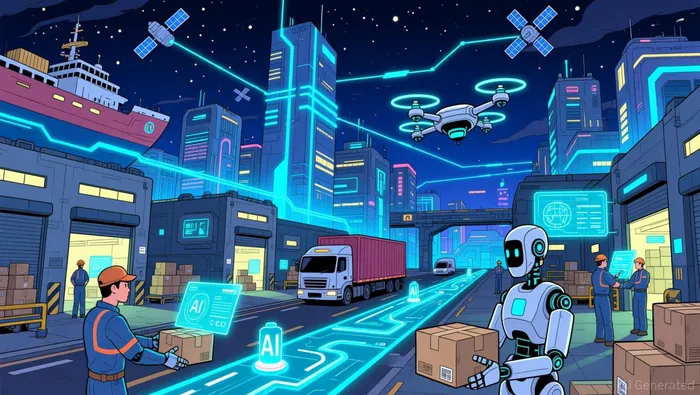 to enhance supply chain and inventory optimization, signaling a departure from traditional automation. This adaptability is not merely reactive-it is a strategic reimagining of operations, driven by real-time visibility tools and AI-driven labor planning as highlighted in Capstone's report.
AI Integration: From Cost Center to Value Creator
The integration of AI has become a defining feature of margin resilience. In Q3 2025, Intel reported a 153% year-over-year surge in operating income for its Data Center and AI Group, while non-GAAP gross margins hit 40.0%. Similarly, Microsoft's Azure revenue grew by 30% year-over-year, with AI services contributing 12 percentage points to this growth, despite increased infrastructure investments according to YCharts analysis. Alphabet's Google Cloud also demonstrated AI-driven momentum, with operating margins expanding to 23.7% and an 82% year-over-year increase in backlog as reported by Futurum Group. These examples underscore how AI is transitioning from a cost center to a value creator, enabling firms to streamline operations and capture new revenue streams.
However, the path to AI-driven profitability is not without challenges. Retailers like Dollar Tree faced margin compression due to higher operating costs, even as revenue grew as noted in Market Minute. This highlights the need for firms to balance automation with a "human soul" in customer interactions, as EY's analysis indicates. The most successful companies are those that use AI to augment-not replace-human expertise, ensuring they remain agile in the face of evolving consumer expectations.
Margin Resilience: Navigating Macro Headwinds
The ability to maintain margins amid macroeconomic turbulence is a critical differentiator. Microsoft and Intel's Q3 results exemplify this, as both firms leveraged AI to offset inflationary pressures and supply chain bottlenecks according to YCharts analysis. Meanwhile, logistics firms are adopting cost-to-serve analysis and ESG compliance to refine their strategies, ensuring sustainability aligns with profitability as noted in KPMG research. For instance, the rise of micro-fulfillment centers and circular supply chains has enabled retailers to reduce delivery times and waste, further insulating margins from external shocks as observed in RetailSCL.
Yet, not all firms have succeeded in this balancing act. Macy's, for example, exceeded expectations during the holiday season, but its reliance on short-term sales spikes underscores the fragility of margin strategies that lack long-term structural innovation as noted in Market Minute. This contrast between AI-driven resilience and traditional tactics is a key consideration for investors.
Undervalued Opportunities: The Case for Strategic Investment
Despite the sector's progress, several tech-enabled logistics and retail firms remain undervalued. Intel, for instance, trades at a discount to its historical price-to-earnings ratio despite leading the AI infrastructure boom according to Intel's Q3 results. Similarly, Alphabet's Google Cloud, with its expanding backlog and 23.7% operating margins, offers compelling upside potential as AI adoption accelerates as reported by Futurum Group. These firms exemplify the "resilience playbook": they have integrated AI to drive operational efficiency, diversified supply chains to mitigate geopolitical risks, and maintained disciplined cost structures.
Investors should also consider the broader macroeconomic context. J.P. Morgan's mid-year 2025 outlook notes signs of "AI fatigue" among investors, with share prices for AI-driven companies lagging behind earnings performance according to JPMorgan's research. This dislocation presents an opportunity to acquire undervalued assets at attractive valuations, particularly for firms with verifiable AI integration and margin resilience.
Conclusion: Building a Resilient Portfolio
The post-2025 chaos era demands a new investment framework-one that prioritizes adaptability, AI integration, and margin resilience. Firms like Intel, Microsoft, and Alphabet have demonstrated that technological innovation can coexist with profitability, even in turbulent markets. For investors, the key is to identify companies that are not only surviving but redefining their industries through strategic AI adoption and operational agility. As the sector evolves, those who master the resilience playbook will emerge as long-term leaders.







Comentarios
Aún no hay comentarios