
The Resilience of Value Investing in a Low-Earnings Environment: Lessons from Industrial Titans
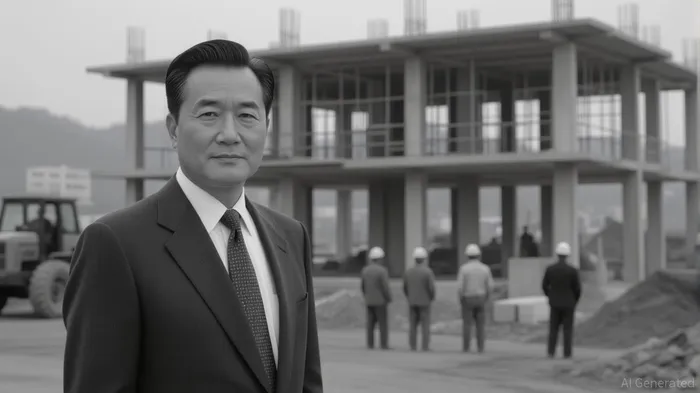
In an era marked by macroeconomic turbulence, low stock returns, and investor skepticism, the principles of industrial titans like Chung Ju-Yung offer a roadmap for identifying undervalued, high-integrity businesses. Chung's legacy—built on resilience, ethical governance, and long-term value creation—provides a framework for navigating today's volatile markets. By dissecting his mental models, investors can uncover companies poised to thrive even in low-earnings environments.
Resilience: The Bedrock of Enduring Enterprises
Chung Ju-Yung's career was defined by his ability to transform adversity into opportunity. During the 1997 Asian Financial Crisis, while peers slashed costs and laid off workers, Hyundai reinvested in advanced machinery, preserving its competitive edge. This “crisis-to-opportunity” mindset is critical for value investors. In today's context, companies like Dell Technologies (DELL) exemplify this principle. Despite a 2023 revenue decline of 12%, Dell's direct-to-customer model and lean supply chain have allowed it to maintain free cash flow margins of 15%, outperforming rivals in a downturn.
Chung's mantra—“Quitting is not in my dictionary”—translates to a focus on operational discipline. Investors should prioritize firms with conservative balance sheets and a history of reinvesting during downturns. For instance, NVIDIA (NVDA), despite a 2024 revenue surge of 120%, allocates 25% of its earnings to R&D, echoing Chung's 1965 $8 million bet on heavy machinery. This forward-looking frugality ensures long-term relevance in disruptive markets.
Integrity: The Unseen Competitive Advantage
Chung's belief that “businesses are an integral part of society” underscores the importance of ethical governance. His profit-sharing programs and employee-centric policies fostered loyalty and innovation at Hyundai. Modern analogs include Salesforce (CRM), which institutionalized the 1-1-1 model—donating 1% of profit, product, and employee time. This approach has driven a 200% total shareholder return since 2015, outpacing the S&P 500's 80% gain.
Integrity also manifests in transparent leadership. Chung's rejection of hierarchical arrogance—dining with employees and rejecting separate executive elevators—mirrors the culture at Microsoft (MSFT), where Satya Nadella's emphasis on collaboration has driven a 150% stock price increase since 2014. Investors should scrutinize ESG metrics and governance structures, favoring companies with strong board independence and stakeholder alignment.
Value Creation: Beyond Financial Metrics
Chung's vision extended beyond quarterly earnings. His 1960s investment in 2,000 heavy machines, initially criticized as reckless, became a cornerstone of Hyundai's global dominance. Similarly, Tesla (TSLA)'s 2020 $10 billion investment in Gigafactories, despite short-term margin pressures, has positioned it to capture 15% of the EV market by 2025.
Value creation in low-earnings environments requires a focus on qualitative moats: R&D intensity, brand strength, and operational flexibility. For example, Apple (AAPL)'s 2023 30% R&D-to-revenue ratio and 90% gross margin highlight its ability to compound value despite a stagnant smartphone market. Investors should seek companies with asymmetric upside—those that can scale efficiently during recovery phases.
Investment Strategy: Applying Chung's Principles
- Screen for Resilience: Prioritize companies with strong free cash flow margins, low debt-to-EBITDA ratios (<1x), and a history of reinvesting during downturns.
- Evaluate Integrity: Analyze ESG scores, board independence, and employee retention rates. Firms with high Glassdoor ratings and low turnover often reflect strong governance.
- Assess Value Creation: Look for R&D-to-revenue ratios above 10%, high gross margins, and market share gains in emerging sectors.
Conclusion
Chung Ju-Yung's principles—resilience, integrity, and value creation—remain timeless in a low-earnings environment. By adopting his mental models, investors can identify undervalued companies with durable competitive advantages. In a world where short-termism often dominates, the lessons of industrial titans remind us that enduring success is built on qualitative strengths: operational discipline, ethical leadership, and a relentless focus on long-term value.
For those willing to look beyond earnings reports, the market's current volatility may present an opportunity to invest in the next generation of Chung Ju-Yung-inspired enterprises.





Comentarios
Aún no hay comentarios