
The Resilience of U.S. Growth Amid Tariff Rollbacks and Inflation Concerns
Tariff Rollbacks: A Strategic Shift with Mixed Implications
President 's November 2025 executive order eliminating tariffs on beef, coffee, and tropical fruits marks a pivotal departure from his signature protectionist policies according to reports. While the move aims to alleviate consumer costs and address inflationary concerns, its economic impact is nuanced. Short-term relief for households is tempered by long-term fiscal trade-offs. The Congressional Budget Office estimates . This erosion of fiscal gains underscores the tension between immediate affordability and structural economic stability.
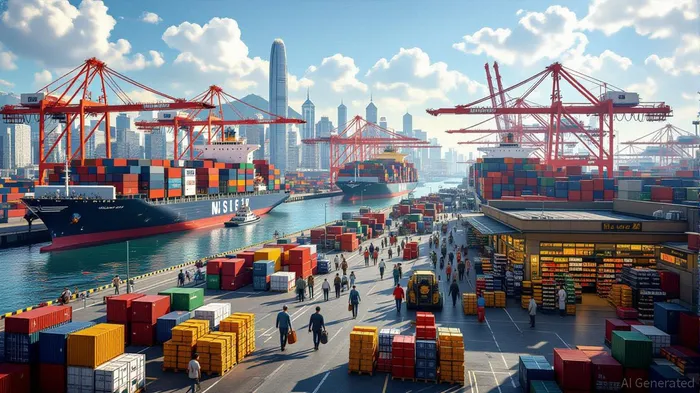
Supply chain dynamics further complicate the rollout. As of the International Food Manufacturers Association notes, "Supply chains do not react that quickly to pricing actions" according to analysis. Grocery prices, already inflated by prior tariff regimes, are unlikely to decline rapidly. Meanwhile, the Tax Foundation projects . , highlighting the enduring legacy of protectionist measures.
Federal Reserve Policy: Navigating Inflation and Liquidity
The Federal Reserve's response to these developments has been equally pivotal. , the Fed faces a delicate balancing act. New York Fed President ' recent remarks-suggesting "near-term" rate cuts-have signaled a dovish pivot, with . This shift reflects the Fed's acknowledgment that tariff rollbacks, coupled with weaker labor demand, may temper inflationary pressures by 2027 according to analysis.
Simultaneously, the Fed's end of quantitative tightening by December 1 and its planned transition to quantitative easing (QE) in January 2026 are poised to inject liquidity into financial markets. These measures aim to stimulate economic activity while aligning with fiscal expansion efforts, such as . The interplay between monetary and fiscal policy is critical: while QE supports asset markets, introduces volatility.
Market Sentiment: Optimism Amid Uncertainty
Investor sentiment has responded to these developments with a mix of optimism and caution. The prospect of lower borrowing costs has buoyed sectors like housing, technology, and real estate, with Treasury yields declining in anticipation of Fed easing. However, concerns about valuation multiples and long-term fiscal sustainability persist. For instance, Brazilian banks like Banco Bradesco, while benefiting from high real interest rates and moderating inflation, face analyst skepticism about overvaluation .
The U.S. market's resilience is further bolstered by the end of the November 2025 government shutdown, which historically correlates with post-shutdown liquidity surges and catch-up spending. This, combined with the Fed's QE pivot, suggests a favorable environment for risk assets in the near term. Yet, as of the Boston Fed cautions, the central bank remains "mildly restrictive" and wary of premature easing, underscoring the fragility of current optimism.
Conclusion: A Delicate Equilibrium
The U.S. economy's resilience in 2025 hinges on its ability to balance short-term consumer relief with long-term fiscal discipline. Tariff rollbacks and Fed rate cuts are tools to manage inflation and liquidity, but their efficacy depends on structural factors like supply chain inertia and regulatory shifts. For investors, the key lies in hedging against policy volatility while capitalizing on sectors poised to benefit from monetary easing. As the Fed and Congress navigate this complex terrain, the interplay between trade policy and monetary strategy will remain a defining feature of the economic outlook.







Comentarios
Aún no hay comentarios