
Resilience and Growth in Post-Pandemic Retail and Delivery Sectors: Strategic Reinvention and Shareholder Value
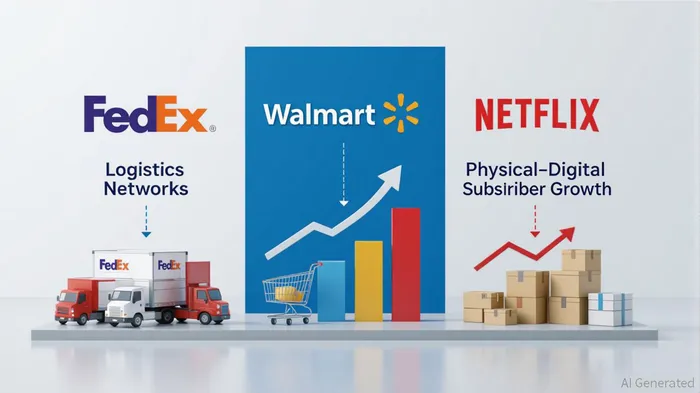
The post-pandemic retail and delivery sectors are no longer navigating the chaos of supply chain meltdowns or sudden shifts in consumer behavior—they're now in the trenches of strategic reinvention. Companies like FedEx, Walmart, and Netflix are proving that resilience isn't just about surviving macroeconomic headwinds; it's about redefining their value propositions to unlock long-term shareholder value. Let's break down how these titans are rewriting the playbook.
FedEx: Cutting Costs, Spinning Off Assets, and Betting on Peak Seasons
, but the company's DRIVE initiative . That's not just fiscal discipline—it's a lifeline in a world where industrial demand is soft and pricing wars are heating up. CEO isn't just trimming fat; he's restructuring the entire business. The separation of FedEx Freight into two standalone public companies is a bold move, .
But here's the kicker: FedExFDX-- isn't just slashing—it's investing in peak seasonality. , . . This isn't just a cost-cutting play—it's a calculated bet on cyclical demand.
Walmart: The Omnichannel Behemoth
Walmart's 2025 strategy is a masterclass in blending old-school retail with digital wizardry. , with —a number that's not just impressive, it's terrifying for Amazon[5]. The secret sauce? Store-fulfilled pickup and delivery, . online sales[1].
But WalmartWMT-- isn't just relying on convenience. It's doubling down on AI and automation. Four next-gen fulfillment centers now cut handling costs by 20%, and its Silicon Valley expansion—338,000 square feet of tech brainpower—signals a long-term commitment to data-driven retail[2]. The Walmart Connect ad platform is another goldmine, . This isn't just omnichannel—it's a full-scale digital transformation.
And let's not forget the physical stores. , Walmart is ensuring its bricks-and-mortar footprint remains a competitive edge[2]. Shareholders should note: this is a company that's not just surviving—it's redefining what “retail” means in 2025.
Netflix: From Password Sharing to Profit Sharing
Netflix's Q2 2025 results are a case study in strategic agility. , driven by . But the real story is how NetflixNFLX-- turned password sharing into profit. By cracking down on account sharing, , .
The AI-driven content engine is another game-changer. Localized Korean and Spanish-language programming isn't just boosting retention—it's cutting content costs through smarter production[1]. And with themed venues in Philadelphia, Dallas, and Las Vegas on the horizon, Netflix is diversifying beyond streaming[4]. This isn't just a subscription play—it's a brand-building blitz.
The Big Picture: Resilience Through Reinvention
What do these three companies have in common? They're all prioritizing operational efficiency while investing in high-growth levers. FedEx is shedding underperforming assets to focus on core logistics. Walmart is weaponizing its physical stores with digital tools. Netflix is monetizing its user base and AI prowess.
Historically, these strategies have shown mixed but instructive outcomes in the market. For example, FedEx's earnings announcements have historically driven notable short-term gains, . Walmart's earnings events, while less dramatic, showed a , though without reaching statistical significance. Netflix, however, exhibited high volatility, .
For investors, the takeaway is clear: resilience isn't about holding on—it's about reinventing. These companies are betting on their ability to adapt, and the numbers are backing them up.





Comentarios
Aún no hay comentarios