
The Resilience of Fossil Fuels: Why Oil, Gas, and LNG Remain Strategic Assets Until 2050
A Slower Transition, A Longer Lifespan for Fossil Fuels
According to a report by the IEA, global oil demand is projected to reach 113 million barrels per day by 2050-13% higher than 2024 levels-under the agency's current policies scenario, Profit Pakistan Today reports. This trajectory, far from the rapid decline envisioned in net-zero pathways, reflects the inertia of existing infrastructure, regulatory frameworks, and economic dependencies. Similarly, gas demand is expected to grow steadily, driven by its role as a transitional fuel in power generation and industrial processes. The IEA's net-zero scenario, while technically feasible, remains "out of reach" without unprecedented policy shifts and technological breakthroughs, InvestorShub notes.
The key driver of this resilience lies in the energy needs of the digital economy. Data centers and artificial intelligence (AI) infrastructure are surging as global electricity demand accelerates. By 2030, data center electricity consumption is projected to quintuple, accounting for 5% of global electricity use, according to DNV. In the U.S. alone, data centers will consume more electricity for data processing than for manufacturing energy-intensive goods like steel and cement, Pew Research reports. Natural gas, currently powering 40% of U.S. data centers, is expected to remain a dominant energy source through 2030, Natural Gas Intel states.
LNG Infrastructure: A Cornerstone of Energy Security
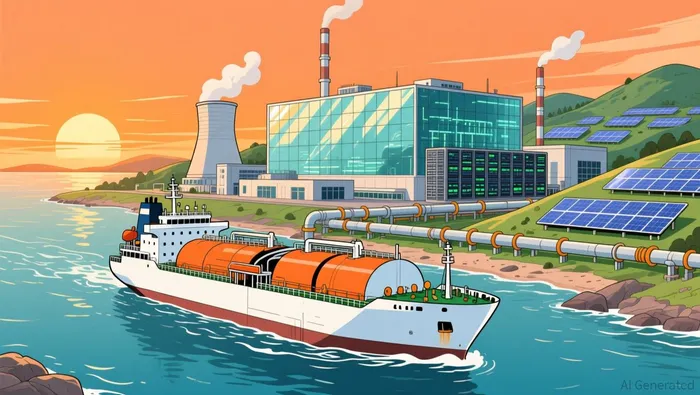
The expansion of LNG infrastructure is central to meeting this growing demand. By 2030, the IEA forecasts the addition of 300 billion cubic meters of annual LNG export capacity, primarily from the U.S. and Qatar, IEA reports. This surge in supply is reshaping global markets, with LNG prices projected to decline and stimulate demand in Asia and the Middle East, Bloomberg notes. For investors, this represents a dual opportunity: capitalizing on near-term supply growth while positioning for long-term demand from energy-intensive sectors like AI.
However, the post-2030 outlook is nuanced. While new projects in Mexico and the U.S. will extend supply, demand growth-particularly in the Asia-Pacific region-could outpace availability, creating a tightening market, Reuters observes. Strategic investments in carbon capture and destination-flexible LNG contracts will be critical for mitigating risks and aligning with evolving decarbonization goals, IEA notes.
The AI-Driven Energy Paradox
The rise of AI presents a unique paradox: a technology capable of accelerating clean energy innovation is simultaneously driving a surge in fossil fuel consumption. By 2050, incremental electricity demand from data centers is projected to reach 3,700 terawatt-hours (TWh), or 8.7% of total global power demand, Natural Gas Intel estimates. While renewables are gaining ground-accounting for 24% of U.S. data center energy use by 2030-fossil fuels will remain the backbone of this growth, Yahoo Finance notes. By 2035, 64% of incremental generation to meet data center demand will come from natural gas and coal.
This reliance is not without justification. Natural gas offers a cost-competitive, flexible solution for balancing the intermittency of renewables, while LNG infrastructure provides the scalability needed to meet surging demand. Moreover, advancements in AI itself could eventually reduce energy intensity, but this transition is decades away, IEA reports.
Strategic Investment Imperatives
For energy producers and LNG developers, the message is clear: the next two decades will be defined by infrastructure resilience and adaptability. Key opportunities include:
1. LNG Export Terminals: Projects in the U.S. and Qatar are set to dominate supply growth, with destination-flexible contracts enhancing market access, Bloomberg notes.
2. Carbon Capture Integration: Technologies to reduce methane emissions and capture CO₂ from LNG operations will be critical for aligning with mid-century decarbonization targets, IEA notes.
3. Power Generation Assets: Natural gas-fired plants remain essential for balancing renewable grids, particularly in regions with high data center density, Natural Gas Intel observes.
Conclusion
The IEA's revised projections paint a world where fossil fuels retain strategic relevance well into the 2040s and beyond. While the net-zero vision remains aspirational, the realities of energy demand-driven by AI, data centers, and industrial growth-ensure that oil, gas, and LNG will remain core assets for investors. The challenge lies in aligning these investments with evolving climate mandates, a task that demands both foresight and flexibility.







Comentarios
Aún no hay comentarios