
The Resilience of U.S. Equities: Why This Week's Gains Signal a Strategic Entry Point
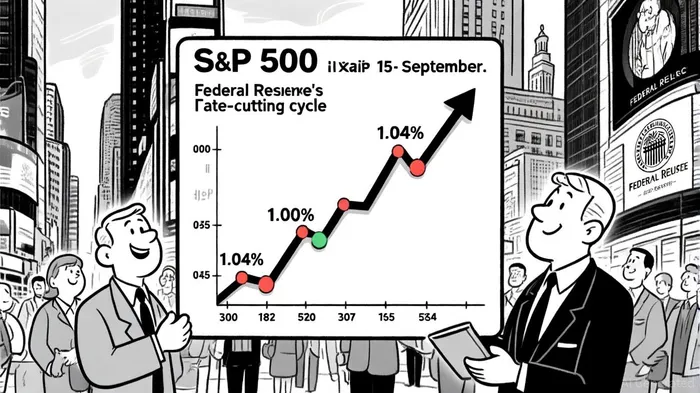
The U.S. equity market has once again demonstrated its resilience, with the S&P 500 surging 1.04% in the week of September 15, 2025, closing at 6,664.36 on September 19[1]. This performance marks a pivotal moment in a broader narrative of market momentum driven by the Federal Reserve's resumption of its rate-cutting cycle after an eight-month pause[1]. For investors, this week's gains are not merely a short-term fluctuation but a signal of a strategic inflection pointIPCX--, where macroeconomic policy, investor sentiment, and sectoral dynamics align to create compelling opportunities.
The Fed's Role in Reigniting Risk-On Sentiment
The Federal Reserve's decision to cut interest rates has been the primary catalyst for this week's gains. By signaling a shift toward accommodative monetary policy, the Fed has injected liquidity into financial markets, reducing borrowing costs and incentivizing capital flows into equities. According to a report by LPL Research, the S&P 500's upward trajectory in September reflects a “risk-on” environment, as investors recalibrate expectations for corporate earnings and economic growth in a lower-rate regime[1]. This dynamic is particularly significant given the index's year-to-date performance, which has been bolstered by the Fed's actions despite earlier volatility tied to President Trump's tariff announcements[1].
Investor Sentiment: A Contrarian Indicator in Action
While the market's technical strength is evident, investor sentiment metrics add another layer of conviction to the case for a strategic entry point. The AAII Investor Sentiment Survey reveals that bullish sentiment has declined to 32.69%, a level below the long-term average of 37.61% and far removed from the 75% exuberance observed during the 2000 technology bubble[4]. Historically, such subdued optimism has preceded periods of outperformance, as extreme bearishness often clears the field for a rebound.
The put/call ratio further reinforces this narrative. As of the latest data, the CBOE equity put-call ratio stands at 0.66, indicating a net bullish bias in options trading activity[3]. While the index options ratio (1.08) suggests some caution in broader market hedging, the overall balance of call options—driven by retail and institutional investors—points to a willingness to embrace risk. These metrics, when viewed through a contrarian lens, suggest that the market may not yet be fully priced for the Fed's accommodative trajectory.
Sectoral Momentum: Where the Action Is
The third quarter of 2025 has seen pronounced divergence across sectors, with Consumer Non Cyclical, Capital Goods861083--, and Technology leading the charge. Consumer Non Cyclical, for instance, has gained 20.58% year to date, reflecting demand for essential goods amid inflationary moderation[1]. Meanwhile, the Technology sector's 14.84% gain underscores the enduring appeal of innovation-driven growth, even as macroeconomic headwinds persist[1].
This sectoral strength is not merely speculative. Companies like Pitney Bowes Inc.PBI--, a member of the Computer Peripherals & Office Equipment industry, have surged 56.51% year to date, illustrating how niche markets are capitalizing on broader trends[1]. Conversely, underperforming sectors such as Energy (-0.59%) and Oil Well Services (-32.75%) highlight the risks of overexposure to cyclical industries in a shifting policy landscape[1]. For investors, this dispersion offers both caution and opportunity: while systemic risks remain, the current environment favors a selective, growth-tilted approach.
Strategic Implications for Investors
The convergence of these factors—monetary easing, contrarian sentiment, and sectoral momentum—creates a rare alignment for strategic entry. The S&P 500's recent performance, coupled with historically low levels of bullish sentiment, suggests that the market is not yet in a bubble but rather in a phase of recalibration. As MorningstarMORN-- notes, growth-tilted stock funds have dominated Q2 and Q3 2025, a trend likely to continue as the Fed's rate cuts amplify liquidity-driven gains[1].
However, prudence remains essential. While the current environment favors equities, investors must remain vigilant about overleveraging in a market that could still face corrections tied to geopolitical risks or earnings disappointments. A disciplined approach—focusing on sectors aligned with long-term structural trends (e.g., technology, non-cyclical consumption) and avoiding overexposure to highly cyclical industries—will be critical.
Conclusion
This week's gains in U.S. equities are more than a technical rebound; they are a reflection of a market repositioning itself for a new phase of monetary policy. With the Fed's rate cuts reinvigorating risk appetite, investor sentiment signaling caution rather than euphoria, and sectoral performance highlighting innovation-driven growth, the case for a strategic entry point is compelling. As always, timing the market is fraught with uncertainty, but the current alignment of forces suggests that those who act with discipline and foresight may find themselves well-positioned for the road ahead.







Comentarios
Aún no hay comentarios