
The Resilience Dividend: How SDG&E's 20-Year Reliability Streak Underpins Long-Term Shareholder Value
The utility sector has long been a cornerstone of essential infrastructure, but in an era of climate volatility and decarbonization, resilience and reliability have become critical differentiators. San Diego Gas & Electric (SDG&E) offers a compelling case study in how operational excellence can align with long-term shareholder value. For 20 consecutive years, SDG&E has been named the most reliable utility in the Western United States, a feat underscored by its SAIDI and SAIFI metrics. These metrics, which measure outage duration and frequency, respectively, are not just operational benchmarks-they are signals of a utility's ability to manage risk, maintain customer trust, and, ultimately, secure investor confidence.
Reliability as a Strategic Asset
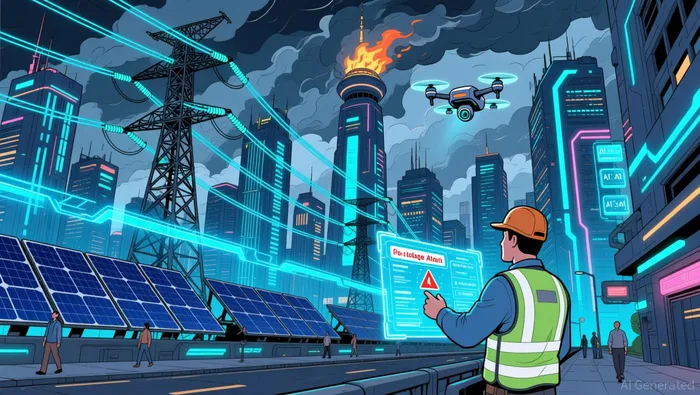
SDG&E's reliability is no accident. The utility has invested heavily in grid modernization, including smart-grid technologies, predictive analytics, and AI-driven fire detection systems. These initiatives have reduced sustained outages by 55% and shortened their duration by 70% compared to the average U.S. investor-owned utility, as part of its participation in the ReliabilityOne® program. Such improvements are not merely technical achievements; they directly enhance the utility's ability to meet regulatory expectations and avoid costly penalties. For example, California's Public Utilities Commission (CPUC) ties performance-based incentives to reliability metrics, creating a financial incentive for utilities to prioritize resilience.
The financial implications of this reliability are clear. A five-year SAIDI average of 60 minutes per customer-a figure SDG&E has maintained-demonstrates its capacity to minimize service disruptions in a region prone to wildfires and extreme weather. This consistency is particularly valuable in a regulatory environment where utilities are increasingly held to account for climate-related risks. As one industry report notes, utilities with strong reliability metrics often enjoy higher credit ratings, which lower borrowing costs and reduce the pressure on ratepayers. For SDG&E, this translates to a competitive edge in securing capital for infrastructure upgrades, a critical factor in sustaining long-term shareholder value.
Navigating Regulatory Tensions
Despite its operational strengths, SDG&E faces a regulatory crossroads. In 2026, the CPUC proposed reducing the utility's return on equity from 10.23% to 9.88%, a move that SDG&E argues could undermine investor confidence and increase credit risk. The utility had initially sought an 11.25% ROE, citing the need to fund grid modernization and maintain its reliability streak. While the CPUC justified the 9.88% rate as a balance between shareholder and ratepayer interests, environmental groups have pushed for even lower returns, suggesting a 6% ROE could save California ratepayers billions annually.
This tension highlights a broader challenge for regulated utilities: how to align profitability with public expectations. SDG&E's response has been to emphasize the cost-saving potential of reliability-driven investments. For instance, the utility's analysis shows that demand flexibility measures-such as managed electric vehicle charging and demand response programs-could reduce 2040 system costs by over 20% and lower peak demand by hundreds of megawatts. By demonstrating that reliability improvements can also drive efficiency, SDG&E strengthens its case for maintaining investor returns while addressing decarbonization goals.
Investor Confidence and the Infrastructure Premium
Investor confidence in essential infrastructure is increasingly tied to a utility's ability to adapt to systemic risks. SDG&E's 20-year reliability streak is a testament to its operational discipline, but it also reflects a strategic alignment with investor priorities. As one industry expert notes, "Utilities that can demonstrate resilience against both routine and extreme events are better positioned to attract capital in a low-growth, high-risk environment." This is particularly relevant in California, where wildfires and regulatory scrutiny create a high-stakes operating context.
Moreover, SDG&E's reliability metrics serve as a proxy for its broader governance and risk management capabilities. A utility that consistently outperforms national averages on SAIDI and SAIFI is less likely to face regulatory backlash or capital flight. This is not just theoretical: utilities like BVU Authority, which boast SAIDI scores 90% below the national average, have seen stronger investor sentiment and lower cost of capital. While SDG&E's regulatory environment is more complex, its reliability record provides a similar assurance to shareholders that the utility can navigate challenges without compromising service.
Conclusion: The Resilience Dividend
SDG&E's 20-year reliability streak is more than a public relations victory-it is a strategic asset that underpins its long-term value proposition. By combining operational excellence with forward-looking investments in grid modernization, the utility has created a model for how regulated infrastructure can deliver both reliability and returns. However, the ongoing debate over ROE underscores the fragility of this balance. For investors, the lesson is clear: in essential infrastructure, resilience is not just a regulatory requirement; it is a financial imperative. As climate risks intensify and decarbonization demands grow, utilities like SDG&E that can marry reliability with innovation will continue to outperform their peers.







Comentarios
Aún no hay comentarios