
Resilience in Adversity: Unlocking Investment Opportunities in High-Stress, High-Growth Founders' Businesses
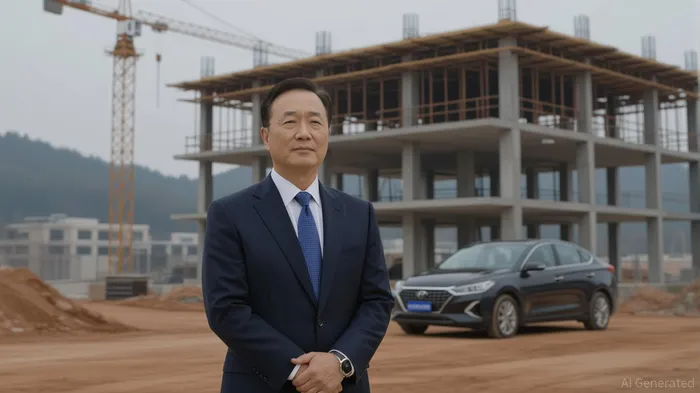
In the annals of business history, few figures embody the intersection of adversity and triumph as profoundly as Chung Ju-yung. Rising from poverty in colonial Korea to building the Hyundai Group into a global industrial titan, his legacy is a masterclass in mental models that prioritize resilience, ethical governance, and long-term reinvestment. For investors, his story is not just inspirational—it is a blueprint for identifying high-growth, founder-led businesses that thrive under pressure.
The Mental Models of Adversity-Driven Leadership
Chung's philosophy was rooted in three pillars: relentless work ethic, ethical stewardship, and strategic reinvestment. His mantra, “shorten the time,” emphasized efficiency without sacrificing quality, while his corporate motto—“diligence, frugality, and affection”—reflected a people-first culture. These principles are not abstract; they are operational frameworks that create durable competitive advantages.
Consider his response to the 1997 Asian Financial Crisis. While peers slashed costs, Hyundai reinvested in advanced machinery, securing a 15% productivity boost by 2000. This “crisis as catalyst” mindset mirrors modern leaders like Elon Musk, who turned Tesla's 2008 near-bankruptcy into a $1 trillion market cap juggernaut. reveals a trajectory shaped by relentless innovation and a refusal to yield to short-term panic.
Industries Where Adversity-Driven Leadership Is Undervalued
Today, sectors led by founders with similar traits are emerging as high-conviction investment opportunities.
1. Automotive and Energy: Hyundai's Hydrogen Gambit
Hyundai's $7.4 billion investment in hydrogen energy by 2025, despite industry skepticism, exemplifies long-term vision. Its 8.2% EBITDA margin in 2025 underscores the payoff of strategic patience. In India, where it holds a 63% market share in utility vehicles, the company's frugality-driven cost structure has insulated it from supply chain shocks.
2. Aviation: Delta's Culture of Shared Sacrifice
Delta Airlines, under Ed Bastian, emerged from bankruptcy in 2005 by fostering a culture of shared sacrifice. A 2016 $1.5 billion profit-sharing payout to employees boosted morale and operational efficiency. By 2025, Delta's 12.6% Q2 operating margin reflects the compounding power of trust and resilience.
3. Technology: Verra Mobility's R&D-Driven Growth
Verra Mobility (NASDAQ: VRRM), led by Todd Pedersen, is a case study in undervalued adversity-driven leadership. Despite a 12-month Sharpe ratio of -0.45, its 46.77% projected 2025 earnings growth and $48.35 intrinsic value (vs. $25.01 stock price) suggest a compelling mispricing. Pedersen's focus on R&D reinvestment and low debt positions the company to capitalize on AI-driven logistics.
4. Consumer Electronics: Apple's Ecosystem Reinvention
Steve Jobs' return to AppleAAPL-- in 1997 transformed a near-bankrupt company into a $3 trillion empire. By 2025, the iPhone and Apple ecosystem account for 70% of revenue, driven by Jobs' ethos of simplicity and user-centric design. While its P/E ratio of 28.5x may seem high, its reinvention of product ecosystems (e.g., M1 chips, AR/VR) reflects long-term thinking.
The Investment Imperative: Beyond Financial Metrics
Academic research corroborates the value of adversity-driven leadership. A 2023 McKinsey study found that firms led by resilient leaders outperformed peers by 23% in shareholder returns over five years. This is not luck—it is the result of operational discipline, stakeholder trust, and strategic adaptability.
For investors, the key is to screen for:
- Founder-led governance (e.g., NVIDIA's Jensen Huang, who allocates 25% of revenue to R&D).
- High reinvestment ratios (>5% of revenue in innovation).
- Cultural indicators like profit-sharing (Salesforce's 1-1-1 model) and employee retention.
highlights its commitment to long-term innovation, a trait mirrored in Chung's frugality-driven reinvestment.
Conclusion: The Future Belongs to the Resilient
As global markets grapple with AI disruption, climate change, and geopolitical instability, the ability to adapt and innovate in adversity is becoming a defining competitive advantage. Founders like Chung Ju-yung, Elon Musk, and Ed Bastian are not anomalies—they are the architects of tomorrow's durable businesses.
For investors, the lesson is clear: prioritize companies where leadership treats crises as catalysts, not obstacles. The next generation of industry leaders will emerge from those who, like Chung, see adversity not as a barrier but as a foundation for enduring value.
Final Note: In 2025, the most compelling investment opportunities lie not in chasing short-term trends but in identifying leaders who build empires from the ground up—brick by brick, crisis by crisis. The future belongs to the resilient.





Comentarios
Aún no hay comentarios