
Resilience in Adversity: Lessons from Chung Ju-Yung and the Path to Long-Term Value Creation
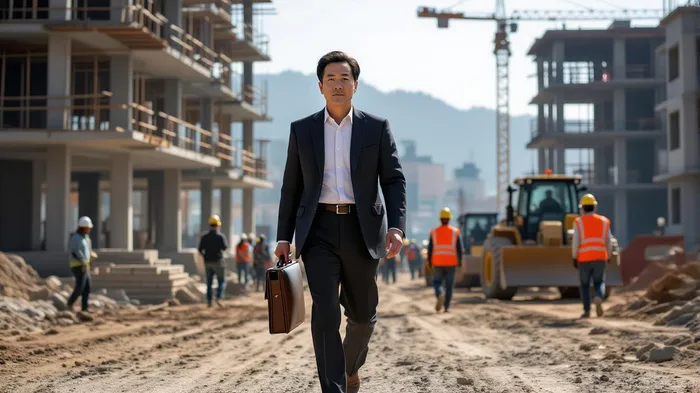
In the annals of business history, few leaders have embodied the spirit of resilience as profoundly as Chung Ju-Yung. His journey from a rural Korean farmer's son to the architect of the Hyundai Group is a testament to the power of vision, relentless execution, and ethical leadership. Today, as investors grapple with macroeconomic headwinds, geopolitical turbulence, and supply chain fragility, Chung's principles remain a compass for identifying undervalued businesses poised to thrive in adversity.
The Chung Ju-Yung Framework: Three Pillars of Resilience
Chung's leadership philosophy, distilled in his autobiography Born of This Land, centers on three pillars: long-term vision, operational discipline, and employee empowerment. These principles are not relics of the 20th century but frameworks for navigating the 21st-century's volatility.
Long-Term Vision: Anticipating the Future, Not Reacting to It
Chung's mantra—“As long as you don't die and remain healthy, there may be periods of hardship but never complete failure”—reflects a mindset of perpetual forward-looking. He understood that resilience is not about enduring crises but anticipating them. For example, in the 1960s, he invested heavily in advanced machinery for Hyundai's construction division, recognizing automation as a future imperative. Today, this principle translates to companies like Tesla (TSLA) and UnitedHealth Group (UNH), which prioritize R&D and strategic foresight. Tesla's vertical integration and focus on energy storage, for instance, position it to withstand supply chain shocks, while UnitedHealth's AI-driven healthcare models adapt to regulatory and demographic shifts.Operational Discipline: Frugality as a Strategic Advantage
Chung's philosophy of “diligence, frugality, and affection” emphasized minimizing waste while maximizing output. He famously used both sides of a sheet of paper and rejected luxury, believing it bred complacency. This ethos is mirrored in companies like General Motors (GM) and Molina Healthcare (MOH), which have maintained lean operations despite industry pressures. GM's debt-to-EBITDA ratio of 2.5x (as of 2025) reflects disciplined capital allocation, while Molina's Leadership Development Program ensures consistent cost-effective care delivery. Investors should look for firms with low operating expense ratios and high net profit margins, as these are proxies for operational rigor.Employee Empowerment: Building a Culture of Ownership
Chung treated employees as partners, not tools. He shared meals with workers during lean times and fostered a culture of collaboration. This ethos is alive in companies like Tesla and Salesforce (CRM), where employee engagement drives innovation. Tesla's high retention rates and cross-functional R&D teams have accelerated breakthroughs in electric vehicles and energy storage, while Salesforce's “Ohana Culture” emphasizes employee well-being and stakeholder trust. For investors, employee satisfaction scores and low turnover rates are critical indicators of a leadership-driven culture.
Case Studies: Modern-Day Chung-Inspired Resilience
1. Nucor (NUE): Frugality and Vertical Integration in Steel
Nucor's response to 2018 U.S. steel tariffs exemplifies Chung's principles. By leveraging the tariffs to triple profits and reinvest in domestic production, NucorNUE-- turned a geopolitical challenge into a growth engine. Its $3.2 billion in U.S. plant expansions (including a $1.3 billion steel plate mill) reflect long-term vision and operational discipline.
2. Apple (AAPL): Supply Chain Diversification and Innovation
Apple's shift from China to India and its $500 billion AI server investment in 2025 showcase strategic foresight. By diversifying production and aligning with U.S. policy, AppleAAPL-- mitigates geopolitical risks while tapping into new markets. Its 23% market share in India (2025) underscores the power of proactive adaptation.
3. GE Aerospace (GE): Capitalizing on U.S. Industrial Policy
GE's $1 billion 2025 investment in U.S. manufacturing—nearly doubling its prior commitment—aligns with Chung's emphasis on national development. By expanding LEAP engine production, GE not only secures its position in the aerospace sector but also supports U.S. supply chain resilience.
The Investor's Playbook: Identifying Resilient Businesses
Seek Companies with a “Chung Factor”
Look for firms with high R&D-to-revenue ratios, low debt-to-EBITDA, and employee retention rates above industry averages. These metrics signal long-term vision, operational discipline, and cultural strength.Focus on Geopolitical Alignment
Prioritize companies benefiting from reshoring trends (e.g., TeslaTSLA--, Micron) or data sovereignty policies (e.g., Microsoft). These businesses are positioned to thrive in a fragmented global landscape.Value Ethical Leadership
Companies with leaders who prioritize stakeholder trust (e.g., UnitedHealth's Patrick Conway) and sustainability (e.g., Tesla's Elon Musk) are more likely to navigate crises with integrity and agility.
Conclusion: The Enduring Legacy of Resilience
Chung Ju-Yung's principles are not relics but blueprints for navigating today's challenges. By investing in companies that embody his ethos—long-term vision, operational rigor, and employee empowerment—investors can build portfolios that endure and outperform. In a world of uncertainty, resilience is not just a trait; it is a competitive advantage.





Comentarios
Aún no hay comentarios