
Resilience in Adversity: Lessons from Chung Ju-Yung and the Implications for Value Investing in Uncertain Times
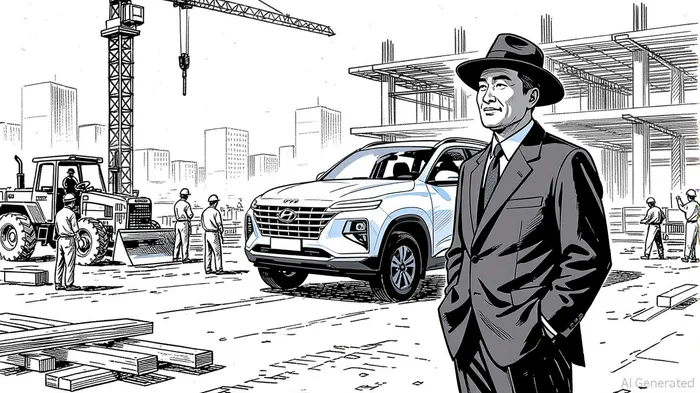
In the annals of business history, few figures embody the interplay of vision, resilience, and operational rigor as profoundly as Chung Ju-Yung. His transformation of Hyundai from a modest rice store into a global industrial titan offers timeless lessons for investors navigating today's volatile markets. As uncertainty becomes the new normal—marked by geopolitical tensions, AI-driven disruptions, and climate risks—the principles that underpinned Chung's success—what we might call the GRIT framework (Growth, Resilience, Innovation, and Trust)—serve as a compass for identifying undervalued, founder-led businesses poised to compound value over time.
The GRIT Framework: A Blueprint for Endurance
Chung Ju-Yung's leadership was rooted in a long-term vision that transcended short-term profit. In 1965, he invested $8 million in cutting-edge machinery—a staggering sum for post-war Korea—betting on infrastructure projects like the Gyeongbu Expressway. This bold move mirrored the strategic gambles of modern-day leaders like Elon Musk, who reinvested Tesla's dwindling resources into AI-driven logistics and the Robotaxi project during the 2025 crisis. The result? A 10,000% return for TeslaRACE-- investors since 2010, despite periodic volatility.
Resilience, for Chung, was not passive endurance but active discipline. During the 1997 Asian Financial Crisis, while peers slashed R&D, Hyundai doubled its investment in hydrogen and electric vehicles. By 2025, this foresight had reduced EV production costs by 30%, securing its leadership in sustainability. Similarly, Amazon's Jeff Bezos demonstrated operational rigor in 1999 by writing off $50 million in toy inventory, a decision that allowed the company to pivot to AWS and AI-driven logistics. Amazon's 24.77% ROE and 10.54% profit margin in 2025 underscore the power of disciplined execution.
Innovation, in Chung's view, was a strategic imperative, not a luxury. His early adoption of hydrogen energy and automation positioned Hyundai as a future leader, much like Nvidia's reinvestment in R&D during the 2023 AI slump. By 2025, Nvidia's market dominance was a testament to the compounding effects of innovation.
Trust in human capital was the bedrock of Chung's success. Profit-sharing schemes, open communication, and a culture of frugality (e.g., double-sided printing, shared meals) fostered loyalty. This ethos translated into outperformance during crises: Hyundai's U.S. market recovery in 2008 outpaced GMGM-- and Ford.
The Investor's Dilemma: Spotting Grit in the Noise
For investors, the challenge lies in distinguishing founder-led businesses with embedded resilience from those merely riding short-term trends. The GRIT framework offers a lens:
- Growth Through Long-Term Vision: Look for companies that prioritize R&D during downturns. Tesla's 14% R&D reinvestment under Musk and Microsoft's Azure division (revitalized under Satya Nadella) exemplify this.
- Resilience via Operational Discipline: Metrics like debt-to-EBITDA ratios (Hyundai's 1x, Microsoft's 0.8x) and consistent cost-cutting without sacrificing innovation are critical.
- Innovation as a Strategic Imperative: Founders who treat constraints as catalysts—like Chung's wartime resourcefulness—tend to outperform.
- Trust in Human Capital: Profit-sharing, low employee turnover, and cultural alignment with long-term goals are indicators of a motivated workforce.
Strategic Roadmap for Value Investors
The principles of value investing—pioneered by Warren Buffett and Joel Greenblatt—align closely with the GRIT framework. Buffett's focus on economic moats and intrinsic value, and Greenblatt's “Magic Formula” (return on capital and earnings yield), both emphasize qualities like operational discipline and long-term reinvestment. A 2024 study found that founder-led companies in AI and renewables delivered 15–20% higher returns during downturns, reinforcing the idea that resilience and vision are rewarded in volatile markets.
For today's investor, the roadmap is clear:
- Seek Founder-Led Resilience: Prioritize companies with long-tenured founders who have navigated past crises (e.g., Hyundai's Ju-Yung, Amazon's Bezos).
- Embrace Operational Discipline: Favor businesses with R&D-to-revenue ratios above 5% and debt-to-EBITDA ratios under 1x.
- Invest in Compounding Machines: Target industries with durable moats—electric vehicles, AI, hydrogen energy—where innovation cycles compound over time.
Conclusion: The Power of Adversity
Chung Ju-Yung's legacy teaches us that adversity is not an obstacle but a crucible. The scars of past crises—whether the 1997 Asian Financial Crisis or the 2023 AI slump—often forge the strongest leaders. For investors, the task is to identify those businesses built on grit, operational rigor, and long-term vision. In doing so, they not only navigate uncertainty but harness it as a force for compounding returns.
As markets oscillate between optimismOP-- and panic, the GRIT framework offers a steadying hand. The next Tesla, AmazonAMZN--, or Hyundai may already be out there—waiting for those with the patience to recognize its potential.





Comentarios
Aún no hay comentarios