
Reshaping Returns: How CRE's Structural Shifts Are Redefining Risk and Reward
The commercial real estate (CRE) landscape is undergoing a profound transformation, driven by structural shifts in global supply chains, evolving consumer behavior, and the relentless march of technological innovation. As investors navigate this complex environment, identifying undervalued subsectors amid dislocation and disruption has become both a challenge and an opportunity. This analysis explores how structural and technological forces are reshaping risk and reward in CRE, with a focus on subsectors poised for revaluation.
Structural Shifts and Undervalued Subsectors
Industrial Real Estate: A Tale of Two Trends
The industrial sector, once a poster child for post-pandemic growth, now faces a bifurcated outlook. While demand remains subdued due to shifting trade policies and supply chain recalibrations[1], long-term fundamentals remain intact. E-commerce's continued expansion and the resurgence of nearshoring in manufacturing are expected to drive demand for industrial space over the next five years[1]. However, near-term headwinds—such as potential material cost increases from tariffs and delayed construction completions through 2027[1]—have created pockets of undervaluation. For instance, price per square foot in the industrial sector rose by 2.9% in Q4 2024, driven by big-box retail and automotive uses[4], suggesting that value is beginning to emerge in well-located properties.
Retail: Constraints and Contradictions
The retail sector remains a study in contradictions. Limited new construction has kept inventory constrained, but much of the returning supply from bankruptcies is concentrated in underperforming areas[1]. Meanwhile, high-growth regions like the Sun Belt are seeing improved demand, though tariffs threaten to dampen consumer spending[3]. This divergence creates opportunities for investors who can differentiate between properties in resilient corridors and those in declining markets. Retail assets with adaptive reuse potential—such as converting underutilized spaces into mixed-use hubs—could benefit from the sector's gradual normalization[3].
Office: A Slow but Inevitable Recovery
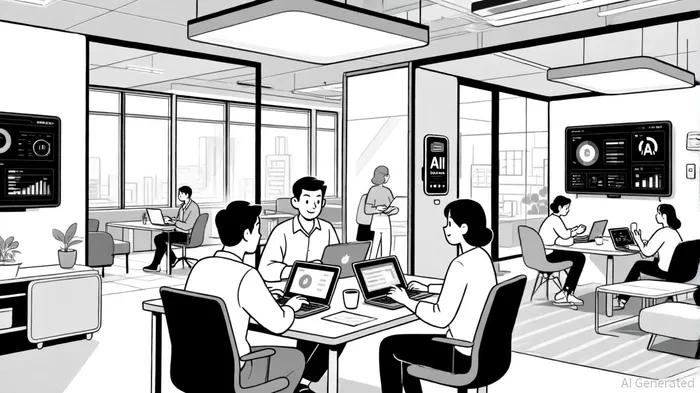
Office markets are showing early signs of stabilization, with sublease availability improving and a “flight to quality” helping premium assets[3]. However, aggregate vacancy rates have yet to peak, reflecting ongoing challenges from hybrid work models[3]. The key to unlocking value lies in reimagining office spaces as flexible, technology-enabled environments. Properties that integrate smart building technologies—such as IoT-enabled occupancy sensors and AI-driven predictive maintenance[2]—are better positioned to attract tenants in a post-pandemic world.
Technological Disruption: A Catalyst for Revaluation
The rise of proptech and automation is not just optimizing operations—it is redefining the value proposition of CRE assets. AI-driven platforms are now essential for real-time data analytics, enabling predictive maintenance and smarter property management[2]. For example, AI agents are replacing chatbots with context-aware assistance, improving tenant engagement during property tours and concierge services[2]. These innovations reduce operational costs and enhance tenant satisfaction, making properties more competitive in a fragmented market.
Automation is also transforming financial operations, from underwriting to rent collection, by increasing speed and accuracy[2]. This efficiency is particularly valuable in multifamily and industrial sectors, where margins are often tight. Meanwhile, shifting work models—64% of large companies now use hybrid arrangements[3]—are fueling demand for satellite offices and coworking spaces. These flexible alternatives to traditional leases are gaining traction as companies seek to align real estate costs with evolving workforce needs[5].
Strategic Implications for Investors
The interplay of structural shifts and technological disruption demands a nuanced approach to CRE investing. Undervalued subsectors like industrial and office require patience and a focus on long-term fundamentals, while retail opportunities hinge on location and adaptability. Technological adoption is no longer optional—it is a prerequisite for competitive differentiation. Investors who prioritize assets with embedded proptech capabilities and flexible design will be best positioned to capitalize on the sector's evolving dynamics.
In this redefined landscape, risk and reward are no longer static. They are fluid, shaped by the ability to anticipate change and act decisively. For those willing to look beyond short-term volatility, the CRE market offers a mosaic of opportunities waiting to be reassembled.







Comentarios
Aún no hay comentarios