
Repsol's Q3 Production Surpass 551,000 BPD: A Strategic Inflection Point for Energy Transition Leaders?
Repsol's third-quarter 2025 production of 553,000 barrels of oil equivalent per day (BOE/d) underscores its operational resilience amid a volatile global energy landscape. However, the figure masks a complex narrative of challenges and strategic recalibration. While the company's upstream division faced disruptions in Libya-reducing adjusted income to €280 million for the quarter, according to the Q3 earnings call-it broader energy transition initiatives are gaining momentum, positioning Repsol as a pivotal player in the evolving oil and gas sector. For investors, the question remains: Does this production performance signal a strategic inflection point for energy transition leaders like Repsol?
Operational Momentum Amid Headwinds
Repsol's Q3 results reflect a mixed bag of outcomes. The company's adjusted income fell 49% year-over-year to €558 million, driven by refining margins that averaged $4 per barrel-far below the $13.6 per barrel recorded in Q3 2024, as discussed on the earnings call. Production interruptions in Libya, which lasted nearly two months, further strained upstream operations. Yet, cash flow from operations improved to €1.5 billion, demonstrating the company's ability to maintain liquidity despite these challenges, a point emphasized during the Q3 earnings call.
The production figure of 553,000 BOE/d, while slightly below the upper end of Repsol's 2024 guidance (570,000–600,000 BOE/d), highlights its disciplined approach to asset management. The company has prioritized high-margin, low-emission barrels, a strategy aligned with its 2024–2027 Strategic Update. This plan emphasizes optimizing fossil fuel operations while accelerating renewable energy investments-a dual focus that reflects Repsol's attempt to balance short-term profitability with long-term sustainability.
Energy Transition: Scaling Renewables and Low-Carbon Projects
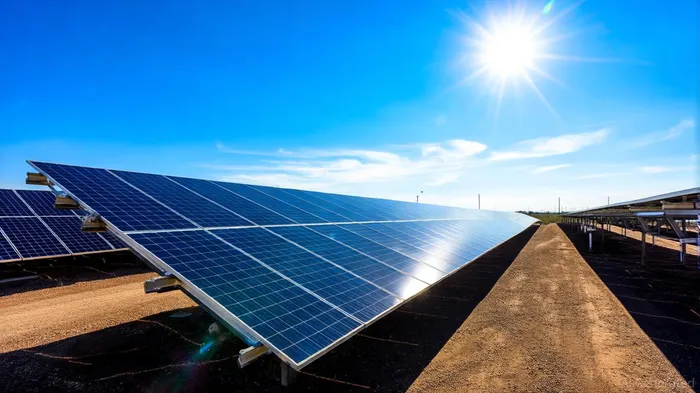
Repsol's energy transition efforts are arguably its most compelling narrative for investors. By Q3 2025, the company had achieved 90% of its 2025 target for low-emission energy capacity, with 2,952 MW of renewable assets operational and 800 MW added through new projects in Spain, according to a NetZeroInvestor brief. These include a 335-MW wind farm in Zaragoza and a 204-MW solar project in Cádiz. In the U.S., the 595-MW Pecan Prairie Solar Facility in Texas marked the first major project from its 2024 acquisition of ConnectGen to enter construction, per Repsol's quarterly results.
The company's ambition to reach 6 GW of renewable capacity by 2025 and 20 GW by 2030 was reiterated on the earnings call and is underpinned by partnerships like the 400-MW wind and solar portfolio with Schroders Greencoat, set to operationalize by mid-2025, as covered in the NetZeroInvestor brief. These projects are expected to save 2.3 million tons of CO2 annually compared to coal-based generation, reinforcing Repsol's commitment to decarbonization.
However, critics note that Repsol's oil and gas investments still dwarf its low-carbon initiatives. While the company allocates 35% of its capex to renewables-a higher share than most European peers, per the NetZeroInvestor brief-its net debt rose to €5.5 billion in Q3 2025 due to dividend payments and share buybacks, according to a Nasdaq report. This raises questions about the scalability of its energy transition without compromising financial flexibility.
Investor Sentiment and Market Dynamics
Repsol's strategic duality-maintaining fossil fuel operations while expanding renewables-resonates with a sector in flux. Global energy markets in Q3 2025 saw $2.2 trillion invested in clean technologies, while oil demand hit 103.7 million barrels per day, a point highlighted on the earnings call. Investors appear to value Repsol's balanced approach: Its share price has outperformed peers in the European energy sector, reflecting confidence in its ability to navigate the transition.
Yet, the Q3 earnings call revealed caution. The Low Carbon division reported a €7 million loss due to declining Spanish power prices, and Repsol revised its 2024 cash flow forecast downward to €6 billion, both noted in the Nasdaq report. These adjustments signal the risks of over-reliance on volatile renewable markets. Nevertheless, the company's capital reduction program-€350 million in share buybacks-demonstrates a commitment to shareholder returns, a critical factor for investor retention, according to Repsol's quarterly results.
Strategic Inflection Point? A Cautious Verdict
Repsol's Q3 production figures and energy transition progress suggest a strategic inflection point, but one that is neither linear nor risk-free. The company's ability to synergize fossil fuel operations with renewables-while maintaining disciplined capital allocation-positions it as a leader in the transition. However, challenges such as geopolitical disruptions (e.g., Libya) and refining margin pressures highlight the fragility of its current model.
For investors, the key lies in Repsol's execution. If the company can sustain its 35% capex allocation to low-carbon projects while optimizing upstream operations, it may achieve its 2025–2030 targets without sacrificing profitability. The recent Pecan Prairie Solar Facility and 6 GW renewable goal are promising, but success will depend on technological innovation, regulatory support, and market stability.
In the evolving oil and gas sector, Repsol's Q3 results are a microcosm of the broader industry's struggle to balance tradition and transformation. Whether this marks a true inflection point will depend on how well the company navigates the next phase of its energy transition-a test of resilience, adaptability, and vision.







Comentarios
Aún no hay comentarios