
The Repricing of Scarcity in 2026: Bitcoin, Gold, and Silver in a Derivatives-Driven World
In 2026, the concept of scarcity in financial markets is undergoing a profound transformation. BitcoinBTC--, gold, and silver-once valued primarily for their inherent rarity-are now being redefined through the lens of derivatives, exchange-traded products (ETPs), and evolving institutional narratives. As macroeconomic uncertainties persist and regulatory frameworks mature, investors are recalibrating their perceptions of these assets, blending traditional metrics with new financial instruments that amplify or distort their scarcity-driven valuations.
Bitcoin's Scarcity Reimagined
Bitcoin's scarcity narrative has shifted from a purely self-sovereign digital asset to a financialized instrument mediated by derivatives and ETFs. According to the Grayscale 2026 Digital Asset Outlook, institutional adoption is accelerating as U.S. regulatory clarity, such as bipartisan crypto legislation, facilitates the integration of Bitcoin into mainstream portfolios. This shift allows investors to hedge and trade Bitcoin's scarcity without direct ownership, reshaping its role in global finance.
The introduction of spot ETFs has further normalized Bitcoin as a portfolio asset, reducing its speculative stigma and aligning its valuation with traditional stores of value. Institutional investors now treat Bitcoin as a macroeconomic hedge, similar to gold, but with distinct advantages in liquidity and programmability. However, Bitcoin's valuation remains sensitive to liquidity conditions and positioning within the crypto market, creating a duality between its digital scarcity and its financialized identity.
Gold's Timeless Trust
Gold's scarcity in 2026 is less about mining output and more about trust and neutrality. As a global collateral asset, its value is reinforced by central bank purchases and its role in hedging geopolitical risks. Unlike Bitcoin, gold's scarcity is not programmable but is instead tied to centuries of institutional trust.
Gold's dominance as a reserve asset has been further solidified by its performance in Q4 2025, when it reached all-time highs amid rising U.S. debt and geopolitical tensions. Central banks, particularly in emerging markets, continue to accumulate gold as a counterbalance to fiat currency risks, reinforcing its role as a benchmark for scarcity in the derivatives market.
Silver's Dual Identity
Silver's dual identity as both an industrial input and an investment metal complicates its scarcity narrative. In 2025, silver outperformed both gold and Bitcoin due to inflationary fears and industrial demand, but its volatility remains pronounced. Derivatives and leverage amplify this volatility, making silver a more dynamic but less predictable store of value.
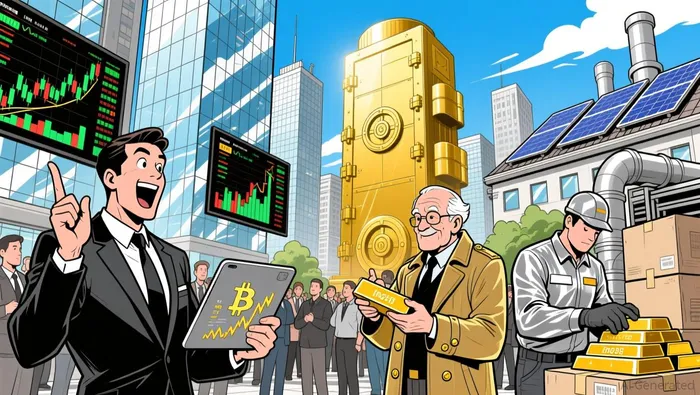
The structural supply deficit in silver, driven by its critical role in solar energy and electric vehicle manufacturing, has created a unique interplay between physical scarcity and financial speculation. Unlike gold, silver's price is influenced by both investment flows and industrial demand, leading to sharp price swings that reflect its dual nature.
The Derivatives-Driven Shift
The rise of ETPs and derivatives has fundamentally altered how scarcity is perceived. Investors now evaluate Bitcoin, gold, and silver not just by their inherent rarity but by their functionality within financial systems. This shift is evident in how institutional investors are incorporating these assets into diversified portfolios, reflecting a broader revaluation of scarcity through narratives, market access, and liquidity.
Derivatives markets have also created a paradox: true scarcity coexists with high leverage and extensive financial activity. For example, Bitcoin's fixed supply is now traded through leveraged futures and options, allowing investors to speculate on scarcity without holding the asset. Similarly, silver's industrial demand is amplified by futures contracts that decouple its price from physical supply constraints.
Conclusion
The 2026 financial landscape is defined by a redefinition of scarcity. Bitcoin, gold, and silver are no longer valued solely for their physical or digital rarity but for their roles within evolving market structures. As derivatives and ETPs reshape investor perceptions, these assets are becoming tools for hedging macroeconomic risks, diversifying portfolios, and leveraging narratives of scarcity. For investors, the challenge lies in navigating this derivatives-driven world-where scarcity is both a tangible reality and a financial construct.







Comentarios
Aún no hay comentarios