
Repositioning in the Chemical Industry: Navigating a Weakening Commodity Cycle
The global chemical industry is at a crossroads in 2025. After decades of outperforming capital markets, the sector has seen its returns lag, with annual growth of less than 2% since late 2022 compared to a 24% rise in broader indices, according to a McKinsey report. This divergence reflects a weakening commodity cycle driven by overcapacity, high energy prices, and shifting demand dynamics. Yet, within this challenging environment lies a critical opportunity: strategic reallocation toward innovation, sustainability, and digital transformation. For investors, the path forward requires reallocating capital from traditional commodity segments to high-growth areas that align with long-term structural trends.
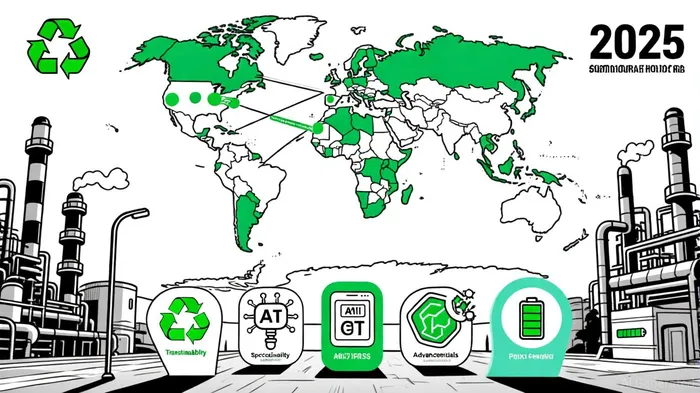
The Case for Sector Reallocation
The chemical industry's struggles stem from a confluence of factors. Overbuilt capacity, particularly in commodity chemicals, has eroded margins, while energy costs-still elevated post-2023-have disproportionately impacted regions like Europe and Asia, according to a Deloitte outlook. Meanwhile, geopolitical tensions and trade wars have disrupted supply chains, forcing companies to prioritize regionalization over globalization, as the Deloitte outlook notes. These pressures have led to a modest 3.5% projected growth in 2025, far below historical averages, Deloitte projects.
However, the same forces that have weakened the commodity cycle are accelerating a reallocation toward value-added segments. Specialty chemicals, which offer customized solutions for sectors like automotive, electronics, and pharmaceuticals, are growing at a 5.3% CAGR, outpacing the broader industry, according to ChemistryJobInsight. Similarly, sustainability-driven innovations-such as chemical recycling, bio-based feedstocks, and carbon capture-are reshaping competitive dynamics. According to a McKinsey analysis, companies that integrate these strategies are better positioned to capture long-term value.
Strategic Growth Areas and Investment Opportunities
1. Specialty Chemicals: High-Margin Innovation
The shift to specialty chemicals is a defining trend in 2025. These products, which include advanced materials for electric vehicles (EVs) and semiconductors, command premium pricing and higher margins. DuPont de NemoursDD-- (DUP), for instance, has divested non-core assets to focus on high-margin applications like water filtration and electronics, leveraging its R&D expertise to meet surging demand. Similarly, LyondellBasell IndustriesLYB-- (LYB) has capitalized on its U.S. cost advantages-driven by low natural gas prices-to outperform European peers, while also expanding into high-growth markets like battery materials.
Investors should also consider Eastman Chemical CompanyEMN-- (EMN), which has pioneered methanolysis technology to recycle plastic waste into high-quality materials. With global specialty chemicals projected to reach $900 billion by 2030, ChemistryJobInsight projects, companies that align with this trend are likely to outperform.
2. Sustainability and Green Chemistry
Sustainability is no longer a peripheral concern but a core business imperative. Regulatory frameworks like the EU Green Deal and the U.S. Inflation Reduction Act are accelerating the adoption of low-carbon technologies, with the green chemicals market expected to grow at a 10% CAGR through 2030, according to ChemistryJobInsight. BASF SE (BASFY) exemplifies this shift, restructuring its portfolio to focus on low-carbon production and investing in green hydrogen technologies, as CAS notes. Meanwhile, LyondellBasellLYB-- has secured renewable energy partnerships, such as a 15-year offshore wind agreement in Germany, to decarbonize its operations, according to an HFS Research report.
For investors, the key is to identify firms with scalable circular economy solutions. Neste Corporation (NZEHF), for example, uses waste fats to produce renewable diesel with a 90% reduction in greenhouse gas emissions compared to fossil alternatives. Such companies are not only mitigating regulatory risks but also capturing value from emerging markets.
3. Digital Transformation: Efficiency and Resilience
Digital tools are redefining operational efficiency in the chemical industry. AI-driven analytics, predictive maintenance, and blockchain-enabled supply chains are enabling firms to reduce costs, enhance transparency, and comply with sustainability mandates, according to HFS Research. Celanese Corporation (CE) and Eastman ChemicalEMN-- have deployed AI platforms to optimize product development and supply chain resilience, while also improving customer communication.
The integration of digital technologies is particularly critical for managing volatility. A 2023 study notes that only 30% of digital transformation initiatives succeed, underscoring the need for strategic planning and data harmonization, per CAS insights. Firms that prioritize AI training and ecosystem partnerships-such as BASF's collaborations on chemically recycled benzene-are better positioned to navigate this transition, a McKinsey analysis finds.
Geopolitical and Regional Considerations
While global demand for chemicals remains uneven, regionalization is a key theme. Asia-Pacific, which accounts for 45% of global production, continues to dominate, driven by India's PLI scheme and China's leadership in battery materials, ChemistryJobInsight reports. However, investors must balance exposure to these growth markets with risks from geopolitical tensions and regulatory shifts. For example, U.S.-based firms like LyondellBasell benefit from domestic energy advantages but face competition from Asian producers in commodity segments, McKinsey notes.
Conclusion: A Call for Bold Reallocation
The chemical industry's 2025 landscape is defined by a weakening commodity cycle and a renaissance of innovation. For investors, the imperative is clear: reallocate capital from underperforming commodity segments to high-growth areas like specialty chemicals, sustainability, and digital transformation. Companies such as DuPont, LyondellBasell, and Eastman Chemical are leading this transition, leveraging strategic focus, technological agility, and regional advantages to capture long-term value.
As the industry evolves, those who adapt will thrive. The next decade will belong to firms that prioritize innovation, sustainability, and digital resilience-not those clinging to outdated models.





Comentarios
Aún no hay comentarios