
Rep. Torres Proposes Legislation to Ban Insider Trading on Prediction Markets After Trader Profits $400K on Maduro's Capture
Rep. Ritchie Torres (D-N.Y.) is set to introduce legislation prohibiting federal officials from trading on prediction markets when they possess material nonpublic information according to reports. The bill, named the Public Integrity in Financial Prediction Markets Act of 2026, is a response to a recent incident in which a trader made over $400,000 by wagering on the capture of Venezuela’s President Nicolás Maduro.
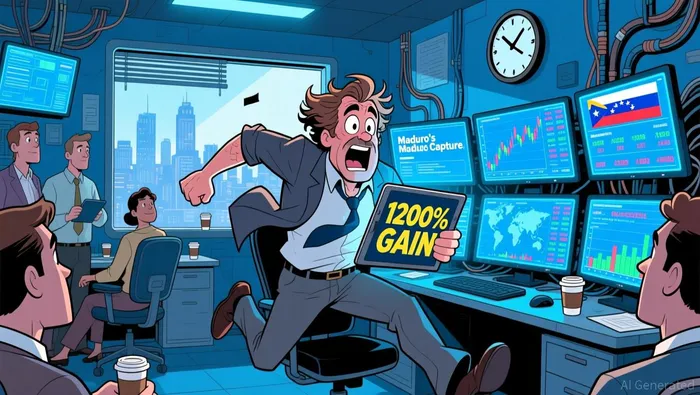
The trader used a newly created Polymarket account to bet $32,500 on Maduro being 'out' by January 31. The shares resolved near $1 after the U.S. military captured Maduro, resulting in a 1,200% return within 24 hours. This event has raised questions about ethical boundaries.
The bill seeks to extend the STOCK Act’s principles to prediction markets, which saw over $44 billion in trading volume in 2025. It would bar federal elected officials, political appointees, and executive branch employees from trading on contracts tied to government policy or political outcomes when they possess or could reasonably obtain material nonpublic information according to new analysis.
Why Did This Happen?
The trader’s profit was made shortly before President Trump announced the capture of Maduro. The timing of the bets and the account’s creation have sparked speculation about access to nonpublic information.
Kalshi and Polymarket are the dominant players in the prediction market space. Kalshi’s press relations team noted that trading on material non-public information by insiders is prohibited under its rulebook. However, the recent events have highlighted the need for more safeguards.
The U.S. operation that led to Maduro’s capture was announced early on Saturday. The market for Maduro’s removal had started to climb hours before the announcement. This suggests that some market participants may have acted on information not available to the public.
How Did Markets React?
The capture of Maduro and the associated market activity have drawn attention from both lawmakers and the financial community. The trader’s profit has raised concerns about the integrity of prediction markets.
Prediction markets are increasingly used to gauge public sentiment and forecast political and economic outcomes. The rapid growth of these platforms has outpaced regulatory oversight. The recent events have reignited the debate over the appropriate legal framework for these markets.
Kalshi and Polymarket have faced legal challenges in multiple states. Connecticut’s Department of Consumer Protection sent cease-and-desist letters to Kalshi, Crypto.com, and Robinhood. These actions reflect growing regulatory scrutiny of the sector.
What Are Analysts Watching Next?
Experts predict that prediction markets will continue to grow in 2026. The Intercontinental Exchange’s $2 billion investment in Polymarket and Kalshi’s exclusive data deals with major media outlets have positioned these platforms as essential tools for real-time analysis.
The Public Integrity in Financial Prediction Markets Act of 2026 could reshape the landscape for prediction markets. If passed, it would limit the ability of political figures to profit from nonpublic information.
The bill’s focus on transparency and integrity aligns with broader concerns about market fairness. Analysts are watching to see how this legislation will affect investor behavior and market dynamics.
The recent events in Venezuela and the associated market activity highlight the need for a balanced approach to regulation. While prediction markets provide valuable insights, they must also be governed to prevent abuse.







Comentarios
Aún no hay comentarios