
Rep. Torres Introduces Bill to Restrict Elected Officials' Use of Prediction Markets
U.S. Representative Ritchie Torres (D-N.Y.) is set to introduce the Public Integrity in Financial Prediction Markets Act of 2026. The bill seeks to prevent federal officials from trading on prediction markets when they have access to nonpublic information about political or government-related outcomes according to reports. The move comes after a recent $32,000 Polymarket bet on the ouster of Venezuelan President Nicolás Maduro generated a $400,000 profit as reported.
The legislation mirrors existing insider trading rules in traditional financial markets. It would apply to prediction market contracts tied to government policy, political outcomes, and actions on platforms engaged in interstate commerce as research shows. The restriction applies to federal elected officials, political appointees, and executive branch employees according to the bill's proposal.
The recent Polymarket bet on Maduro's capture has raised concerns about insider trading. 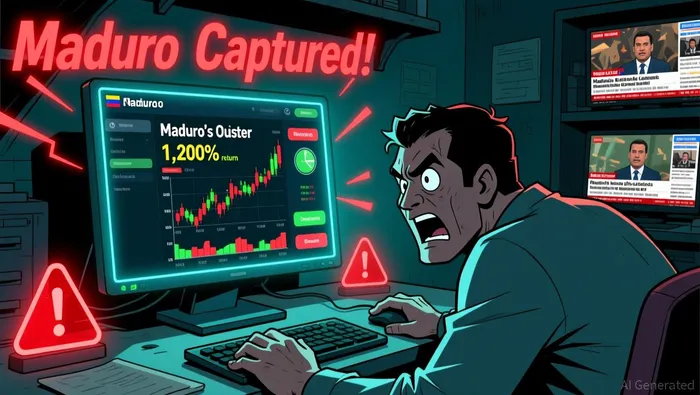 The trade was made by a newly created account and settled hours after U.S. forces captured Maduro, resulting in a 1,200% return for the trader. The low-probability nature of the trade and the sudden rise in market odds have led to speculation about access to nonpublic intelligence.
Why Did This Happen?
The proposed legislation is a response to growing concerns about insider trading in prediction markets. Unlike traditional financial markets, prediction markets currently operate in a regulatory gray area. The bill aims to close this gap by applying similar ethical standards to political betting according to experts.
Insider trading in prediction markets is not inherently illegal. Polymarket's rulebook does not explicitly prohibit it, and CEO Shayne Coplan has even suggested it can benefit the public by incentivizing information sharing according to company statements. However, the sudden profitability of the Maduro bet has raised red flags about potential misuse of nonpublic intelligence.
How Did Markets React?
Prediction market platforms like Polymarket and Kalshi have been under increased scrutiny. Kalshi has rules against insider trading for decision-makers and insiders, but enforcement varies according to industry reports. Polymarket, on the other hand, has faced criticism for its lack of transparency and unclear enforcement of its own rules according to analysts.
The recent incident has sparked calls for greater oversight. Lawmakers like Torres are pushing for stronger regulations to prevent political figures from exploiting nonpublic information as lawmakers argue. The bill is expected to face scrutiny from both supporters and critics. While it could enhance market integrity, some argue it may also limit the informational value of prediction markets according to industry analysis.
What Are Analysts Watching Next?
Experts are closely following how the bill will be enforced. Prediction markets operate across multiple platforms, and user anonymity poses a challenge for tracking violations according to market experts. The legislation may require cooperation between market platforms and government ethics offices to implement effectively as analysts note.
The bill also raises questions about the broader regulatory framework for prediction markets. Unlike traditional financial markets, prediction markets are not uniformly classified or regulated according to industry reports. The CFTC has some jurisdiction, but enforcement actions have been rare according to regulatory analysis. Analysts are watching whether this legislation will prompt further regulatory action or serve as a model for state-level laws according to market observers.
The introduction of the bill reflects growing concern about the intersection of politics and financial markets. Prediction markets are increasingly used to forecast political events and policy changes. Regulators must now determine how to balance market efficiency with ethical concerns about insider trading according to industry experts.
Investors and traders will be watching how the market reacts to the proposed restrictions. While the bill primarily targets federal officials, it could influence the broader perception and use of prediction markets according to market analysts.







Comentarios
Aún no hay comentarios