
Reopening the China-Singapore Economic Corridor: Strategic Investment Opportunities in 2025
The China-Singapore Economic Corridor (CSEC) has emerged as a pivotal axis for post-pandemic trade normalization and infrastructure-driven growth. In 2023–2025, bilateral cooperation has accelerated, with $240 million in new agreements signed in October 2024 during the 10th China-Singapore (Chongqing) Demonstration Initiative on Strategic Connectivity (CCI) meeting[2]. These agreements span sectors such as transportation, logistics, green energy, and digital commerce, reflecting a strategic alignment to counter global trade uncertainties, including U.S. tariff policies[4]. For investors, this corridor represents a unique convergence of China's advanced manufacturing and technological capabilities with Singapore's global financial expertise, creating high-impact opportunities in 2025.
Trade Normalization and Bilateral Agreements
Post-pandemic trade normalization between China and Singapore has been bolstered by high-level diplomatic engagements and institutional frameworks. In May 2024, the completion of negotiations for Version 3.0 of the China-ASEAN Free Trade Area (CAFTA) marked a milestone in regional economic integration, with a focus on digital and green economies[2]. This framework not only reduces trade barriers but also positions the CSEC as a testing ground for cross-border digital commerce and sustainable infrastructure.
A notable example is Singapore's YCH Group, which has established a localized digital commerce platform in Chongqing, leveraging the city's role as a logistics hub[2]. Similarly, SP Group's investment in green energy infrastructure at the Chongqing Lianglu Guoyuan Port Comprehensive Bonded Zone underscores the corridor's commitment to decarbonization[2]. These projects align with Singapore's Green Plan 2030 and China's dual carbon goals, creating a symbiotic ecosystem for investors in renewable energy and smart logistics.
Infrastructure Developments in the Yangtze River Delta
The Yangtze River Delta (YRD), a $4.65 trillion economic cluster by 2024[1], has become a focal point for China-Singapore collaboration. While direct Singaporean investments in the YRD are not explicitly detailed in recent agreements, the region's infrastructure boom-driven by national-level integration efforts-offers indirect opportunities. Key projects include:
- Railway Expansion: Addition of 660 kilometers of railway lines to enhance connectivity between Shanghai, Suzhou, and Huzhou[3].
- EV Charging Infrastructure: Installation of 70,000 new public charging piles, bringing the total to 600,000 by 2025[3].
- Smart Port Development: Energy China's large-scale energy storage project in Singapore supports carbon reduction goals[5], while the YRD's bonded zones attract foreign firms like Decathlon and AstraZeneca[4].
These initiatives highlight the YRD's role as a magnet for foreign direct investment (FDI), particularly in sectors aligned with China's 14th Five-Year Plan priorities, such as new energy vehicles and low-altitude economy technologies[3].
Infrastructure Developments in the Pearl River Delta
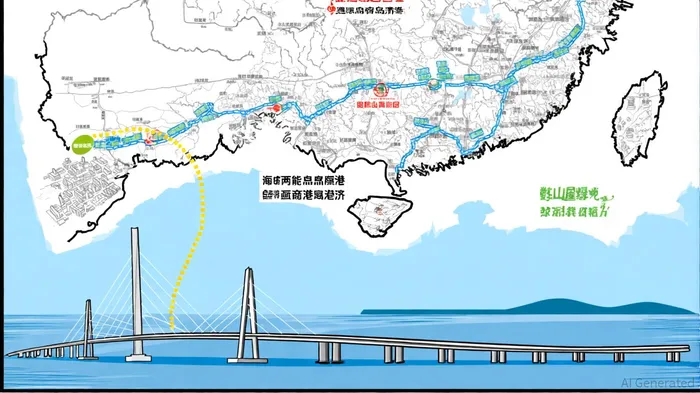
The Pearl River Delta (PRD) is witnessing transformative infrastructure projects that indirectly challenge Singapore's maritime dominance. A proposed $20 billion mega port in the Wanshan Islands, southwest of Hong Kong, aims to consolidate regional port resources and handle 45–50 million TEU annually[2]. This project, coupled with the Shiziyang Link double-deck bridge (expected completion by 2028[3]), underscores the PRD's ambition to become a global logistics hub.
Additionally, the Pearl River Delta water resources allocation project, operational since January 2024, ensures ecological stability for cities like Guangzhou and Shenzhen[3]. For investors, these projects signal opportunities in green infrastructure and smart urban systems, particularly as Singaporean firms like SP Group expand their footprint in China's coastal regions[2].
Strategic Investment Opportunities in 2025
The CSEC's post-pandemic resurgence presents three key investment themes:
1. Green Energy and Carbon Neutralization: Energy storage projects in Singapore and solar/wind infrastructure in the YRD and PRD are critical to meeting decarbonization targets[2][5].
2. Digital Commerce and Logistics: Localized platforms like YCH Group's Chongqing initiative demonstrate the potential for cross-border e-commerce and AI-driven supply chains[2].
3. Smart Infrastructure: Railways, EV charging networks, and water resource projects in the YRD and PRD offer long-term returns, supported by China's $215 billion 2023 investment in major projects[3].
Conclusion
The China-Singapore Economic Corridor is no longer a theoretical concept but a dynamic engine of post-pandemic growth. With $240 million in new agreements, Version 3.0 of CAFTA, and transformative infrastructure projects in the YRD and PRD, the corridor offers a unique blend of geopolitical resilience and economic scalability. For investors, the key lies in aligning with sectors that bridge China's industrial might and Singapore's financial innovation-particularly in green energy, digital commerce, and smart infrastructure. As global trade uncertainties persist, the CSEC stands out as a strategic asset for long-term value creation.







Comentarios
Aún no hay comentarios