
RenX Enterprises: Strategic Capital Deployment and Scalability in Environmental Processing
RenX Enterprises (RENX) has positioned itself at the intersection of environmental innovation and industrial scalability, leveraging high-utilization equipment to drive growth in the sustainable growing media sector. As the company navigates a challenging financial landscape, its strategic investments in advanced milling technology and multi-facility expansion underscore a long-term vision to capitalize on the environmental processing sector's untapped potential.
Capital Deployment and Technological Integration
RenX's capital allocation strategy centers on deploying high-utilization equipment to transform organic waste into engineered substrates, a market with growing demand due to regulatory pressures and sustainability trends. The company's partnership with Microtec Development & Holdings has been pivotal, granting an exclusive U.S. license for advanced milling and materials-engineering technology. This technology enables the conversion of locally sourced green and organic waste into substrates that replace peat-based alternatives, addressing both environmental and supply-chain inefficiencies.
A critical milestone in this strategy is the anticipated delivery of the Micotec Mill in March 2026. 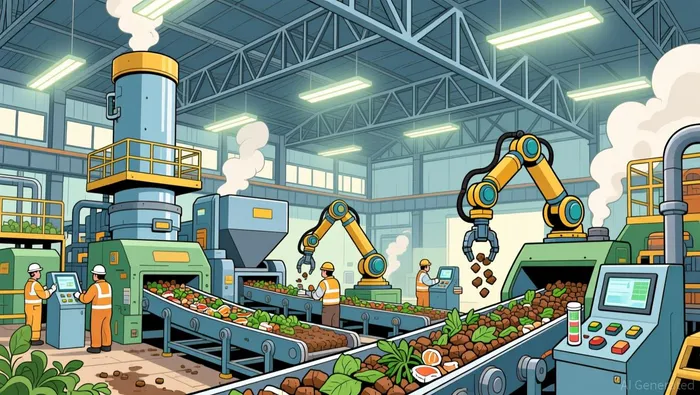 This equipment is expected to significantly enhance RenX's processing capabilities, allowing it to scale operations beyond single-site production. By adopting a repeatable, multi-facility model, RenXRENX-- aims to reduce per-unit costs and expand its geographic footprint, aligning with industry trends favoring localized, circular-economy solutions.
Scalability and Market Positioning
The scalability of RenX's operations is a direct function of its technological and capital investments. According to a report by Safe and Green Development Corporation, the company's ability to replicate its production model across multiple facilities positions it to capture regional markets with tailored substrate formulations. This approach not only mitigates supply-chain risks but also aligns with global shifts toward carbon-neutral agriculture and horticulture practices.
However, scalability is not without challenges. RenX's Property, Plant, and Equipment () , reflecting aggressive infrastructure spending. While this underscores the company's commitment to growth, it also highlights the capital intensity of its business model. further indicates significant leverage, raising questions about liquidity and long-term financial sustainability.
Revenue Growth and Financial Realities
RenX's Q3 2025 results demonstrated explosive revenue growth, with . This surge, driven by pilot projects and early commercial deployments, suggests strong market validation for its sustainable growing media. Over the trailing twelve months (), , though this figure masks a lack of growth over the preceding three years.
The disconnect between short-term revenue spikes and long-term profitability remains a concern. RenX's . Yet, the company's strategic focus on high-utilization equipment- such as the Diamond Z and Komptech Systems, now fully operational-suggests a deliberate trade-off between near-term losses and future market dominance.
Conclusion: Balancing Potential and Risk
RenX Enterprises' capital deployment strategy reflects a high-stakes bet on the environmental processing sector's scalability. By integrating advanced milling technology and pursuing a multi-facility model, the company is well-positioned to capitalize on the growing demand for sustainable substrates. However, investors must weigh this potential against the company's current financial constraints, including high leverage and operational losses.
If RenX can execute its 2026 commercialization plans-marked by the Micotec Mill's deployment and additional facility expansions-it may transition from a capital-intensive innovator to a scalable, cash-flow-positive player. For now, the path remains fraught with risk, but the rewards for successful execution could be substantial in a sector increasingly driven by environmental regulation and consumer demand for sustainable solutions.





Comentarios
Aún no hay comentarios