
Renewed Economic Optimism and Corporate Strategy: Investing in Policy-Driven Sectors
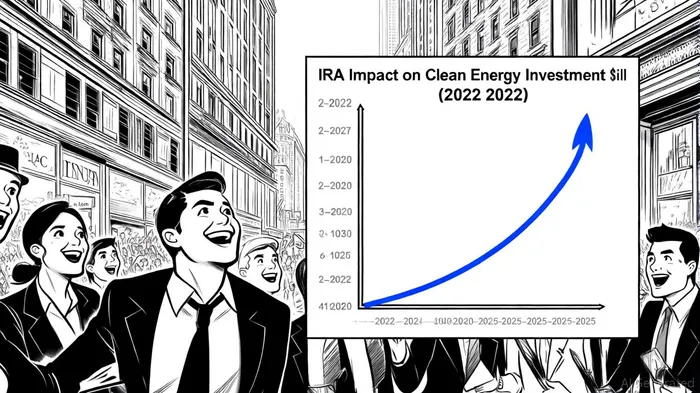
The U.S. economy is experiencing a renaissance of optimism, driven by a confluence of proactive policy frameworks and corporate strategies aligned with long-term growth. Central to this shift are the Inflation Reduction Act (IRA) and the America First Investment Policy, which have catalyzed transformative investments in clean energy, electric vehicles (EVs), and critical infrastructure. These policies are not merely regulatory tools but strategic levers reshaping industrial competitiveness and economic resilience.
Clean Energy: A Policy-Driven Manufacturing Boom
The IRA has been a cornerstone of this transformation. According to a report by the Clean Investment Monitor, U.S. business and consumer investment in clean technologies and infrastructure totaled $493 billion from 2022 to 2024, a 71% increase compared to the two years prior to the IRA's enactment [1]. This surge is attributed to tax credits like the Section 45X Advanced Manufacturing Production Tax Credit, which incentivizes domestic production of solar modules, battery cells, and wind turbine components. For instance, Canadian Solar's $250 million investment in a Texas manufacturing facility—creating 1,500 jobs—exemplifies how IRA incentives are reshaping supply chains [2].
The economic impact extends beyond manufacturing. A study by the American Clean Power Association and ICF estimates the IRA will grow the U.S. economy by $1.9 trillion over the next decade, with 13.7 million jobs created [3]. However, challenges persist. Rising tariffs and federal policy uncertainty led to the cancellation of six projects totaling $6.9 billion in Q1 2025 alone [4]. Despite this, the sector remains resilient, with new project announcements increasing by 47% year-over-year.
Electric Vehicles: From Policy to Profitability
The EV sector has emerged as a flagship of the IRA's success. By Q1 2025, investment in clean energy manufacturing had tripled to $14.0 billion, with the EV supply chain accounting for over 25% of this total [5]. Companies like Gotion and Redwood Materials are expanding battery production and recycling capabilities, supported by IRA incentives. For example, Gotion's Illinois facility is projected to create 1,200 jobs and bolster domestic battery cell production [6].
Market dynamics are also shifting. Battery prices are projected to fall below $100/kWh in 2025, making EVs more competitive with gas-powered vehicles [7]. This trend aligns with U.S. ZEV manufacturing capacity, which now exceeds 2024 sales and is projected to meet 60–67% of anticipated EV demand by 2035 [8]. However, the sector faces headwinds, including federal deregulation under the America First Investment Policy, which has slowed offshore wind development while expanding fossil fuel production [9].
Critical Infrastructure: Security and Strategic Resilience
The America First Investment Policy underscores national security as a priority, restricting foreign investments from adversarial nations in sectors like energy and technology [10]. This has spurred a focus on domestic infrastructure modernization. For example, the Bipartisan Infrastructure Law allocated $19.25 billion to EV charging networks, particularly in underserved areas [11].
Critical infrastructure resilience is further reinforced by the Department of Homeland Security's 2024-2025 strategic guidance, which emphasizes risk management against climate-related and cyber threats [12]. Companies are adapting by integrating advanced technologies, such as AI-driven grid management systems, to enhance reliability.
Navigating the Policy Landscape
While federal policies provide a robust framework, corporate strategies must remain agile. For instance, Microsoft's commitment to 100% renewable energy by 2025 highlights the interplay between policy incentives and market-driven sustainability goals [13]. Conversely, states like California and New York are tightening climate mandates, requiring companies to adopt region-specific compliance strategies [14].
Investors should also consider the IRA's place-based incentives, which direct investments to disadvantaged communities. For example, the Low-Income Communities Bonus Credit has spurred solar projects in counties with lower college graduation rates, creating jobs and boosting local economies [15].
Conclusion: A Strategic Imperative
The alignment of policy and corporate strategy in clean energy, EVs, and critical infrastructure presents a compelling case for long-term investment. While challenges like policy uncertainty and global competition persist, the economic and environmental momentum generated by the IRA and America First policies ensures these sectors remain pivotal to U.S. economic growth. For investors, the key lies in identifying companies that not only benefit from these incentives but also demonstrate adaptability in navigating a dynamic regulatory landscape.





Comentarios
Aún no hay comentarios