
Renewable Energy as a Strategic Investment in Response to Bitcoin Mining's Environmental Impact
The environmental footprint of BitcoinBTC-- mining has long been a contentious issue, but recent developments suggest a paradigm shift: the industry's energy demands are becoming a catalyst for renewable energy innovation. As Bitcoin's hash rate continues to rise, so too does the pressure on miners to adopt cleaner energy sources. This dynamic creates a unique investment opportunity in renewable energy infrastructure, driven by the urgent need to mitigate Bitcoin's carbon impact while leveraging its role as a decentralized, energy-intensive asset.
The Energy Challenge and the Push for Renewables
Bitcoin's energy consumption remains staggering. In 2023, the network consumed an estimated 127 terawatt-hours (TWh) annually, a figure comparable to the electricity use of Argentina. This demand has drawn scrutiny from regulators, environmental groups, and even some segments of the crypto community. However, the industry's response has been telling: a rapid pivot toward renewable energy sources.
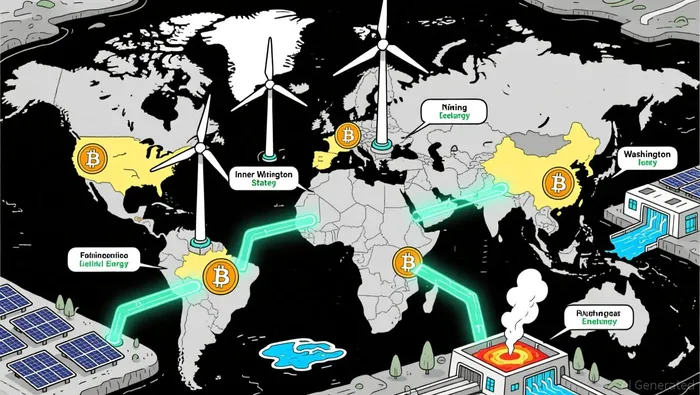
Miners are increasingly locating operations in regions with abundant solar, wind, hydro, or geothermal power. Texas, for instance, has become a hub for Bitcoin mining due to its surplus wind and solar energy, particularly during periods of low grid demand. Companies like Layer1 and Argo BlockchainARBK-- have capitalized on this dynamic, using Bitcoin mining to stabilize the grid by consuming excess renewable energy that would otherwise go to waste. Similarly, Iceland's geothermal energy and Quebec's hydropower have attracted firms like Bitfarms, which leverage low-cost, clean energy and cold climates to reduce cooling expenses. These case studies illustrate a broader trend: Bitcoin mining is no longer just a consumer of energy but a driver of renewable energy integration.
Quantifying the Environmental Impact and the Path Forward
Despite these strides, Bitcoin's environmental toll remains significant. In 2023, cryptocurrency mining accounted for 0.5% of global electricity use and 0.25% of CO₂ emissions, alongside substantial water consumption. These figures underscore the scale of the challenge but also highlight the potential for renewables to offset this impact.
The key lies in aligning Bitcoin's energy demands with renewable energy projects. For example, Bitcoin miners can act as flexible loads, adjusting their energy consumption to match the intermittent supply of solar and wind power. This flexibility not only reduces carbon footprints but also enhances grid stability, making renewables more viable for other industries. As a result, investments in renewable energy infrastructure-such as solar farms, wind turbines, and energy storage systems-are increasingly tied to Bitcoin's growth trajectory.
Strategic Investment Opportunities
For investors, the intersection of Bitcoin mining and renewable energy presents a dual opportunity: addressing environmental risks while capitalizing on a growing market. Renewable energy projects that partner with Bitcoin miners can secure long-term, stable demand for their output, reducing the volatility typically associated with green energy investments. Furthermore, governments and regulatory bodies are beginning to incentivize such partnerships through subsidies and carbon credit programs, adding another layerLAYER-- of financial appeal.
Consider the case of Texas, where the convergence of deregulated energy markets, abundant renewables, and Bitcoin's energy appetite has created a self-reinforcing cycle. Investors in Texas-based renewable projects are not only supplying clean energy but also contributing to a decentralized financial system that rewards energy efficiency. Similar dynamics are emerging in Canada and Iceland, where hydropower and geothermal energy are being monetized through Bitcoin mining.
Conclusion: A Synergistic Future
Bitcoin mining's environmental impact is undeniable, but its energy demands are also accelerating the adoption of renewable energy solutions. For investors, this represents a strategic inflection point: funding the infrastructure that will power the next phase of Bitcoin's growth while advancing climate goals. As the industry continues to innovate-whether through grid stabilization, surplus energy utilization, or carbon-neutral mining-renewable energy will remain at the center of this transformation.
The challenge is no longer just about mitigating Bitcoin's environmental footprint; it's about harnessing its energy intensity to build a cleaner, more resilient energy ecosystem. For those who recognize this shift, the investment case is clear: renewable energy is not just a response to Bitcoin's impact-it is its most promising partner.





Comentarios
Aún no hay comentarios