
Renewable Energy Project Development: Navigating Regulatory and Grid Interconnection Dynamics as Key Value Drivers
The renewable energy sector's trajectory in the U.S. has been profoundly shaped by regulatory and grid interconnection reforms over the past two years. As developers and investors grapple with evolving policy landscapes and infrastructure bottlenecks, understanding the interplay between these factors and project viability is critical to assessing risk and reward. This analysis examines how FERC Order 2023 and its regional implementations have influenced interconnection timelines, investment flows, and financial outcomes, while highlighting persistent challenges that demand strategic navigation.
Regulatory Reforms and Grid Interconnection Progress: A Double-Edged Sword
FERC Order 2023, enacted in July 2023 and refined in March 2024, marked a paradigm shift in grid interconnection processes. By replacing the traditional "first-come, first-served" model with a "first-ready, first-served" cluster study approach, the reforms aimed to address the staggering backlog of over 2,300 GW of projects awaiting grid access as of 2025. According to a report by Wood Mackenzie, these changes catalyzed a 33% surge in interconnection agreements in 2024, reaching 75 GW-a-record high. Solar and storage projects dominated this growth, capturing 75% of secured capacity, underscoring their role as the sector's primary growth engines.
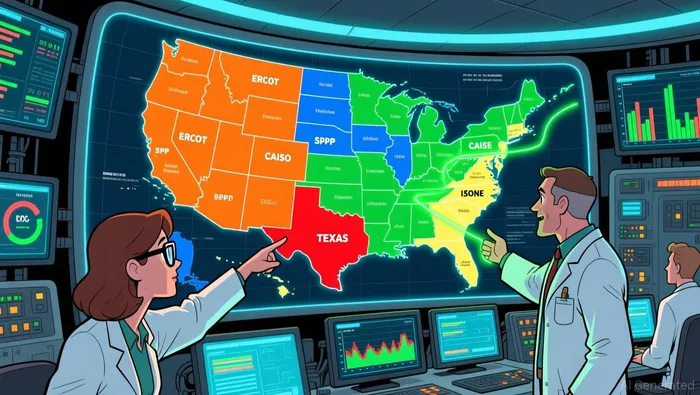 However, the reforms have introduced regional disparities. For instance, the Southwest Power Pool (SPP) and ERCOT have demonstrated higher success rates and shorter processing times, while regions like CAISO and ISONE struggle with speculative project submissions and implementation delays. These inconsistencies highlight the need for developers to tailor strategies to local interconnection rules, as regional deviations in financial readiness requirements and site control criteria can significantly impact project timelines.
Investment Trends: Policy Shifts and Financial Implications
The post-FERC Order 2023 era has seen a complex interplay between regulatory clarity and economic headwinds. Global investment in renewable energy hit $386 billion in the first half of 2025, driven by offshore wind and small-scale solar, though utility-scale solar and onshore wind faced a 13% decline in financing compared to 2024. In the U.S., investment dropped 36% year-on-year, partly due to the phaseout of tax credits like 45Y and 48E for projects starting construction after July 4, 2026.
The 2025 Tax Legislation further complicated matters by tightening FEOC restrictions, which prohibit sourcing components from countries like China and Russia. These restrictions have increased compliance costs and supply chain risks, deterring smaller developers and reducing the flexibility of project financing. As noted by BloombergNEF, such policy shifts could result in billions of lost GDP and millions of job-years, illustrating the trade-off between national security priorities and economic growth.
Quantifying Risk and Reward: ROI and IRR Dynamics
While direct ROI and IRR data for projects pre- and post-FERC Order 2023 remain elusive, indirect indicators suggest a nuanced picture. The cluster study process's potential to reduce interconnection delays could enhance IRR by accelerating project commercialization, particularly for time-sensitive incentives like tax credits according to FERC's final rule. Conversely, the added complexity of regional compliance and FEOC restrictions may erode ROI by inflating capital expenditures and operational costs according to FERC's final rule.
For example, the 33% increase in interconnection agreements in 2024 likely improved developer confidence, but the 13% attrition rate of projects from 2000–2019 to 2024 (only 13% reaching commercial operation) underscores lingering risks. Developers must now balance the benefits of streamlined interconnection with the costs of navigating a fragmented regulatory landscape.
Strategic Considerations for Investors
Investors must prioritize projects in regions with robust interconnection frameworks, such as ERCOT and SPP, where processing times are shorter and success rates higher. Additionally, partnerships with local transmission providers can mitigate regional compliance risks, while diversifying supply chains to avoid FEOC-affected components is essential for maintaining ROI.
Long-term, the sector's growth hinges on further reforms to address the 80% of interconnection backlogs attributed to solar and storage projects. Innovations like the SPP's Consolidated Planning Proposal (CPP), which aims to align transmission planning with interconnection needs, could unlock untapped value by reducing coordination bottlenecks.
Conclusion
Regulatory and grid interconnection progress remains a pivotal value driver for renewable energy projects, offering both opportunities and challenges. While FERC Order 2023 has accelerated interconnection timelines and boosted developer confidence, regional disparities and policy headwinds necessitate a granular, adaptive approach. For investors, the key lies in leveraging regulatory clarity where it exists, mitigating compliance risks, and advocating for systemic reforms to address persistent bottlenecks. As the sector evolves, the ability to navigate these dynamics will define the risk-reward profile of renewable energy investments in the years ahead.







Comentarios
Aún no hay comentarios