
Renewable Energy Partnerships in Retail Real Estate: The IGD-Edison Next PPA Deal as a Strategic Model
The transition to a low-carbon economy is reshaping the commercial real estate sector, with renewable energy partnerships emerging as a cornerstone of sustainable value creation. The recent Power Purchase Agreement (PPA) between IGD and Edison Next at the Tiburtino Shopping Center in Rome exemplifies how long-term energy contracts can decarbonize retail real estate while enhancing ESG returns. This analysis evaluates the strategic and financial merits of such partnerships, using the IGD-Edison Next deal as a case study to illustrate their potential to attract capital in a rapidly evolving energy landscape.
The IGD-Edison Next PPA: A Blueprint for Decarbonization
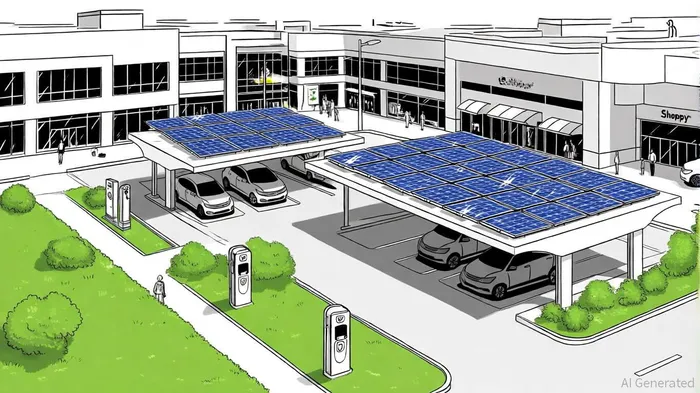
The 20-year on-site PPA between IGD and Edison Next involves the development of a 1 MW photovoltaic plant at the Tiburtino Shopping Center, one of IGD's largest retail complexes in Italy. The plant, spanning 4,700 square meters across the building's roof and parking lot canopies, is projected to generate 1.2 GWh of electricity annually, with 80% used on-site. This initiative will reduce CO2 emissions by 300 tons per year, representing a 30% cut in the shopping center's carbon footprint compared to baseline levels[1]. By outsourcing the plant's design, installation, and maintenance to Edison Next, IGD avoids upfront capital expenditures while securing a stable, renewable energy supply[2].
This model aligns with broader trends in corporate decarbonization. According to the 2025 State of Decarbonization report by PwC, over 4,000 companies have made climate commitments in the past five years, with 37% raising their ambitions[3]. The IGD-Edison partnership reflects this shift, leveraging renewable energy to meet IGD's 2025–2027 ESG targets and contribute to global sustainability goals such as SDG 7 (Affordable and Clean Energy) and SDG 13 (Climate Action)[4].
Financial Structuring: Balancing Stability and Risk
PPAs are typically structured to balance cost predictability with market flexibility. Fixed-price PPAs, which account for 70% of global agreements, offer price stability, shielding buyers from volatile energy markets[5]. For the Tiburtino project, a fixed-price structure would likely provide IGD with long-term budget certainty, a critical advantage in an era of rising energy costs. However, indexed or floating-price PPAs—constituting 20% of global contracts—could offer cost savings if market prices decline, albeit at the expense of predictability[5]. Hybrid models, though rare, blend fixed and variable pricing to mitigate risks[5].
The broader PPA market in 2025 is shaped by rising costs due to supply chain bottlenecks and project delays. For instance, solar PPA prices in the U.S. increased by 10.4% year-over-year in Q3 2024[6]. While such trends may elevate initial costs, they also underscore the value of long-term contracts in locking in favorable rates. For IGD, the 20-year PPA with Edison Next likely secures a competitive rate amid these headwinds, enhancing its financial viability.
ESG Performance and Investor Confidence
The Tiburtino project's ESG impact is measurable and material. By reducing CO2 emissions by 300 tons annually, it directly supports IGD's decarbonization goals and aligns with Edison International's net-zero target for Scopes 1, 2, and 3 by 2045[7]. Edison's ESG profile, including a net impact ratio of 52.9%, highlights its positive contributions to Societal Infrastructure and GHG Emissions reduction[8]. Such metrics are critical for attracting ESG-focused investors, who increasingly prioritize transparency and auditable outcomes[9].
Investor responses to ESG initiatives are also evolving. A 2025 OECD report notes that 68% of ESG metrics are input-based, focusing on policies rather than outcomes[10]. This underscores the need for performance-based metrics, such as IGD's 30% emissions reduction, to demonstrate tangible progress. The use of standardized frameworks like GRI and SASB further enhances credibility, enabling stakeholders to track progress toward sustainability targets[4].
Strategic Implications for Capital Allocation
The IGD-Edison partnership illustrates how PPAs can drive sustainable value creation in commercial real estate. By avoiding upfront capital outlays, IGD reallocates resources to other strategic priorities while securing long-term energy savings. Edison Next, in turn, gains a stable revenue stream from the PPA, incentivizing investment in renewable infrastructure. This win-win dynamic is particularly appealing in a capital market where ESG-aligned projects command premium valuations[11].
Moreover, regulatory tailwinds are amplifying the appeal of such partnerships. The EU's Corporate Sustainability Reporting Directive (CSRD) and similar frameworks globally are tightening disclosure requirements, pushing companies to adopt verifiable ESG metrics[12]. Projects like the Tiburtino PPA, with quantifiable emissions reductions and transparent reporting, position IGD to meet these standards and attract ESG-conscious investors.
Conclusion
The IGD-Edison Next PPA at Tiburtino Shopping Center is a strategic model for decarbonizing commercial real estate. By combining a 20-year fixed-price structure with measurable ESG outcomes, the partnership addresses both financial and environmental imperatives. As energy markets evolve and regulatory demands intensify, such collaborations will become increasingly vital for aligning corporate strategies with global sustainability goals. For investors, the Tiburtino project demonstrates that long-term PPAs are not just a tool for decarbonization but a robust mechanism for generating ESG returns in a transitioning energy landscape.







Comentarios
Aún no hay comentarios