
Renewable Energy Infrastructure in Europe: The Strategic Imperative of Integrated Smart-Grid Solutions
The Momentum in Spain and Germany: Lessons from the Frontlines
Spain and Germany, two of Europe's largest energy markets, are leading the charge in grid modernization. By 2024, , according to the ASUENE blog, a milestone that exposed both the promise and fragility of its grid. A nationwide blackout in May 2025, attributed to the challenges of managing intermittent solar and wind power, underscored the urgent need for resilience, as reported by the EM-Power blog. In response, the country has prioritized investments in battery storage and green hydrogen, with the latter emerging as a cornerstone for long-term energy storage, according to the ASUENE blog.
Germany, meanwhile, , reflecting its broader strategy to phase out fossil fuels and integrate decentralized renewables, as reported by the Reuters article. These investments are not merely reactive; they are part of a coordinated effort to future-proof energy systems against volatility while meeting the European Union's Green Deal targets. For investors, the alignment of public funding with private-sector innovation in these markets signals a fertile ground for growth.
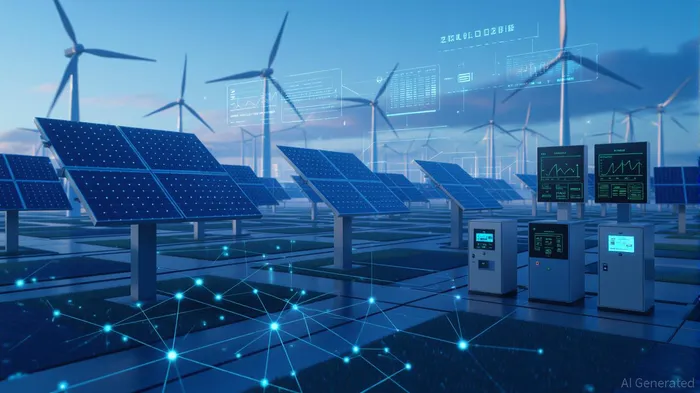
Corporate Innovation: The Engine of Grid Modernization
The transition to smart grids is being driven by a wave of corporate innovation, particularly in Spain. Companies like iGrid T&D are pioneering the adoption of standards, which enhance substation automation and grid resilience, as noted in the ENSUN Spain list. Similarly, ebalanceplus , according to the ENSUN Spain list. Startups such as Grid Access App , while and GES USA, Inc. , according to the ENSUN Spain list.
Germany's corporate landscape, though less detailed in the current data, is equally dynamic. , as reported by the Reuters article, , areas where European firms have historically led.
Investment Thesis: Positioning for Long-Term Upside
The energy transition is no longer a distant vision-it is a present-day imperative. For investors, early positioning in smart-grid infrastructure and renewable integration offers dual advantages: participation in high-growth sectors and alignment with global decarbonization goals. Spain's post-blackout reforms and Germany's grid investments, as reported by the ASUENE blog and the Reuters article, exemplify how policy and market forces are converging to create durable value.
Key opportunities lie in companies that bridge the gap between renewable generation and grid stability. Firms like iGrid T&D and ebalanceplus, as noted in the ENSUN Spain list, are not only addressing immediate infrastructure gaps but also laying the groundwork for scalable, future-proof systems. In Germany, , .
Conclusion
The path to a net-zero Europe is paved with smart-grid solutions and corporate ingenuity. As Enlit Europe 2025 demonstrates, the continent's energy leaders are doubling down on digitalization, storage, . For investors, the message is clear: those who align with this transition today will reap the rewards of a resilient, sustainable energy economy tomorrow.







Comentarios
Aún no hay comentarios