
Remote Property Ownership in a Declining Market: Selling at a Loss or Renting Remotely?
The U.S. real estate market in 2025 is navigating a complex landscape of declining property values, softening rental growth, and shifting investor strategies. For property owners in depreciating markets, the decision to sell at a loss or rent remotely has become a critical financial crossroads. This analysis evaluates the trade-offs between these two options, drawing on recent market trends, tax implications, and operational risks to determine which path offers greater prudence in today's environment.
Market Trends: A Dual-Track Downturn
The U.S. housing market has experienced divergent trends in 2024–2025. While home prices are projected to rise modestly by 2.1–4% in 2026, the rental market has seen a more pronounced correction. As of Q3 2025, the national multifamily vacancy rate climbed to 4.4%, driven by new construction outpacing demand. Effective rent growth slowed to 0.5% year-over-year, with asking rents falling by 0.3% in the same period. Sun Belt markets like Austin and Phoenix, once hotspots of appreciation, now face year-over-year rent declines of -5.1% and -2.1%, respectively. These shifts reflect a broader oversupply of housing units, particularly in secondary markets, where inventory has surged by 20% compared to 2019 levels.
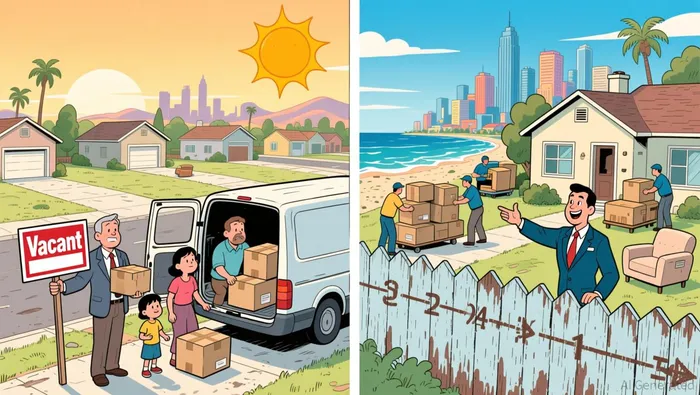
Conversely, coastal markets such as San Francisco and New York have maintained rent growth, supported by return-to-office mandates and limited supply according to industry analysis. This geographic duality complicates the sell-vs-rent decision, as investors in oversupplied regions face weaker rental demand and declining asset values, while those in constrained markets may still benefit from stable or rising rents.
Financial Analysis: Tax Implications and Holding Periods
The 2025 tax reforms have introduced new tools for real estate investors, but they also complicate the calculus of selling versus renting. For properties sold at a loss, the tax benefits are significant. A Section 1231 loss can offset ordinary income and capital gains, with excess losses carried forward for up to 20 years. Additionally, passive activity losses from rental properties can be deducted upon sale, potentially creating a net operating loss (NOL) that reduces future tax liability.
Renting, however, offers its own advantages. The 100% bonus depreciation provision allows investors to expense qualifying assets in the first year, accelerating tax deductions and improving cash flow. For long-term rentals, depreciation deductions reduce taxable income, though depreciation recapture at sale remains a risk, taxing gains at ordinary income rates up to 25%. The 2025 tax reforms also expanded Section 179 expensing limits, enabling investors to deduct up to $2.5 million in improvements, such as energy-efficient upgrades.
 A key consideration is the holding period. Properties held for more than one year qualify for long-term capital gains treatment, which is generally more favorable than short-term rates. However, converting a rental property to a primary residence before sale can preserve the $500,000 capital gains exclusion for married couples, a strategy that may outweigh the benefits of immediate liquidity.
Operational Risks: Remote Management in a Declining Market
Remote property ownership introduces operational challenges that can erode returns. High financing costs, driven by elevated interest rates, have constrained investor acquisition activity, with plans to buy new properties dropping from 67% in November 2024 to 53% in June 2025. Insurance costs have also surged, with residential and senior living properties facing premium increases of up to 100% due to climate risks and inflation.
Labor shortages and rising maintenance costs further strain remote landlords. In multifamily markets, 35% of landlords plan to spend over $20,000 on property upgrades in 2025, reflecting the need to compete in a saturated market. Technology adoption-such as AI-driven property management platforms-can mitigate some of these challenges, but upfront investments and technical expertise are required.
For investors in declining markets, the decision to sell or rent hinges on liquidity needs and risk tolerance. Selling at a loss provides immediate cash but forfeits potential appreciation and rental income. Renting preserves asset value and offers steady cash flow but exposes owners to management burdens and market volatility.
Strategic Recommendations
- For Investors in Oversupplied Markets: Selling at a loss may be preferable if the property's adjusted tax basis allows for a deductible loss. This strategy can generate a tax benefit that offsets the sale's negative equity, particularly if the loss is used to offset capital gains or ordinary income.
- For Investors in Constrained Markets: Renting is often more prudent, as coastal and high-demand areas continue to see rent growth. The 2025 tax reforms' expanded depreciation and expensing provisions enhance the appeal of long-term rentals.
3. Hybrid Approach: Investors with multiple properties might consider a mix of strategies. Selling underperforming assets in oversupplied regions while retaining high-demand rentals can balance risk and reward.
Conclusion
The decision to sell at a loss or rent remotely in a declining real estate market requires a nuanced evaluation of financial, tax, and operational factors. While selling can unlock immediate tax benefits and liquidity, renting offers the potential for long-term appreciation and steady income. In 2025, the optimal strategy depends on geographic location, tax planning, and the ability to manage operational risks. As markets continue to evolve, investors must remain agile, leveraging tax reforms and market insights to navigate this challenging environment.







Comentarios
Aún no hay comentarios