
Remittix: The XRP 2.0 Challenger Reshaping the Future of Cross-Border Payments
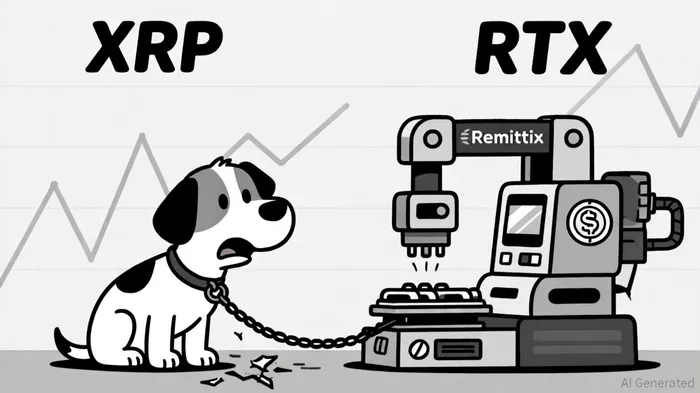
In the ever-evolving landscape of blockchain-based remittances, a new contender is emerging to challenge Ripple's XRPXRP--. Remittix (RTX), a PayFi platform launched in 2025, has positioned itself as a potential “XRP 2.0” by leveraging real-world utility, deflationary economics, and institutional-grade security. With over $26.3 million raised in its presale and a beta wallet now live, RTX is rapidly gaining traction as a decentralized solution for cross-border payments. This analysis evaluates Remittix's investment potential against XRP, focusing on its technological innovation, market adoption, and strategic advantages.
The XRP Legacy and Its Limitations
XRP has long dominated the remittance sector due to its speed and low cost, but its future is clouded by regulatory uncertainty. Ripple's ongoing legal battles with the U.S. Securities and Exchange Commission (SEC) have created volatility, with XRP trading at $2.97 as of September 2025 despite a $178.48 billion market cap [1]. Analysts argue that XRP's institutional adoption—while significant—is increasingly constrained by compliance risks [2]. For investors seeking alternatives, the question becomes: Can a project like Remittix replicate XRP's success while avoiding its pitfalls?
Remittix's Strategic Differentiation
Remittix's value proposition lies in its dual focus on technical robustness and user-centric design. The platform's beta wallet, now live on EthereumETH-- and SolanaSOL--, supports 40+ cryptocurrencies and 30+ fiat currencies, enabling direct crypto-to-bank transfers in over 30 countries [3]. This is a critical advantage over XRP, which relies on partnerships with financial institutions rather than direct user-to-bank integration.
Key innovations include:
1. Live FX Conversion: Users can convert crypto to fiat in real time without third-party intermediaries, reducing costs by up to 80% compared to traditional remittance services [4].
2. CertiK-Audited Smart Contracts: The platform has passed rigorous security audits, a feature absent in XRP's centralized ledger model [5].
3. Deflationary Tokenomics: RTX's presale offers a 50% token bonus for early adopters, while a 15% USDT referral program incentivizes organic growth [6].
Market Adoption and Liquidity
Remittix's presale has already sold 669 million tokens at $0.1130 each, raising $26.3 million—a figure that dwarfs XRP's recent fundraising efforts. The project has secured listings on BitMart and LBank, enhancing RTX's liquidity and accessibility [7]. By contrast, XRP's liquidity is heavily concentrated in institutional markets, limiting retail participation.
Community engagement further underscores Remittix's momentum. A $250,000 giveaway campaign and a 15% referral program have driven grassroots adoption, with over 669,000 wallets created in the first quarter of 2025 [8]. This contrasts with XRP's reliance on speculative trading rather than utility-driven adoption.
Price Projections and Risk Factors
While XRP's price remains tied to regulatory outcomes, RTX's trajectory is more predictable. As of May 2025, RTX traded at $0.0757, with analysts forecasting a launch price of $0.085 by mid-2025 [9]. However, risks persist:
- Market Volatility: Crypto-to-fiat platforms face competition from stablecoins and traditional remittance giants like Western Union.
- Regulatory Hurdles: Although Remittix has passed KYC verification, expanding to new jurisdictions could delay adoption.
Investment Thesis: Why RTX Could Outpace XRP
- Utility-Driven Growth: Remittix's focus on real-world applications—freelancer payments, retail transactions, and utility bill settlements—creates a sticky user base.
- Scalability: By supporting multiple blockchains (Ethereum, Solana, and future Cardano/XRP integrations), RTX avoids the single-chain limitations of XRP.
- Community Incentives: Referral programs and airdrops ensure sustained adoption, whereas XRP's growth depends on uncertain regulatory outcomes.
Conclusion
Remittix is not merely an “XRP 2.0”—it is a reimagining of the remittance sector through decentralized, user-first design. While XRP's legacy remains intact, its regulatory challenges and limited utility make it a riskier bet for 2025. For investors seeking exposure to the PayFi boom, RTX's combination of innovation, security, and community-driven growth offers a compelling alternative. As the beta wallet expands to 30+ countries and listings on major exchanges solidify, Remittix is poised to redefine cross-border payments—and potentially eclipse XRP in the process.






Comentarios
Aún no hay comentarios