
Relief over Trump Tariff Delay Eases Market Panic
Generado por agente de IACyrus Cole
jueves, 13 de febrero de 2025, 7:59 pm ET1 min de lectura
AP--
The threat of a punishing trade war sent Wall Street on a roller coaster Monday, but relief over President Donald Trump's delay in imposing tariffs on Mexican and Canadian goods helped ease market panic. The S&P 500 ended up falling 0.8% after Asian and European indexes logged worse drops. The Dow Jones Industrial Average lost 122 points, or 0.3%, and the Nasdaq composite sank 1.2% (AP, 2025).
The delay in tariffs, announced by Mexican President Claudia Sheinbaum, led to a rally in longer-term U.S. government bonds, which are seen as some of the safest possible investments. The resulting rally in their prices drove Treasury yields down, with the yield on the 10-year Treasury edging down to 4.53% from 4.55% late Friday after earlier dropping as low as 4.46% (AP, 2025).
Investors moved into longer-term U.S. government bonds instead of stocks and crypto, whose prices also fell in the tumult. This shift in investor behavior indicates a risk-off sentiment, as investors sought safer havens for their money in the face of uncertainty surrounding the potential trade war.
The delay in tariffs also had an impact on specific sectors vulnerable to trade disputes. For example, Constellation Brands, the company that sells Modelo and Corona beers in the United States, fell 3.5% on Monday. Best Buy, which sells electronics made around the world, lost 2.4%. Brown-Forman, the company behind Jack Daniel's that sells alcohol in Canada, fell 3.3% (AP, 2025).
These declines in stock prices for companies in sectors vulnerable to trade disputes reflect investor concerns about the potential impact of tariffs on their businesses and the broader economy. The delay in tariffs provided some relief to these companies and helped to stabilize the market, but the threat of tariffs remains, and investors are likely to remain cautious until the situation becomes clearer.
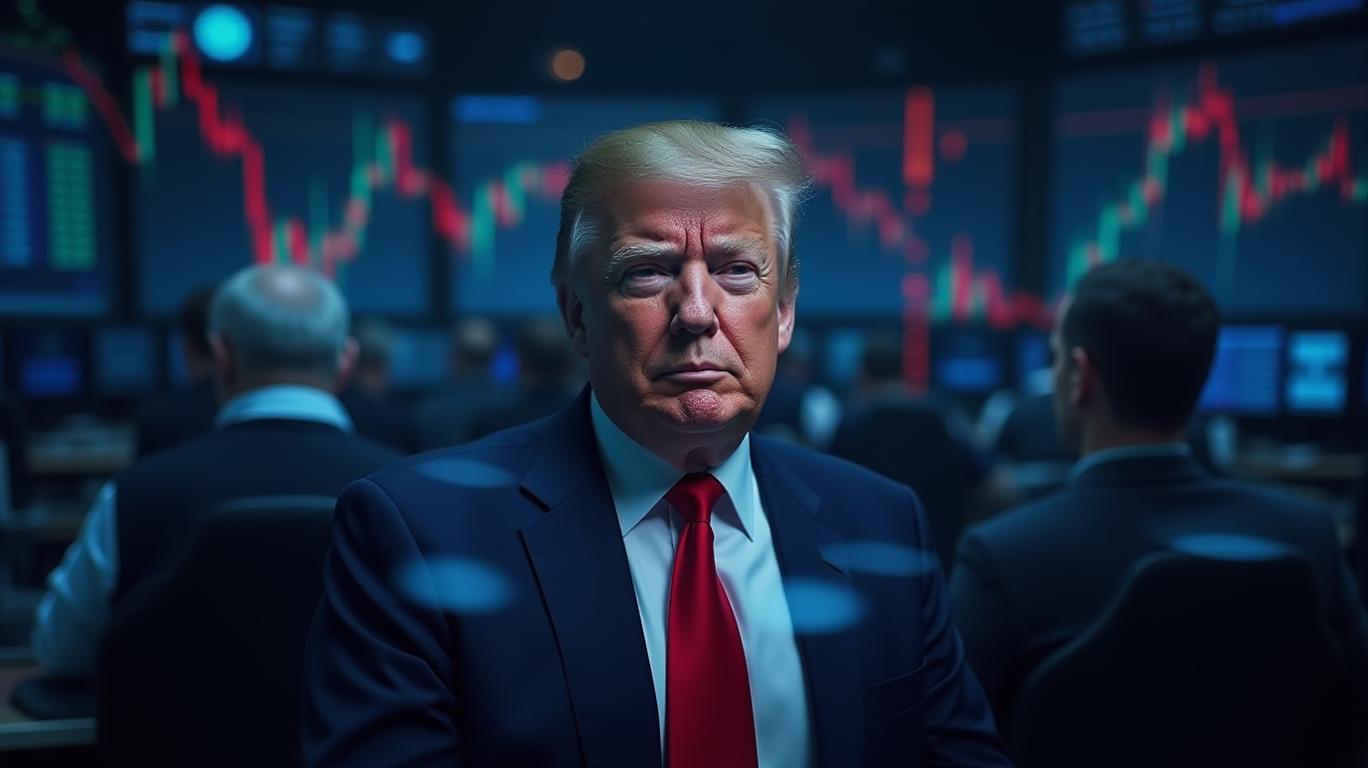
In conclusion, the delay in Trump's tariffs on Mexican and Canadian goods provided some relief to investors, as it reduced uncertainty about potential disruptions in global supply chains and trade. However, the situation remains fluid, and negotiations are ongoing. Investors should continue to monitor developments in U.S.-Mexico-Canada trade relations, as well as the broader geopolitical landscape, to assess the potential impact on their portfolios. The delay in tariffs may have provided some respite for Big Tech, manufacturing, and energy stocks, but investors should remain vigilant about the potential for further volatility in these sectors, as well as the broader market, in the event of an escalation in trade tensions.
BF.B--
JACK--
STZ--
The threat of a punishing trade war sent Wall Street on a roller coaster Monday, but relief over President Donald Trump's delay in imposing tariffs on Mexican and Canadian goods helped ease market panic. The S&P 500 ended up falling 0.8% after Asian and European indexes logged worse drops. The Dow Jones Industrial Average lost 122 points, or 0.3%, and the Nasdaq composite sank 1.2% (AP, 2025).
The delay in tariffs, announced by Mexican President Claudia Sheinbaum, led to a rally in longer-term U.S. government bonds, which are seen as some of the safest possible investments. The resulting rally in their prices drove Treasury yields down, with the yield on the 10-year Treasury edging down to 4.53% from 4.55% late Friday after earlier dropping as low as 4.46% (AP, 2025).
Investors moved into longer-term U.S. government bonds instead of stocks and crypto, whose prices also fell in the tumult. This shift in investor behavior indicates a risk-off sentiment, as investors sought safer havens for their money in the face of uncertainty surrounding the potential trade war.
The delay in tariffs also had an impact on specific sectors vulnerable to trade disputes. For example, Constellation Brands, the company that sells Modelo and Corona beers in the United States, fell 3.5% on Monday. Best Buy, which sells electronics made around the world, lost 2.4%. Brown-Forman, the company behind Jack Daniel's that sells alcohol in Canada, fell 3.3% (AP, 2025).
These declines in stock prices for companies in sectors vulnerable to trade disputes reflect investor concerns about the potential impact of tariffs on their businesses and the broader economy. The delay in tariffs provided some relief to these companies and helped to stabilize the market, but the threat of tariffs remains, and investors are likely to remain cautious until the situation becomes clearer.
In conclusion, the delay in Trump's tariffs on Mexican and Canadian goods provided some relief to investors, as it reduced uncertainty about potential disruptions in global supply chains and trade. However, the situation remains fluid, and negotiations are ongoing. Investors should continue to monitor developments in U.S.-Mexico-Canada trade relations, as well as the broader geopolitical landscape, to assess the potential impact on their portfolios. The delay in tariffs may have provided some respite for Big Tech, manufacturing, and energy stocks, but investors should remain vigilant about the potential for further volatility in these sectors, as well as the broader market, in the event of an escalation in trade tensions.

Divulgación editorial y transparencia de la IA: Ainvest News utiliza tecnología avanzada de Modelos de Lenguaje Largo (LLM) para sintetizar y analizar datos de mercado en tiempo real. Para garantizar los más altos estándares de integridad, cada artículo se somete a un riguroso proceso de verificación con participación humana.
Mientras la IA asiste en el procesamiento de datos y la redacción inicial, un miembro editorial profesional de Ainvest revisa, verifica y aprueba de forma independiente todo el contenido para garantizar su precisión y cumplimiento con los estándares editoriales de Ainvest Fintech Inc. Esta supervisión humana está diseñada para mitigar las alucinaciones de la IA y garantizar el contexto financiero.
Advertencia sobre inversiones: Este contenido se proporciona únicamente con fines informativos y no constituye asesoramiento profesional de inversión, legal o financiero. Los mercados conllevan riesgos inherentes. Se recomienda a los usuarios que realicen una investigación independiente o consulten a un asesor financiero certificado antes de tomar cualquier decisión. Ainvest Fintech Inc. se exime de toda responsabilidad por las acciones tomadas con base en esta información. ¿Encontró un error? Reportar un problema




Comentarios
Aún no hay comentarios