
Reliance Industries Q4 Profit Surges 6% as Retail and Jio Counter Oil Headwinds
Reliance Industries Limited (RIL) has once again demonstrated its ability to navigate cyclical challenges, posting a 6.4% year-on-year rise in net profit to ₹22,611 crore for Q4 FY25. While its oil-to-chemicals (O2C) segment faced margin pressures, the company’s retail and digital arms—Reliance Retail and Jio Platforms—delivered stellar results, defying earlier forecasts of a profit decline. The performance underscores RIL’s diversified business model, which continues to evolve beyond its traditional energy core.
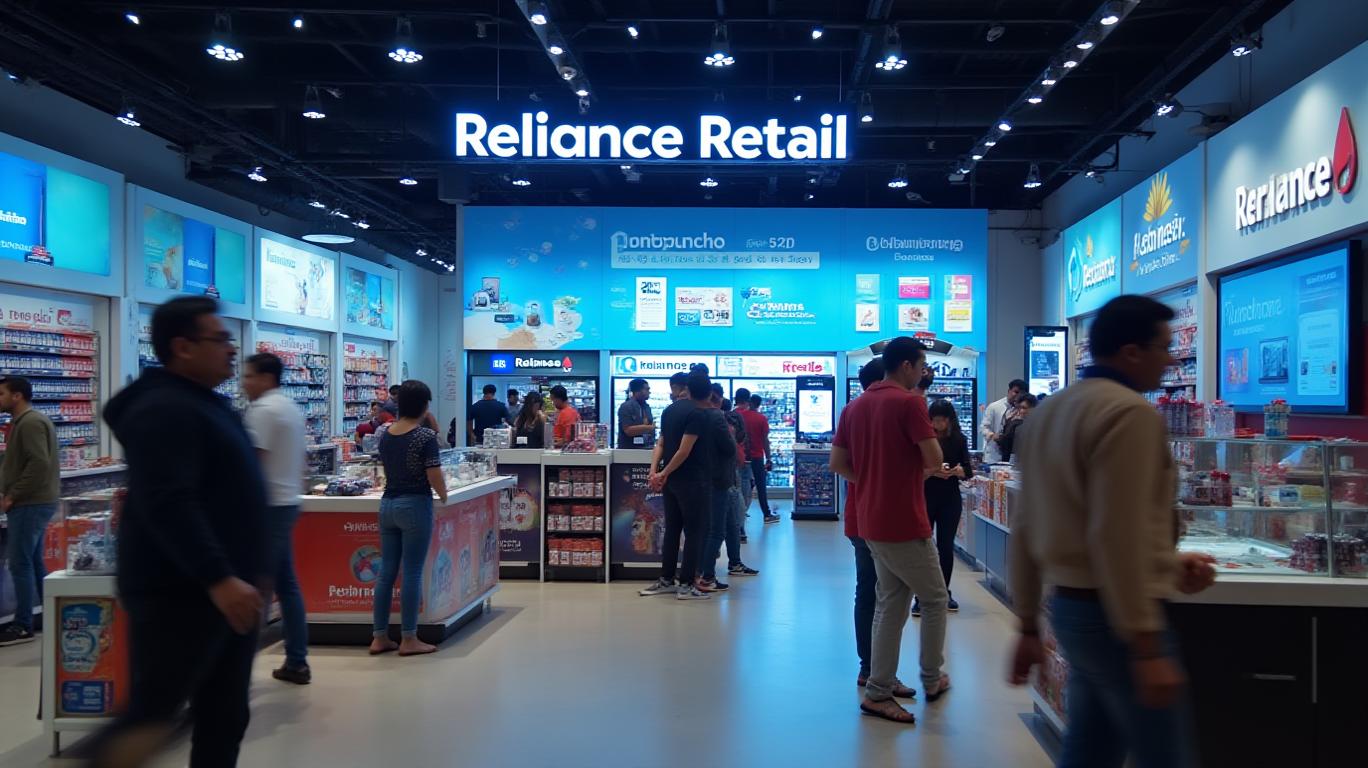
The Retail Engine: Growth Through Efficiency
Reliance Retail’s profit surged 30.4% YoY to ₹3,519 crore, driven by a 15.7% revenue jump to ₹88,620 crore. The segment’s expansion—now operating 19,340 stores, up from 18,836 a year ago—combined with cost optimizations and strategic moves like the launch of its fast-fashion brand Yousta, fueled growth. Analysts at Goldman Sachs noted that restructuring in the grocery segment, which closed low-margin stores, also contributed to margin resilience.
The retail division’s EBITDA margin dipped slightly to 8.5%, but this was offset by strong operational scaling. With a focus on urban and rural penetration, RIL is capitalizing on India’s growing consumer market, where its vertically integrated supply chain provides a competitive edge.
Jio’s Dominance: Monetizing Scale in Telecom and Content
Jio Platforms emerged as a profit powerhouse, reporting a 25.8% YoY jump in net profit to ₹7,023 crore. Its revenue rose 17.8% to ₹39,853 crore, driven by a 13.5% increase in Average Revenue Per User (ARPU) to ₹206.2. The tariff hikes implemented in July 2024, alongside subscriber growth to 488 million, highlight Jio’s pricing power in a market it now dominates.
Jio’s digital ecosystem also shone: its content arm, JioStar, turned profitable with ₹229 crore in net profit, while JioHotstar’s MAUs hit 503 million in Q4, boosted by cricket events. The segment’s EBITDA margin expanded by 40 basis points YoY, a rare feat in a sector known for margin erosion.
The O2C Struggle: Cyclical Pressures Take a Toll
The O2C segment, which contributed 56% of RIL’s revenue in FY25, faced headwinds. Despite a 15.4% revenue rise to ₹1.64 lakh crore, its EBITDA fell 10% to ₹15,080 crore due to shrinking refining margins ($8.9/bbl vs. $9.3/bbl in Q3). Weak crude differentials and lower product cracks (e.g., gasoline) exacerbated the pain.
The oil and gas segment also stumbled, with EBITDA down 8.6% to ₹5,123 crore, as KGD6 gas production declined. These setbacks, however, were anticipated given the volatile energy landscape, and RIL’s focus on renewables and battery tech suggests a long-term pivot away from reliance on oil cycles.
Full-Year Results: Cash Reserves and Capital Allocation
For FY25 as a whole, RIL reported a record ₹10.71 lakh crore in revenue and ₹81,309 crore in net profit, both up mid-single digits YoY. The company’s financial health remains robust: it holds ₹2.3 lakh crore in cash and declared a dividend of ₹5.50 per share, its first since Q3 FY25.
Capital expenditure hit ₹36,041 crore in Q4 alone (up 55% YoY), with FY25 capex totaling ₹1.31 lakh crore. Priorities include renewable energy, battery manufacturing (via its partnership with CATL), and retail expansion—areas aligned with India’s infrastructure needs and global decarbonization trends.
Analyst Take: Buying the Dip in a Diversified Giant
Over 92% of 39 brokerages maintain a "Buy" rating on RIL, with CLSA targeting a 30% upside to ₹1,650 by end-2025. Citigroup upgraded the stock to "Buy," citing Jio’s 5G monetization potential and retail margin recovery.
The stock’s P/E multiple of 20.5x is lower than peers like Bharti Airtel (26x) and Titan Company (32x), suggesting undervaluation. Meanwhile, RIL’s dividend yield of 0.8%—though modest—is a positive signal for income-seeking investors.
Conclusion: A Resilient Play for Long-Term Growth
Reliance Industries’ Q4 results highlight its ability to balance cyclical risks with secular growth drivers. Retail and Jio’s performance—supported by 8.5% EBITDA margins and ARPU expansion—offer a clear path to offset O2C volatility.
The company’s cash reserves of ₹2.3 lakh crore and disciplined capex in renewables and batteries position it to capitalize on India’s $5 trillion economy ambitions. With a dividend payout and a stock trading at 20.5x FY26 earnings (vs. a 5-year average of 22x), RIL appears attractively priced.
While O2C challenges persist, the broader narrative remains one of transformation: a former oil giant now leading in telecom, retail, and green tech. For investors, this is a stock to buy on dips, as RIL’s diversified growth engines and financial resilience suggest it’s building for decades ahead.





Comentarios
Aún no hay comentarios