
Reliance Global Group's Strategic Addition of Solana to Its Digital Asset Treasury: A Masterstroke in Blockchain Diversification and Long-Term Value Creation
Why Solana? The Technical Edge in a Crowded Market
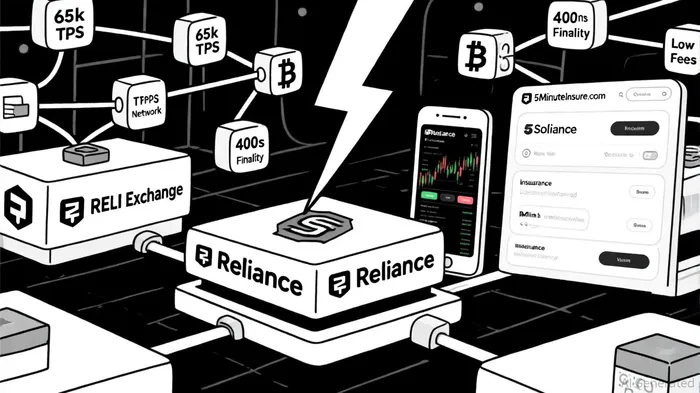
Solana's inclusion in Reliance's portfolio is no accident. The network's technical specs-65,000 transactions per second (TPS), 400-millisecond finality, and near-zero fees-position it as a direct competitor to Ethereum's Layer 2 solutions and a viable backbone for high-throughput applications, according to a StockTitan report. Reliance explicitly cited Solana's Proof-of-History (PoH) consensus mechanism, which timestamps transactions cryptographically, as a key enabler for its proprietary platforms like RELIRELI-- Exchange and 5MinuteInsure.com in a GlobeNewswire release.
For context, Bitcoin processes ~7 TPS, and Ethereum maxes out at ~30 TPS. Solana's performance metrics align with Reliance's vision of building "high-performance blockchain ecosystems," a phrase the company has repeated in investor communications. By integrating Solana, Reliance isn't just diversifying its holdings-it's future-proofing its infrastructure against the growing demand for real-time, low-cost transactions.
Strategic Integration: From Treasury to Ecosystem
Reliance's approach to digital assets isn't purely speculative. The company has been methodically building out platforms that leverage blockchain's strengths. For example, RELI Exchange-a hybrid trading platform-could use Solana's speed to execute cross-chain swaps or tokenized assets in real time. Similarly, 5MinuteInsure.com, an AI-driven insurance service, might tokenize policies on Solana's network, enabling instant claims processing and reducing administrative overhead.
This move also signals Reliance's confidence in Solana's ecosystem. The network has attracted projects like SerumSRM-- (a decentralized exchange) and MangoBANANA-- Markets (a DeFi platform), which could complement Reliance's offerings. By holding Solana, Reliance isn't just betting on the token-it's investing in a network effect that could drive institutional adoption.
The Dividend Signal: Confidence in a Digital Future
Alongside the Solana acquisition, Reliance announced a $0.03 per share special dividend, payable on December 2, 2025. This isn't just a reward for shareholders-it's a statement. In an industry where volatility often overshadows fundamentals, Reliance is emphasizing financial discipline. The dividend suggests the company believes its digital asset strategy will generate consistent returns, even as it allocates capital to high-risk, high-reward blockchain projects.
Risks and Realities
No strategy is without risks. Solana's rapid growth has occasionally been marred by outages and security concerns (e.g., the 2022 network downtime). However, Reliance's "disciplined and risk-aware approach" to portfolio management implies rigorous due diligence. The company's existing holdings in Bitcoin and Ethereum provide a buffer against Solana's volatility, creating a balanced exposure to both established and emerging chains.
Conclusion: A Blueprint for Institutional Blockchain Adoption
Reliance's Solana acquisition is more than a portfolio tweak-it's a case study in how traditional firms can leverage blockchain's strengths without abandoning financial prudence. By prioritizing scalability, ecosystem integration, and shareholder returns, Reliance is setting a blueprint for institutional players navigating the crypto-asset class. As the line between traditional finance and decentralized infrastructure blurs, companies that adapt with both technical and strategic agility will dominate.





Comentarios
Aún no hay comentarios