
REITs: A Fresh Start Beyond Volatility
The real estate sector has long been synonymous with stability and long-term growth, yet its investment vehicle—the REIT—has faced skepticism in recent years due to pandemic-driven declines, rising interest rates, and sector-specific headwinds. However, today's environment presents a unique opportunity for investors to reevaluate REITs through a forward-looking lens. Past performance need not dictate future returns, as structural advantages, undervalued pricing, and sector-specific innovations position REITs for a rebound. Let's dissect why now is the time to reconsider this often-overlooked asset class.
1. Beyond the Pandemic Hangover: Occupancy Rates Stabilize, Sectors Diversify
The pandemic's impact on REITs was uneven, with office and retail properties suffering while industrial and healthcare REITs thrived. Yet occupancy data now signals a turning point.
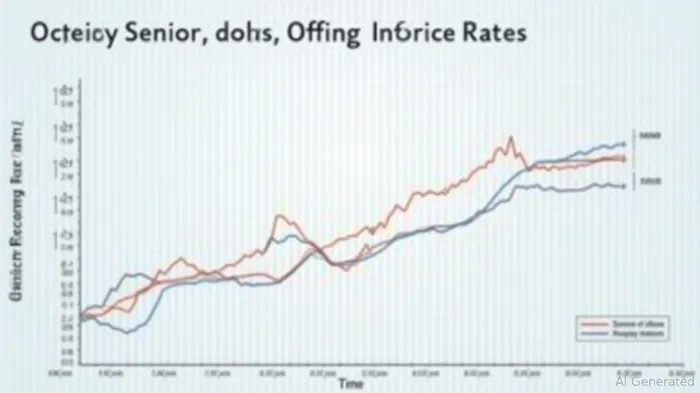
Senior housing exemplifies this shift. As of Q1 2025, occupancy rates hit 87.4%, a twelve-quarter streak of growth. Independent Living occupancy rose to 89%, while Assisted Living reached 85.8%, outpacing all commercial real estate sectors. This is no fluke: a demographic tailwind—10,000 Baby Boomers turn 65 daily—ensures sustained demand. Meanwhile, industrial REITs, though pressured by trade tensions, maintain robust cash flows, and office vacancies are stabilizing post-pandemic.
2. Valuations Are Reset: Undervalued REITs Offer Margin of Safety
REITs have historically traded at discounts to net asset value (NAV), but today's valuations reflect cyclical lows. As of June 2025, the median REIT trades at an 18.2% discount to NAV, with office REITs facing the deepest undervaluation (44.1% discount). This creates a compelling entry point.
Consider the price-to-FFO (Funds from Operations) metric, a key gauge of REIT valuation. The sector's average P/FFO multiple has compressed to 14.4x, near its 10-year average, despite rising rates. Compare this to the broader equity market's valuation multiples, which remain elevated.
Healthcare REITs like Welltower (WELL) and Ventas (VTR), which have seen FFO grow by 320 basis points and 15.2% YoY, respectively, offer both yield and growth. Meanwhile, industrial REITs such as Prologis (PLD) benefit from e-commerce's permanence, with cap rates stabilizing at 5.5%–6%, down from pandemic peaks.
3. Structural Tailwinds: Inflation Hedging, Innovation, and Global Demand
REITs are inherently inflation hedges, as rent increases and property appreciation protect against rising prices. The Bloomberg REIT Index has outperformed the S&P 500 during 70% of historical inflationary periods.
Beyond traditional sectors, innovation is unlocking new opportunities:
- Logistics and Last-Mile Delivery: E-commerce's evolution demands flexible warehouses and urban distribution hubs.
- Healthcare Evolution: Senior housing now integrates tech-driven care models, reducing operational risks and boosting tenant retention.
- Green REITs: Demand for energy-efficient buildings is surging, with $300 billion in green real estate investments projected by 2026.
4. A Prudent Play in a Volatile Market
REITs also offer diversification benefits. With a correlation of 0.4 to equities and 0.6 to bonds, they reduce portfolio volatility. Yields remain attractive: the sector's average dividend yield is 3.8%, outpacing the 10-year Treasury yield of 3.7%.
Investment Thesis:
- Buy Senior Housing REITs: Focus on operators with strong occupancy trends, such as Welltower or Sabra Healthcare (SBRA).
- Underweight Office REITs: Wait for vacancy rates to bottom out before allocating capital.
- Hold Industrial and Net Lease REITs: Their cash flows are recession-resistant, with Prologis and National Retail Properties (NNN) offering steady returns.
Conclusion: REITs Are Due for a Rebound—Act Before the Cycle Reverses
The narrative that REITs are “past their prime” ignores the sector's adaptability and undervalued pricing. With occupancy rates stabilizing, demographic tailwinds, and innovation-driven demand, REITs are primed for a multiyear growth cycle. Investors who focus on sector selection (e.g., healthcare, logistics) and valuation discipline can capitalize on this reset.
The past decade's volatility has already priced in pandemic-era risks and rate hikes. Now is the time to look forward—and invest in REITs' next chapter.







Comentarios
Aún no hay comentarios