
Regulatory Triumph vs. Market Skepticism: Syndax Pharmaceuticals and the Revuforj Paradox
Regulatory Milestones: A Dual Approval Powerhouse
Revuforj's journey to market dominance began on November 15, 2024, when the drug received FDA approval for relapsed or refractory (R/R) acute leukemia with KMT2A translocations. This was followed by a historic second approval on October 24, 2025, as announced in a Syndax press release, expanding the drug's indication to R/R acute myeloid leukemia (AML) with NPM1 mutations. SyndaxSNDX-- now holds exclusive FDA approval for the only menin inhibitor targeting both KMT2A and NPM1 mutations, a position that should logically bolster investor confidence.
The October 2025 approval was particularly significant, as it positioned Revuforj as the first and only therapy for NPM1-mutated AML, a subset of patients with limited treatment options. Syndax also highlighted its inclusion in the National Comprehensive Cancer Network (NCCN) Guidelines as a category 2A option, signaling growing clinical adoption.
Market Reaction: A Surprising Selloff
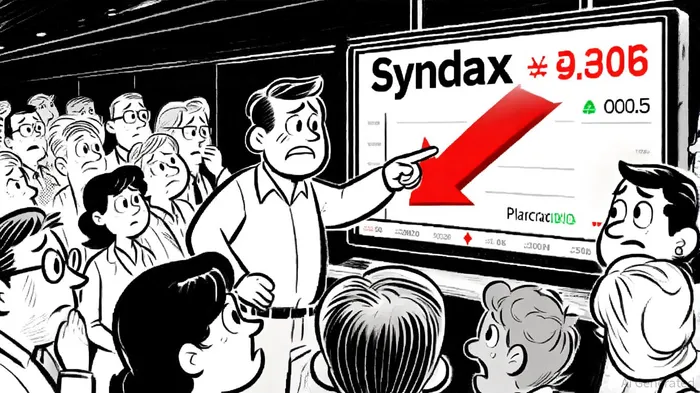
Despite these achievements, SNDXSNDX-- shares closed at $13.53 on October 24, 2025, a 7.83% drop from the previous day's close. Extended trading saw further declines, with the stock falling to $13.27. This reaction defied expectations, especially given the drug's clinical data: the Phase 2 AUGMENT-101 trial reported a 23% complete remission or CRh rate in NPM1-mutated AML patients. Analysts had previously maintained a bullish stance, with 12 "buy" or "strong buy" ratings and a median 12-month price target of $37.00, according to a Reuters earnings summary.
The selloff suggests that investors prioritized risk factors over regulatory progress. Key concerns included:
1. Modest Remission Rates: A 23% CR/CRh rate, while non-trivial, may have been perceived as suboptimal compared to industry benchmarks or unmet expectations.
2. Commercialization Challenges: Questions lingered about Revuforj's ability to penetrate a competitive AML market, particularly given its niche patient population and potential pricing pressures.
3. Broader Market Trends: A general biotech sector downturn or macroeconomic anxieties (e.g., interest rates, healthcare policy) could have amplified selling pressure, as noted in the Parameter report.
Analyst Perspectives: Optimism vs. Reality
While Syndax reported a quarterly adjusted loss of $0.98 per share, beating estimates of $1.33, the market appeared unconvinced. Analysts highlighted the company's SyndAccess patient support program as a step toward addressing affordability barriers, but skepticism persisted about scaling production and securing reimbursement. The disconnect between earnings performance and stock price underscores a common theme in biotech: regulatory validation does not always translate to immediate commercial success.
Broader Implications for Biotech Investing
Syndax's experience reflects a broader tension in biotech investing: the gap between regulatory validation and market perception. While the FDA's stamp of approval is a critical milestone, investors often demand proof of commercial viability, including robust clinical data, competitive differentiation, and scalable business models. Syndax's case illustrates that even with these elements, market forces-such as risk aversion, sector-specific volatility, or macroeconomic headwinds-can overshadow near-term progress.
For investors, this underscores the importance of due diligence beyond regulatory news. Syndax's 23% remission rate, while statistically significant, may not align with investor expectations for transformative therapies. Additionally, the company's reliance on a single drug (Revuforj) exposes it to risks if commercialization falters or if competitors develop superior alternatives.
Conclusion: Navigating the Paradox
Syndax Pharmaceuticals' stock volatility following Revuforj's FDA approvals offers a cautionary tale for biotech investors. Regulatory milestones are undeniably valuable, but they must be contextualized within a company's broader financial health, competitive landscape, and market dynamics. While Syndax has secured a unique position in AML treatment, the market's bearish reaction highlights the need for investors to balance optimism with pragmatism.
As Syndax moves forward, its ability to convert regulatory success into sustained revenue growth-and to address concerns about Revuforj's efficacy and commercialization-will be pivotal. For now, the disconnect between FDA approval and stock price performance serves as a reminder that in biotech, the journey from regulatory victory to market triumph is rarely linear.







Comentarios
Aún no hay comentarios