
Regulatory Threats to Bitcoin Privacy: Geopolitical Risks and the Future of Crypto Adoption
The intersection of regulation, privacy, and geopolitics has become a defining battleground for Bitcoin's future. As governments grapple with the disruptive potential of decentralized finance, the tension between privacy preservation and regulatory oversight is reshaping the global crypto landscape. From the U.S. Department of Justice's (DOJ) crackdown on privacy tools to the European Union's (EU) structured Markets in Crypto-Assets (MiCA) framework, the regulatory environment is increasingly fragmented-and politically charged. For investors, understanding these dynamics is critical to navigating the risks and opportunities in a rapidly evolving market.
U.S. Regulatory Shifts: From Prosecution to Frameworks
The U.S. has undergone a dramatic regulatory pivot under the Trump administration, moving from a "regulation by enforcement" model to a more structured, innovation-friendly approach. The DOJ's April 2025 memo, Ending Regulation by Prosecution, marked a turning point. By disbanding the National Cryptocurrency Enforcement Team and reframing enforcement priorities to focus on criminal activity (e.g., terrorism, fraud), the DOJ signaled a shift away from targeting privacy-preserving technologies like mixers and tumblers, according to a Hodder Law report. This contrasts sharply with the Biden-era prosecution of Tornado Cash developers, which raised existential questions about the legality of decentralized infrastructure.
Meanwhile, the Securities and Exchange Commission (SEC) has adopted a dual strategy: fostering innovation while tightening investor protections. The SEC's Spring 2025 Regulatory Agenda includes proposals to allow crypto trading on national exchanges and deregulatory measures to reduce compliance burdens. However, unresolved issues like FinCEN's mixer rulemaking and 6050I reporting requirements continue to erode privacy for ordinary users, according to the PwC Global Crypto Regulation Report 2025. Commissioner Hester Peirce's emphasis on "private value transfers" highlights the SEC's acknowledgment of privacy's role in financial sovereignty-but only if balanced with oversight, as noted in a Hodder Law report.
Global Regulatory Divergence and Geopolitical Tensions
The U.S. approach has catalyzed a global regulatory arms race. The EU's MiCA framework, set to take effect in 2026, imposes stringent compliance measures on crypto firms, including transparency requirements for stablecoins and asset-backed tokens, according to a Forbes analysis. While this creates a predictable environment for institutional investors, it risks stifling privacy-focused innovation. Conversely, Asian jurisdictions like Singapore and Hong Kong have adopted licensing regimes that prioritize innovation without compromising consumer protection, positioning themselves as crypto-friendly alternatives to U.S. and EU markets, per the PwC Global Crypto Regulation Report 2025.
This divergence has geopolitical ramifications. The U.S. refusal to develop a Central Bank Digital Currency (CBDC) contrasts with China's digital yuan and the EU's digital euro pilot, creating a fragmented global financial infrastructure, as noted in Crypto in 2025. Meanwhile, nations like Russia, Iran, and North Korea have weaponized crypto for sanctions evasion, leveraging platforms like Garantex and TetherUSDT-- to circumvent traditional financial systems, according to the same Geopolitical Monitor piece. The U.S. regulatory focus on stablecoins-aimed at preserving dollar dominance-has further intensified transatlantic tensions, as European regulators clash with American firms over compliance standards (Forbes analysis).
Privacy Under Fire: Risks and Resilience
Bitcoin's core value proposition-censorship resistance and financial privacy-is under siege. The DOJ's 2025 data transfer rule, which restricts access to U.S. sensitive personal data by countries of concern (e.g., China, Russia), indirectly impacts crypto adoption by complicating cross-border transactions; this is discussed in the DOJ Cross-Border Data Transfers Rule. For privacy-preserving technologies, the stakes are even higher. While the DOJ's new enforcement priorities shield platforms from prosecution, the SEC's unresolved mixer rulemaking and the FATF's Travel Rule continue to pressure developers to compromise user anonymity, as noted in a Hodder Law report.
Yet, Bitcoin's adoption in crisis economies offers a counter-narrative. Countries like El Salvador, Zimbabwe, and Argentina have embraced crypto as a hedge against hyperinflation and de-dollarization, demonstrating that privacy and utility can coexist (Geopolitical Monitor). These markets, however, remain vulnerable to geopolitical spillovers. For instance, U.S. sanctions on Tether-a key stablecoin-could disrupt liquidity in regions reliant on dollar-pegged assets (Geopolitical Monitor).
Investment Implications: Navigating the New Normal
For investors, the regulatory and geopolitical landscape demands a nuanced approach. While U.S. pro-crypto policies (e.g., in-kind ETFs, staked ETFs) enhance institutional access, they also expose the sector to political volatility. The EU's MiCA framework, though restrictive, may create a "safe haven" for compliant projects, attracting capital from risk-averse investors. Meanwhile, privacy-focused protocols face an existential dilemma: comply with AML/CTF mandates and lose their core value proposition, or risk delisting and regulatory retaliation.
Conclusion
The battle for Bitcoin's privacy is no longer confined to technical debates-it is a geopolitical struggle with profound implications for global finance. As regulators juggle innovation, stability, and sovereignty, investors must weigh the risks of compliance-driven erosion of privacy against the opportunities in emerging markets. The next decade will test whether BitcoinBTC-- can retain its decentralized ethos in a world increasingly shaped by state power.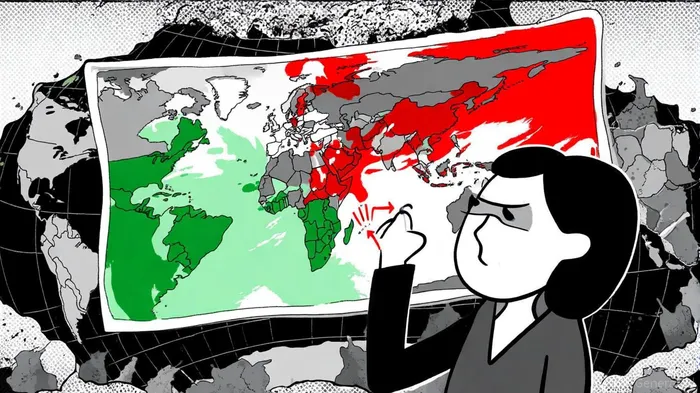






Comentarios
Aún no hay comentarios