
Regulatory Shifts in Financial Reporting: Rethinking Earnings-Driven Investment Strategies in a Post-Quarterly World
The U.S. financial reporting landscape is undergoing a seismic shift. With the SEC's proposed transition from quarterly to semiannual reporting for public companies—a move inspired by practices in the UK and EU—investors must grapple with a fundamental redefinition of how corporate performance is measured and communicated[1]. This regulatory pivot, coupled with updates to FASB and IFRS standards, is not merely a procedural adjustment but a paradigm shift that could reshape earnings-driven investment strategies, market volatility, and investor behavior for decades to come.
The End of an Era: Quarterly Reporting's Decline
For over five decades, quarterly earnings reports have served as the heartbeat of U.S. capital markets. These disclosures created a rhythm of expectations, with investors and analysts fixated on short-term metrics like revenue growth, earnings per share (EPS), and guidance updates. However, the SEC's semiannual proposal, championed by Chairman Paul Atkins, seeks to disrupt this cadence[4]. Proponents argue that biannual reporting would reduce compliance costs, free management from “quarterly tyranny,” and encourage long-term strategic planning[1]. Critics, however, warn of a potential transparency vacuum.
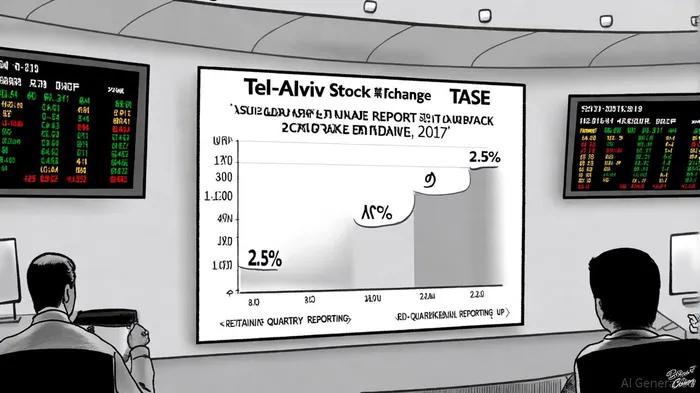
Empirical evidence from the Tel-Aviv Stock Exchange (TASE) offers a cautionary tale. In 2017, TASE allowed small-cap firms to switch to semiannual reporting. Firms that adopted the change saw an average 2% drop in stock prices, while those retaining quarterly reporting gained 2.5%[1]. This divergence underscores investor skepticism toward reduced transparency. The TASE study also revealed a 19.8% reduction in external auditing hours for firms switching to semiannual reporting, but this cost savings came at a price: weaker corporate governance, including less board diversity and diminished audit rigor[1].
Market Volatility and the “Earnings Cliff”
If the SEC's proposal is implemented, U.S. markets could face a new era of volatility. With only two major earnings updates per year, the information flow between reports would be sparse, potentially amplifying price swings around earnings announcements. A 2025 study by Debevoise & Plimpton notes that semiannual reporting could lead to “more pronounced price swings” as investors scramble to interpret limited data[4]. This dynamic is already evident in the TASE case, where reduced reporting frequency correlated with heightened market uncertainty[1].
Moreover, the cost of capital could rise. With less frequent disclosures, investors may demand higher risk premiums to compensate for information gaps, particularly in sectors with high operational or financial leverage. This aligns with a 2025 Federal Reserve analysis showing that market volatility spiked in April 2025 amid policy uncertainties—a scenario that could be exacerbated by semiannual reporting[6].
The Rise of Alternative Data and Enhanced Disclosures
To mitigate transparency risks, investors may increasingly turn to alternative data sources. Credit card spending, parking lot traffic, and supply chain analytics—once niche tools—could become mainstream as quarterly earnings lose their primacy[3]. This shift mirrors trends in AI-driven investment strategies, where real-time data parsing becomes critical.
Meanwhile, FASB and IFRS updates aim to offset reduced reporting frequency by enhancing the granularity of disclosures. For instance, FASB's ASU 2023-07 mandates more detailed segment profitability reporting, while ASU 2023-09 improves tax expense transparency[2]. These changes, effective in 2024-2025, provide investors with richer insights into operational performance, even if quarterly updates become less frequent. Similarly, IFRS amendments like IAS 21's clarification on non-exchangeable currencies and the upcoming IFRS 18 standard (2027) aim to harmonize global reporting practices[5].
Strategic Implications for Investors
The regulatory shifts necessitate a recalibration of investment strategies. Here are three key considerations:
Long-Term Focus Over Short-Term Noise: Investors should prioritize metrics like free cash flow, capital allocation efficiency, and long-term ESG performance over quarterly earnings. Firms with strong balance sheets and predictable cash flows may outperform in a semiannual reporting environment.
Enhanced Due Diligence: With less frequent official disclosures, investors must augment their analysis with alternative data and third-party audits. This is particularly critical for high-growth or volatile sectors like crypto and AI, where regulatory clarity remains limited[2].
Risk Management for Volatility: Portfolio managers should allocate capital to sectors less sensitive to information gaps, such as utilities or consumer staples, while hedging against volatility in cyclical industries.
Conclusion: A New Equilibrium
The transition from quarterly to semiannual reporting is not a binary choice between transparency and cost savings but a complex recalibration of market dynamics. While the SEC's proposal aims to reduce regulatory burdens, it risks creating a governance and information asymmetry that could erode investor confidence. The TASE case study and FASB/IFRS updates suggest that enhanced disclosures and alternative data can partially offset these risks—but only if investors adapt their strategies accordingly.
As the SEC deliberates, one thing is clear: the post-quarterly world will demand a more nuanced, data-driven approach to investing. Those who embrace this shift—leveraging enhanced disclosures, alternative data, and long-term metrics—will be best positioned to navigate the evolving landscape.







Comentarios
Aún no hay comentarios